Languages
Saturday, November 28, 2026



News and Views from the Global South
Human Rights

Acid Survivors Fight Back: A Story of Hope Amidst Despair
When the Oscar-nominated film "Saving Face" won an Academy Award in Hollywood for Best Documentary (Short Subject), it was the triumph of several "firsts": the first time ever that a Pakistani filmmaker had won an Oscar; Pakistan's first Oscar winner was a woman; and it was the first time that an American and a Pakistani had co-directed an Oscar-winning film.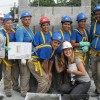
Brazilian Women Are the World’s Happiest
Money may not buy happiness – but it has helped make women in Brazil become the happiest, most optimistic women in the world, according to a study.
Q&A: How to Analyse a Budget’s Impact on Female Empowerment
Tools such as "gender markers", which screen budgets and resources dedicated to promoting gender equality, are proving critical to improving the effectiveness of monetary support that seeks to empower women and girls.
U.N. Special Envoy on Iran Details Pattern of Rights Abuses
A United Nations envoy has called on the Iranian government to release all political prisoners and prisoners of conscience, and to conduct an extensive, impartial and independent investigation into the violence that followed the 2009 presidential election.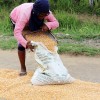
PHILIPPINES: Women Weather Climate Change
As the world commemorates International Women’s Day today, women around the globe are speaking out on various issues that affect them. In light of recent natural disasters and calamities in the Philippines, women are increasingly citing climate change as one of their most pressing concerns.
OP-ED: To Break the Bonds of Injustice
Forty-six years ago, at a Senate subcommittee hearing on migratory labour, U.S. Senator Robert Kennedy listened in disgust as California's Kern County Sheriff explained the arrests of peaceful picketers brought on by mounting pressure from farm owners.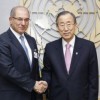
Syria’s Chemical Weapons Trigger New Threats in War Zone
As the besieged government of President Bashar al-Assad continues to violently suppress the warring political opposition in Syria, the United Nations has expressed "concern" over reports "on the possible existence of chemical weapons" in the embattled Middle Eastern country.
CHILE: Promoting Women’s Empowerment on Two Wheels
What does riding a bike have to do with women’s rights? According to the Chilean feminist group Macleta, which promotes cycling and a gender perspective on public transport, a bicycle is a powerful tool for social change.Egyptian Ties with US on Civil Society Rocks
Egypt's legal campaign against a handful of foreign NGOs reached a crescendo last week with the repatriation of several U.S. nationals indicted on charges of engaging in unauthorised civil society activity. But many local analysts believe the latest developments - far from signifying the end of the crisis - portend nothing less than a seismic shift in Egypt's longstanding "strategic relationship" with the U.S.No Red Lines, But No Red Light Either
Intense consultations at the highest level between the U.S. and Israel on how to coordinate their respective strategies vis-à-vis Iran indicate that a strike on the Islamic Republic’s nuclear sites, if launched by Israel, the U.S., or in tandem, wouldn’t occur this spring, probably not even before November.
Arab Women Bring Spring to the Screen
Women have been at the forefront of each uprising in the Arab world. Last week, the ‘8 Arab Women Filmmakers’ festival offered a platform to Arab women directors to give their perspectives on the future of the region.
Festival Brings Human Drama from Headlines to the Screen
The often heroic struggles of some of the world's human rights victims and advocates are on full view at the Toronto Human Rights Watch Film Festival, which runs through Friday at the TIFF Bell Lightbox theatre.
Following the Money Trail in Gender Financing
Promising methods of tracking aid funding intended to improve women's and girls' livelihoods also offer the possibility of revealing whether donors and policymakers are walking the walk when it comes to gender financing.
U.S. Weapons Claiming Palestinian Lives, Group Says
A new policy paper published earlier this week by the U.S. Campaign to End the Israeli Occupation documents a number of cases occurring over the past decade in which weapons and ammunition produced and financed by the U.S. have been used to kill unarmed Palestinians and U.S. citizens.U.S. Lags in Legalising Women’s Rights Treaty
The United States has fallen behind. Many other countries have already implemented it, but the United States still has yet to ratify the Convention on the Elimination of All Forms of Discrimination Against Women (CEDAW), which promotes women's rights as human rights.
French Alternative Water Forum Says ‘No’ to Privatisation
Back in 2001, Gérard Mestrallet, CEO of the transnational water giant GDF- Suez, highlighted his company’s "commitment to fight for better access" to safe water and sanitation throughout the world, in order to put an end to all deadly water-borne diseases, from children’s diarrhoea to parasitic diseases to dysentery.
Brazil to Open Doors to Skilled Immigrants, Slam Shut to Others
In designing a new immigration policy, Brazil is caught between the need to attract skilled workers and professionals in order to meet the challenges posed by economic growth, and its tradition of taking in immigrants for humanitarian reasons.
Faithful and Non-Catholics Alike Prepare to Welcome Pope to Cuba
The Catholic Church in Cuba expects people to welcome Pope Benedict XVI with warmth and enthusiasm, even though Catholics are not a majority here like they are in Mexico, the first stop on the pope’s Latin America tour that begins Mar. 23.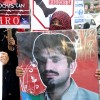
‘Human Rights Hell’ in Balochistan Inflames Separatist Sentiments
"We want our homeland; we want freedom from Pakistan and will fight till our last breath," said Zarmine Baloch (23), veiled from head to toe with just her eyes showing.Japanese Women Empowered By Tohoku Quake
Devastating as the Tohoku earthquake was it gave the local women of the remote region an opportunity to come into their own and take on leadership roles in an essentially patriarchal country.
Groups Reject Holder’s Defence of Targeted Assassination
Two days after U.S. Attorney General Eric Holder outlined the statutory justifications for "targeted killings", civil liberties groups here continue to question the legality of the Obama administration's policy, particularly as it applies to the rights and very lives of both U.S. citizens and foreign nationals.« Previous Page — Next Page »


One world, one humanity, now one court to defend its rights. Another step towards universal human rights, but not remotely a step far enough. The United Nations adopted the Universal Declaration of Human Rights more than half a century ago, but that has done little to stop violations the world over, just as the Geneva Convention has not protected prisoners of war enough. Democracy itself and the freedom it presupposes has not been protective enough. This is the century to move from politicisation of human rights towards humanising political ways. IPS keeps an eye on that difficult path.

The Week with IPS

NEXT STOP - SDGs
Tracking global progress towards a sustainable world
