Languages
Sunday, November 29, 2026



News and Views from the Global South
Human Rights
LIBYA: Jihadists Take Over, As Warned
The official euphoria with which the U.S. and European governments celebrated the fall of the regime of Muammar Gaddafi in Libya has given way to growing concern that many among the new Libyan leadership are radical Muslims with links to al-Qaeda. Revelations are surfacing also of a close collaboration of Western governments with the deposed dictator.Donors Fund Forced Labour in Vietnam
A leading international human rights group has accused the United States government, the World Bank and other international donors of indirectly funding forced labour in Vietnam’s drug rehabilitation centres.
AFRICA: Slow Progress in Reducing Maternal Mortality
Agnes Kalunda’s doctor feared that because of her slight frame there was a high chance of her developing complications during delivery.US-LATAM: Human Trafficking Scourge Needs More Than Policing
South American experts and officials met in Washington this week to discuss current policy initiatives to combat human trafficking in their respective countries, part of a broader U.S.-wide tour to share information and strategies to deal with the issue.Nicaragua’s Antidote to Violent Crime
The so-called "Northern Triangle" of Central America, plagued by poverty, violence and the legacy of civil war, is considered one of the most violent areas in the world. But neighbouring Nicaragua has largely escaped the spiralling violence, and many wonder how it has managed to do so.U.N. Racism Meet Threatens North-South Confrontation
A high-level meeting on racism, scheduled to take place later this month under the auspices of the General Assembly, is threatening to split the world body and trigger a North-South confrontation.
HAITI: U.N. Troops Accused of Exploiting Local Women
Seventeen-year-old Rose Mina Joseph says she is nine months pregnant. Her belly is swollen and she moves slowly, placing each step, as she walks around her family's dusty yard.
Q&A: Mighty Maya Cities Succumbed to Environmental Crisis
The latest archeological findings in the Mirador Basin of Guatemala lend further credence to the theory that the Maya civilisation that once flourished there was brought down by environmental causes such as deforestation.OP-ED-RIGHTS: “We Just Want to Know Where They Are”
The last time Supaya Serrano saw her sisters Erlinda and Ernestina, they were just three and seven years old, respectively.
CLIMATE CHANGE: Nepali Women Sow a Secure Future
Learning a lesson from crop failures attributed to climate change, Nepal’s women farmers are discarding imported hybrid seeds and husbanding hardier local varieties in cooperative seed banks.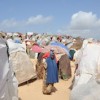
SOMALIA: Armed Militia Grab the Famine Business
Armed groups are withholding aid and preventing Somali famine refugees from leaving camps to ensure the continued supply of food by aid agencies that they are presently selling on the open market.U.S.: Tea Party, Fox News Viewers Outliers on Immigration, Islam
While 10 years after the 9/11 Al- Qaeda attacks, most U.S. citizens say they respect diversity and the freedom of religion, they don't always apply those principles to Islam and immigrants, according to a report released here Tuesday by two major think tanks.ARGENTINA: Purging the Legal System of Dictatorship Accomplices
As human rights cases from Argentina's 1976-1983 military dictatorship move ahead in the courts, cases of judges and prosecutors who were accomplices in the crimes are coming to light.COTE D’IVOIRE: Toxic Waste Victims Wait Years for Compensation
Thousands of victims affected by toxic waste dumping in 2006 in Abidjan, Côte d'Ivoire's commercial capital, still have not received the economic compensation they were promised.CANADA: Native Lands Ruling Opens Up New Questions
As Canada's aboriginal community celebrates last month's milestone legal ruling regarding clear-cutting in Ontario and the forestry sector mulls its future strategy, discussions are taking place about how to carry out an impact assessment evaluating damage incurred by decades of industry encroachment on traditional lands and forests.
BOLIVIA: Rainforest Road Will Have Environmental and Cultural Impacts
A richly biodiverse rainforest the size of 3,000 soccer fields in central Bolivia will be the first victim of the road planned to run through the Isiboro Sécure Indigenous Territory and National Park (TIPNIS), say environmental activists.
CUBA: Catholic Church Takes the Pulse of Religious Sentiment
The Catholic Church seems to be expecting a rise in religious sentiment among the Cuban population as a result of the climate of dialogue and more relaxed relations with the government seen since the 1998 visit of Pope John Paul II.MEDIA-PAKISTAN: Caught Between the Army and the Taliban
Journalists covering the United States-led ‘war-on-terror’ in Pakistan’s turbulent northwest are not sure who wants them out of the way more – the Taliban or the Pakistan army.
LIBYA: New Chapter Opens After Gaddafi
Libyan children will go back to school without Muammar Gaddafi’s ubiquitous presence, despite a lack of new books.HONDURAS: Dying for Land
The deployment of large numbers of troops in the Bajo Aguán region of Honduras is reviving the age-old conflict over land in an area torn between organised crime groups capable of undertaking armed actions, wealthy landowners and peasants demanding further land reform.CIA’s Push for Drone War Driven by Internal Needs
When David Petraeus walks into the Central Intelligence Agency Tuesday, he will be taking over an organisation whose mission has changed in recent years from gathering and analysing intelligence to waging military campaigns through drone strikes in Pakistan, as well as in Yemen and Somalia.« Previous Page — Next Page »


One world, one humanity, now one court to defend its rights. Another step towards universal human rights, but not remotely a step far enough. The United Nations adopted the Universal Declaration of Human Rights more than half a century ago, but that has done little to stop violations the world over, just as the Geneva Convention has not protected prisoners of war enough. Democracy itself and the freedom it presupposes has not been protective enough. This is the century to move from politicisation of human rights towards humanising political ways. IPS keeps an eye on that difficult path.

The Week with IPS

NEXT STOP - SDGs
Tracking global progress towards a sustainable world
