Languages
Sunday, October 25, 2026



News and Views from the Global South
South-South

Latin America and the Venezuelan Question Mark
A lot of water has passed under the bridge in Latin America since Hugo Chávez first took office as president of Venezuela in 1999, with left-wing and centre-left governments coming to power and the emergence of paths toward integration that exclude the United States.
South Africa-Brazil Trade Partnership Hits Potholes
As the five members of the BRICS group of emerging economies – Brazil, Russia, India, China and South Africa – tighten ranks and seek to expand their global influence, the inevitable trade spats have begun.
Villagers Wail Against Nuclear Power
Mahalakshmi, a housewife married to a farmer, is afraid for her family’s future. The fifty-two-year-old woman is also frustrated that Indian authorities have "betrayed" poor villagers.
Asia Leaps Forward in Regional Economic Integration
As the United Nations continues to intensify the promotion of South-South cooperation among member states, Asia plans to take a great leap forward in regional economic integration during the next decade.CAR Rebels Halt Advance on Capital
Rebels in Central African Republic have said they have halted their advance on the capital, Bangui, and would participate in dialogue, as head of regional African forces warned them against making further moves.Thai-EU FTA Raises Alarm for People With AIDS
Days before leaders of the European Union (EU) arrived in Norway to collect this year’s Nobel Peace prize, Thai public health activists sent a letter to the northern powerhouse, warning that the EU’s 2012 accolades face a credibility test in this Southeast Asian country.Bolivia Takes the Leap into the Big Pond of Mercosur*
To go down fighting in the Andean Community (CAN), with a combined market of 92 million consumers, or move up to the big leagues of Mercosur, with 275 million? This was the dilemma faced by Bolivia’s foreign trade strategists when it came to pursuing full membership in the bloc formed by its neighbours to the south.
Reviving Family Farming in Angola, Carrot by Carrot
"We never used to eat carrots, but now we like them," said Rebeca Soba, admiring her vegetable garden, an island of diversity in the midst of a vast sugarcane plantation. Vegetable gardening has been introduced at the Capanda Agroindustrial Pole (PAC) as a source of income for local small farmers.
International Aid Helps Cuba Adapt to Climate Change
"Adaptation to climate change is urgent and must be part of development," said Bárbara Pesce-Monteiro, the United Nations resident coordinator in Cuba, assessing the damage done by hurricane Sandy in the eastern region of the country.
Amazon Regional Alliance to Confront the Climate Emergency
“When someone in Peru sneezes, someone in Brazil catches a cold. When a barrel of oil is produced in Ecuador, a neighbouring country ends up buying it,” says prominent environmentalist Yolanda Kakabadse.
BRICS Seeks New Dialogue with Africa
South Africa plans to boost links between Africa and its partners in the Brazil, Russia, India and China alliance at a landmark summit, which will be held in this country in March, Xavier Carim, deputy director general at the Department of Trade and Industry, told IPS.
Q&A: Will the BRICS Bury IBSA?
China’s presence in the leading developing nations alliance of Brazil, Russia, India and China has given the bloc an advantage that another developing nations club, India, Brazil and South Africa, has hitherto been lacking, according to Peter Draper, one of South Africa’s leading experts on international relations and trade.
Latin America Hosts Artists-in-Residence
Artists-in-residence, once found only in the industrialised North, can now be found throughout Latin America, which is hosting artists from different parts of the world to produce and exhibit their work. There are also opportunities for visiting artists simply to seek inspiration.
BRICS Tracking Where the Money Flows
The five leading developing nations grouped in the BRICS alliance – Brazil, Russia, India, China and South Africa – are planning to intensify efforts to collect accurate trade data, so they can get a better picture of trade flows.
South-South Political Alliances Yet to Influence Business
Politicians in the leading developing nations have been active in boosting mutual ties, as one way of counterbalancing the influence of the developed world. But the economic success of the Brazil, Russia, India, China, and South Africa and the India, Brazil, and South Africa groupings will depend on the extent to which businesses take advantage of the new opportunities which are being created.
Brazil’s Economic Model Offers Ray of Hope
As governments struggle to find ways out of the persistent global financial crisis, Brazil’s development model offers an alternative path to recovery and growth, according to some economists and politicians.
Cambodian Activists Challenge ASEAN Policies
For a brief moment last month, mainstream international media turned the spotlight on Cambodia, one of the world’s 48 least developed countries (LDCs), as a high-level visit from U.S. President Barack Obama and the annual summit of the Association of Southeast Asian Nations (ASEAN) gave this country of 14.3 million people a glamorous edge.
First Muslim Human Rights Commission to Launch End December
Gathering for the first time here in Washington, representatives of the newly established human rights commission of the Organisation of Islamic Cooperation (OIC) stated Thursday that they plan to start their substantive work by the end of the month.
Chile Follows South Africa’s Lead in Climate Change Mitigation
Chile is turning to South-South cooperation to help define the most effective strategies and options for reducing its greenhouse gas (GHG) emissions in the face of global climate change.China’s Tops in South African Trade
South Africa has experienced a significant shift in trade with a new emphasis on links with developing nations, at the expense of traditional partners in the developed world, according to a leading South African economist.
Brazilian Firms Bring Water and Power to Angolans
The Kwanza river in the heart of Angola will be a symbol of Brazilian partnership in African development when power stations along the country's main source of water are fully operational.« Previous Page — Next Page »





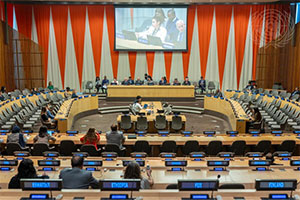 Panel Discussion on International Day for South-South Cooperation 2023. Credit: UN Photo/Cia Pak
South-South cooperation – collaboration between developing countries – is a growing and dynamic phenomenon, an important process that is vital in confronting shared challenges. Led by emerging giants, India, Brazil and South Africa (IBSA), the Global South is a tremendous source of tested solutions to development challenges, including the Millennium Development Goals (MDGs). China’s Belt and Road Initiative (BRI), launched in 2013, has further transformed South-South cooperation by enhancing infrastructure, trade, and investment linkages across Asia, Africa, and Latin America. Meanwhile, new platforms like the expansion of BRICS to include other countries such as Thailand, Nigeria, and Cuba are reshaping global economic governance and offering alternatives to traditional Western-led institutions. The Nairobi Outcome of the 2009 High-Level United Nations Conference on South-South Cooperation in Nairobi, Kenya highlights growing political and economic ties within the developing world, as countries from the Global South assume leading roles in decision-making on hot global issues ranging from economic recovery to food security, energy transitions, debt relief, and climate change. Today, the African Continental Free Trade Area and India’s “Voice of the Global South” summits have advanced frameworks for regional self-reliance, while G77 has reaffirmed commitments to resilient and inclusive economies ahead of the 16th UN Conference on Trade and Development.
Updated by Yilan Batista and Shuli Wong August 2026

The Week with IPS

NEXT STOP - SDGs
Tracking global progress towards a sustainable world
Tracking global progress towards a sustainable world
