Languages
Sunday, September 20, 2026



News and Views from the Global South
The Southern Africa Water Wire

ZAMBIA: Farmers Resort to Human Waste for Fertiliser
The economy's down, the price of fertiliser's up. And Zambian farmers are stealing sewage for their vegetable gardens.
Q&A: Regional Prescriptions for Water Management
The Orange-Senqu River has a one million square kilometre basin that covers Lesotho, South Africa, Botswana and Namibia. The water it provides is crucial to industry in South Africa, but is also relied on by farmers and domestic users.
MALAWI: Questions Over Water Stats
A set of new research data contests the Malawian government's claims that nearly all of the country’s urban citizens have access to clean water and sanitation.
SWAZILAND: Sunshine Brings the Gift of Water
It is break time. A handful of pupils of Sitsatsaweni Primary School are crowded around a 25-litre bucket to wash their hands before tucking into a meal of samp and beans.
WATER-SOUTHERN AFRICA: Managing An Unpredictable Environment
The water available in the Limpopo River basin, which stretches across Botswana, South Africa and Zimbabwe and Mozambique, is both in great demand and highly variable. Managing it effectively and to the satisfaction of all users is a challenge.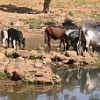
WATER-SOUTHERN AFRICA: Research Not Trickling Down To Farmers
Farmers could be losing tonnes of crops every harvest just because no one has bothered to tell them that scientists have found more effective methods of using water to farm.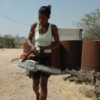
WATER-NAMIBIA: For What Does It Profit a Man…
"Our profit so far is 5,000 Namibian dollars, divided by twenty people," reports Anna Nauses. Silence descends on the office of the Prosopis Project in Okombahe as all do the math. Sixteen months of hard labour felling water-thirsty trees along the Omaruru River has yielded just 30 U.S. dollars per person.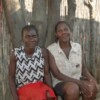
NAMIBIA: Garden Project Grants Modest Independence
Life in Omaruru? Put it this way: even the river that gives the town its name doesn’t always make it down. In this semi-desert part of Namibia, existence is a daily battle against poverty. A women’s gardening project is trying to change this.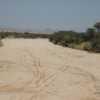
WATER-NAMIBIA: Running A Dry River
The Omaruru River basin is one of the first in Namibia to establish a basin management committee. Its members have a difficult balancing act to perform with a water resource that’s already being utilised to its maximum.
DEVELOPMENT: New Threats Aggravate Africa's Water Crisis
The widespread water scarcity in the African continent, impacting on the lives of nearly 300 million people, may be aggravated further by several new threats, including climate change, transboundary disputes and the negative fallout from military conflicts.
ZIMBABWE: No Water, Just a Bill
City council turns off the water. National minister in charge says turn it back on. Domestic and commercial users alike dispute their unpaid bills. The shadow of a cholera epidemic looms over it all. Must be Harare.
TANZANIA: Solutions to Dar's Water Problems in the Pipeline
In the nine months since she moved to the Dar es Salaam neighbourhood of Kinondoni, Anna Christopher has only seen water running from her taps once.WATER-TANZANIA: Who Pays the Piper?
When John Rubara* and his family moved into their new house in Dar es Salaam's Tabata Kimanga, a fast-growing middle-income neighbourhood in Temeke district, the water company disconnected their supply because the previous owner was in arrears.
ZIMBABWE: Water Rationing Looms in Bulawayo
Bulawayo city council is to tighten a water rationing programme relaxed last year because residents are rapidly pushing up the city's daily consumption by using municipal water supplies for non-domestic activities.
ZIMBABWE: Neglect Sanitation at Your Peril
A functioning public toilet has become a rare sight in Bulawayo. Across this southern Zimbabwean city of about two million residents, public toilets have all but stopped functioning, the buildings now more useful as platforms for graffiti and campaign posters than as public conveniences where people answer the call of nature.
SOUTH AFRICA: Rights to the River
Millions of litres of water are being unlawfully diverted into dams set up by South Africa's major industries, big mining companies and commercial farmers - with potentially devastating consequences for management of the resource.
LESOTHO-WATER: One Dollar Per Square Metre, Now Move
The construction of a two billion dollar dam in Metolong, some 35 kilometres outside of Lesotho’s capital Maseru, is being welcomed by people in and around the city who will gain access to clean and safe drinking water when construction is completed in 2013.
SOUTHERN AFRICA: Floods – Breaking the Cycle
The fourth largest river in Africa, the mighty Zambezi, is a lifeblood to 32 million people, from land-locked Zambia to Mozambique on the Indian Ocean. But its blessing is also its curse.
SWAZILAND: Add Water and Stir
What is the first step towards transforming life in a hardscrabble rural community? Address issues of water.
SOUTHERN AFRICA: Groundwater Still Underutilised
Despite the significant role groundwater could play in alleviating poverty, improving food security and contributing to overall development in Southern Africa, a lack of skills, finances and awareness of the resource means only a small percentage of the region's supplies are tapped into.
Q&A: Why Sanitation Is the Forgotten Sister
As part of the International Year of Sanitation in 2008, Zimbabwe developed a national strategy for sanitation, launched in February 2008. Just five months later, a cholera outbreak that was to claim over 4,000 lives began.« Previous Page — Next Page »


The Southern Africa Water Wire provides in-depth coverage of a diverse range of water-related issues in Africa, linking water to economic development, social well-being and environmental protection. Local journalists from across the continent explore the challenges, failures and successes of managing this vital resource.


Like the Southern Africa Water Wire to receive the latest water news and information from IPS and other top news agencies, as well as agencies in the field
Follow @africawaterwire

