Languages
Sunday, November 22, 2026



News and Views from the Global South
Women & Economy

Trekking Trails Lead Nepal Women to Empowerment
Dawa Gyalmo Sherpa’s three sons went to look for blue-collar jobs in Malaysia, Jordan and Saudi Arabia, saying Mulkharka, their tiny village in Kathmandu valley, had no livelihood prospects.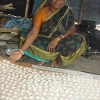
Bangladesh Offers Lessons in Microcredit Management
Phulo Rani Pal checks for loose dust around her open backyard kitchen. It’s time to prepare the sweets she supplies to vendors and it will not do for her products to be contaminated.CUBA: Women Face Challenges in Growing Self-Employment Sector
"Coffee! Get your plastic bags here! Cream cheese, the very best...!" The voices blend in with the cries of other vendors and the noise typical of Cuban markets. Elisa, 64, was one of the hawkers until she was fined for selling her products without a permit. "I paid dearly for it," she says.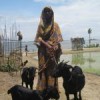
BANGLADESH: Women Raise Own Funds for Microfinance
Amidst despair and poverty, women in some remote villages of Bangladesh are raising money and lending it to each other through a unique microfinance programme launched by a local non-government organisation.
Women Keen to Ease Greenhouse Effect on Their Ability to Provide
A successful entrepreneurial programme in the north of Namibia that infuses farming practices with gender-responsive environmentalism may serve as a model for other countries on the African continent.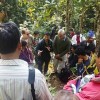
NEPAL: Women Grow Carbon Money on Trees
When Bina Tamang was told that she could earn money by not felling trees in the tiny forest that serves as the source of fuel and fodder for 65 families in her area, the 27-year-old was incredulous.MIDEAST: Dancing in a Palestinian Bubble
It’s Thursday night, the beginning of the weekend in the Muslim world, and time to party and let one’s hair down in Ramallah, the occupied West Bank’s isolated bubble and de facto capital.
ZAMBIA: “Every Year Flooding Makes This Place a Little Hell”
During the rainy season, and many weeks afterwards, home is never the best place to be for Miriam Banda. Until the end of 2008, she enjoyed living at her house in Kanyama, a high-density settlement bordering the central business district in Lusaka, Zambia's capital.
Gender Indicators for Global Climate Funds Still an Afterthought
Of the millions of dollars spent on climate change projects in developing countries, little has been allocated in a way that will benefit women. Yet, in Africa, it is women who will be most affected by climate change.Navigating Challenges, Brazil Steps Up AIDS Response
Long heralded as a model for the global response to HIV/AIDS, Brazil is intensifying its actions, at home and abroad, in the face of potential setbacks including an arising need for new treatment regimens, the resultant increase in drug prices and the debate over intellectual property rights.BOLIVIA: Women Fight Superstition, Machismo in Mining Cooperatives
Hundreds of women belonging to mining cooperatives in Bolivia are striving for the right to mine seams of tin and silver in the country's western highlands, where an age old superstition maintains that the presence of women "scares away" the minerals.
MALAWI: Tax on the Poor Is to Compensate for Tariff Revenue Loss
The decision by the Malawian government to introduce value-added tax (VAT) of up to 16.5 percent on products such as bread, meat, milk and dairy products is being blamed for losses incurred by small-scale businesses. The move comes in response to a loss of revenue due to regional trade commitments.
EGYPT: Solar Energy Projects Picking up Again After Uprising
On a blazingly hot summer’s day in Cairo, it’s 36 degrees Celsius in the shade. Air-conditioners and fans whirr across the city, burdening the national electricity grid. Last summer, the populous city experienced frequent water and power cuts, causing a furore. Consumption had grown by 2,600 megawatts, an increase of 13,5 percent from 2009.KENYA: Empowering Women through Micro-Finance Credit
Without a college education and against the backdrop of limited job opportunities, it was not easy for Salome Wairimu to find employment.
KENYA: Uneducated Women Struggle to Access Credit Fund
As an estimated 3.7 million dollars continues to sit idle in the Women Enterprise Fund (WEF) kitty, the very women the fund was meant to benefit have complained about the difficult requirements that need to be met in order to access the money.CUBA: Economic Reforms Hitting Women Hard
Women in Cuba are gaining ground in public life and earn the same wages as men. But the gender gap in the workplace is still a challenge for women, who are finding the odds more heavily stacked against them as the government of Raúl Castro adopts economic reforms aimed at "updating" the country's socialist system.Women’s Groups Unite Ahead of Busan Aid Forum
Twenty women from four continents consider the words discussion leader Anne Schoenstein, of the Association for Women’s Rights in Development (AWID), has written on a flip chart. She strikes out in blue ink a previous sentence. She begins writing a new one - a demand aimed at aid donors - dictated by Nurgul Djanaeva.
PAKISTAN: Lonely for Women Who Succeed
As you climb the ladder at the workplace, from the mid-management level to the senior leadership positions, you find fewer and fewer women. Little wonder then that Naz Khan - chief finance officer at Engro Fertilizers, a subsidiary of one of Pakistan’s largest conglomerates, Engro Corporation - says it gets lonely at the top.DEVELOPMENT: Microfinance Craze Conceals Multiple Problems
The microfinance industry is expanding at breakneck pace, with more banks and private equity firms now entering the fray. Yet there is growing unease about the naive assumptions, and evangelical predictions, of its advocates.G8: ‘Arab Spring Could Lead to African Drought’
Stressing that there is only so much money to go around, development experts worry that the aid package the Group of Eight (G8) has announced for North Africa may mean fewer funds for the rest of the continent.ZIMBABWE: Cross-Border Traders Don’t Trust Banks With Their Money
A newly available electronic banking service has received a lukewarm reception from cross-border traders in Zimbabwe’s second largest city Bulawayo, despite it alleviating the need to move around with large sums of cash.« Previous Page — Next Page »


Around the world, women make great contributions to different economies. From the field of business, to carrying the bulk of unpaid care, women are essential to economic growth. However, due to gender inequality, women face economic discrimination. Taking many forms, including disproportionate wages, greater exposure to vulnerable employment, and reduced economic opportunity, this inequality continues to curtail economic development. Yet women continue to work past these obstacles and reduce this disparity, furthering economic empowerment. These stories help to identify women’s economic struggles, and those that are working towards empowerment.

The Week with IPS

NEXT STOP - SDGs
Tracking global progress towards a sustainable world
Tracking global progress towards a sustainable world
