Languages
Monday, June 29, 2026



News and Views from the Global South
Women's Health
CARIBBEAN: Progress Stalls on HIV/AIDS
Despite the gains associated with antiretroviral treatments (ART) over the last decade, HIV/AIDS remains the leading cause of death among young and middle-aged adults in the Caribbean, warns a new U.N. report.
Haitian Mothers Find Care in Dominican Republic, but Future Is Bleak
In the spacious lobby of the Nuestra Señora de Altagracia maternity hospital, more than a hundred people wait quietly in chairs, overlooked by a 20-foot-high coloured mosaic inset portraying the patron saint of the Dominican Republic.ZIMBABWE: Failing to Address Schoolgirl Pregnancies
Concern over reports of growing numbers of pupils dropping out of school due to pregnancy has rekindled debate over the link between intergenerational sex and HIV infection among Zimbabwe's youth.CHILE: Women Sterilised Over HIV Status
When Francisca arrived at the historic Curicó Hospital – a staple in the Chilean central valley for nearly one and a half centuries – for the birth of her first child, she didn't know it would be her only one.
ZIMBABWE: Debt Crowds Out Essential Spending on Health
Zimbabwe’s debt burden of about 8.3 billion dollars, owed to internal and external institutions, is crowding out essential national budget items such as health and basic services, with detrimental effects for particularly women.
SIERRA LEONE: Unfulfilled Promise of Free Maternal Health Care for Mothers
Marie Musa, 37, is devastated. After the mother of four gave premature birth, her baby boy died a few hours later – because the hospital did not have enough incubators to rescue the infant.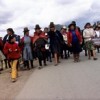
PERU: Women Sterilised Against Their Will Seek Justice, Again
Poor, rural, Quechua-speaking women in the Peruvian province of Anta who were victims of a forced sterilisation programme between 1996 and 2000 have filed a new lawsuit in their continuing struggle for justice.HEALTH-HONDURAS: Solidarity in Breast Cancer Survival
All too aware of the Honduran public health system's shortcomings and the great vulnerability of the country's poorest people, women who have beaten breast cancer are stepping up to share their experiences and knowledge in an effort to save more lives.Malnourished Children Swell Ranks of World’s Hungry
With the number of hungry people growing to more than a billion last year, the world is "nowhere near" reaching the objectives outlined in the Millennium Development Goals (MDGs), according to the latest Global Hunger Index (GHI) released Monday.Retraining Rwanda’s Traditional Birth Attendants
Two years spent training traditional birth attendants in remote rural areas has allowed Rwanda to reduce the country's maternal mortality rate, says the country's health department.
ECONOMY: Growing Obesity in Africa Bad for Worker Productivity
Obesity is no longer a problem confined to wealthy nations. In their developing counterparts in Africa, an increasing number of people can be categorised as obese. According to researchers this trend could be detrimental to countries’ already fragile economies.MALAWI: Village Chief Leads Fight For Maternal Health
In Ntcheu, a rural district in central Malawi, villagers have taken the fight against the country's high maternal mortality rate into their own hands. They have almost eradicated maternal deaths in the area by urging pregnant women to give birth in hospitals, under medical supervision.
$40 Billion for Women and Children, Millions of Lives at Stake
As a three-day anti-poverty talkfest drew to a close Wednesday, the United Nations shifted its focus from the poor and the hungry to two of the most vulnerable and disadvantaged groups in society: women and children.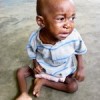
LIBERIA: Chronic Malnutrition Blamed on Mothers
Mercy Freeman sits on a small hospital cot in one of Liberia’s emergency hospitals, looking down at her frail son, whose dark eye sockets have sunk into his bony face.
PAKISTAN: When the Doors Are Open, But Women Choose to Stay Away
For five years, Sana Yasir toiled through medical school and then was awarded at the end with a diploma and a bright future. After completing the required year-long clinical practice, however, Yasir got married and quit the workplace.
WHO – Maternal Deaths Fall
The number of women dying from pregnancy related causes around the world is falling. Sub-Saharan Africa remains one of the most dangerous place for pregnant women, despite recording a 26 percent reduction in maternal mortality rates.SOUTH AFRICA: CSOs Urge Binding Commitment on Socio-Economic Rights
A grouping of six civil society organisations (CSOs) has called on the South African government to ratify the International Covenant on Economic, Social and Cultural Rights (ICESCR).Women, Children Top U.N.’s Anti-Poverty Agenda
All eight of the U.N.'s Millennium Development Goals (MDGs) are critical to development, but numbers four and five on child and maternal health are the real priority areas for this year. That was the main takeaway from a series of briefings with U.N., NGO and country officials in which IPS participated this week.
ANGOLA: More Mothers Survive Childbirth
As darkness falls on a cool evening in Luanda, a group of women sit huddled under threadbare blankets outside one of the city’s few maternity hospitals. "I have to be here," Paula Silva, 45, said, shivering slightly.COTE D’IVOIRE: More Births Attended By Skilled Attendants
As she leaves the community health centre in Abobo-Baule with her newborn baby, Abiba Tahoué is doubly satisfied.
FILM-CUBA: “I Fought for This, But Not Just to Be a Housewife”
Mavi Susel, the first transsexual in Cuba to undergo sex reassignment surgery, back in 1988, has found herself trapped in the traditionally assigned gender role of a housewife.« Previous Page — Next Page »


Worldwide, women’s health is a serious issue. The result of a wide diversity of factors, most notably insufficient access to education, women’s health issues must be addressed. Without access to proper schooling, many girls grow up without the necessary understanding of reproductive health. Due to this, reproductive issues and sexually transmitted infections plague women in developing countries. Women struggle to battle infections such as HIV. The lack of relevant services, coupled with the lack of women’s rights pertaining to their own health, are some of the serious issues that these stories seek to explain.

The Week with IPS

NEXT STOP - SDGs
Tracking global progress towards a sustainable world
Tracking global progress towards a sustainable world
