Languages
Wednesday, October 21, 2026



News and Views from the Global South
Projects

Sustainable Energy Key to COVID-19 Recovery in Asia and the Pacific
The past year is one that few of us will forget. While the impacts of the COVID-19 pandemic have played out unevenly across Asia and the Pacific, the region has been spared many of the worst effects seen in other parts of the world. The pandemic has reminded us that a reliable and uninterrupted energy supply is critical to managing this crisis.
In Argentina’s Chaco Region, the Forest Is Also a Source of Electricity
The forest is the main resource in the Chaco, a vast plain shared by Argentina, Bolivia and Paraguay. And how to use it sustainably is the most difficult question. Two recently inaugurated power plants fired by forest biomass provide a possible answer, although they are not free of controversy.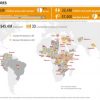
Education Cannot Wait: COVID-19 Emergency Response Fact Sheet
Education Cannot Wait’s (ECW) COVID-19 emergency response has reached over 9 million children and youth (47% girls) to date. ECW’s COVID-19 emergency grants span across 33 crisis-affected countries/emergency contexts.
Pacific Islanders Turn to Local Economies to Drive Post-pandemic Recovery
While Pacific Island countries have, so far, been spared a catastrophic spread of COVID-19, their economies have been devastated by the effects of border closures, internal lockdowns and the demise of international tourism and trade. With the global pandemic far from over, Pacific Islanders are looking to their local and regional economies to drive resilience and recovery.
Successful Crop Innovation Is Mitigating Climate Crisis Impact in Africa
17 February - African smallholder farmers have no choice but to adapt to climate change: 2020 was the second hottest year on record, while prolonged droughts and explosive floods are directly threatening the livelihoods of millions. By the 2030s, lack of rainfall and rising temperatures could render 40 percent of Africa’s maize-growing area unsuitable for climate-vulnerable varieties grown by farmers, while maize remains the preferred and affordable staple food for millions of Africans who survive on less than a few dollars of income a day.
India Glacier Disaster: In a Warming World is there no Less Lethal Way to Power Development?
On Sunday morning, Feb. 7, as most of the working-class in India’s Himalayan State of Uttarakhand went about their chores, the glacier-fed Rishi Ganga river started rising. Two hours later, swollen with rock debris and snowmelt, its waters rose 53 feet — the height equivalent of a five-storey building.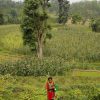
Climate Change & Policy Making in Nepal
Raju Pandit Chhetri is one of the most acclaimed climate change policy experts in Nepal and South Asia. As Director of the Prakiriti Resource Centre, an action focused think tank based in Kathmandu, Pandit Cheetri shares his opinion on the latest climate focused policies being undertaken by the Government of Nepal, especially the 2nd Nationally Determined Contribution NDC that was recently submitted by the Government.
Peace in Yemen, But not Without Women’s Role in Peacebuilding
The armed conflict in Yemen which has lasted six years, has killed and injured over thousands of civilians, displaced more than one million people and given rise to cholera outbreaks, medicine shortages and threats of famine. By the end of 2019, it is estimated that over 233,000 Yemenies have been killed as a result of fighting and the humanitarian crisis. With nearly two-thirds of its population requiring food assistance, Yemen is also experiencing the world's worst food security crisis. The United Nations has called the humanitarian crisis in Yemen “the worst in the world”.
Valérie Allain – Women in Science (2021)
 "Working in Science, like any other career, is fit for women too… Just go for it, nobody can stop you", Valérie Allain, Senior Fisheries Scientist at the Pacific Community (SPC).

We Must Make It Happen – Together!
“As we enter 2021, education must be at the core of pandemic response and recovery efforts,” says António Gutteres, Secretary-General of the United Nations, in his interview with Education Cannot Wait (ECW) for this monthly issue, reminding us that “upholding our pledge to leave no one behind starts with education.”
US-Russia Arms Control: Is Biden off to a Good Start?
President Joseph Biden of the United states and President Vladimir Putin of Russia vide a telephone talk have agreed to extend the New Start treaty beyond the expiry date of 5th February of the New Strategic Arms Reduction Treaty or New-START by another five years. By ageing to do so, President Biden was reversing the decision of his predecessor, President Donald Trump. It is actually the only remaining agreement that curtails US and Russian nuclear forces.
Education Cannot Wait Interviews United Nations Secretary-General António Guterres
Education Cannot Wait’s interview with the Secretary-General of the United Nations, António Guterres, focused on the crucial role of education in the lives of crisis-affected children and youth, follows below. ECW: Why is education a priority in emergencies and protracted crises? António Guterres: The COVID-19 pandemic has upended societies and created the largest-ever disruption of education systems, affecting more than 1.5 billion students. While remote solutions were rolled out, 1 in 3 children missed out on such opportunities, exposing and exacerbating inequalities and vulnerabilities, especially for those in crisis situations. In such circumstances, education protects girls and boys from sexual violence and exploitation, trafficking, early pregnancy and child marriage, forced recruitment into armed groups and child labour. It also ensures that they continue learning, offering them hope for the future. As we enter 2021, education must be at the core of pandemic response and recovery efforts. Without resolute political commitment by global leaders, as well as additional resources for Education Cannot Wait, and its UN and civil society partners, millions of girls and boys may never return to school. Investing in the education of these vulnerable children and youth is an investment in peace, prosperity and resilience for generations to come – and a priority for the United Nations.[related_articles]
El Aromo Solar Project Sets Precedent for Renewable Energy in Ecuador
In December 2020, the “El Aromo” solar energy project was approved in coastal Manabí province, Ecuador. Operated by the Spanish company Solarpack, the project is expected to transform national solar output. El Aromo will occupy 2.9km2 of land that was previously cleared to build a multi-billion dollar oil refinery, plans that have since been abandoned. While El Aromo holds symbolic significance, it remains uncertain whether the project will mark a significant step toward more environmentally sustainable energy development in Ecuador.
Making Seawater Potable in Mexico Has High Costs and Environmental Impacts
Mexico is seeking to mitigate water shortages in part of its extensive territory by resorting to seawater, through the expansion of desalination plants. But this solution has exorbitant costs and significant environmental impacts.
Cuban Farm Explores Sustainability by Hand
Most beginnings are rocky and sometimes the obstacles seem insurmountable, before they are finally overcome. This was certainly the case for the Finca Marta, a farm in Cuba that had to begin by digging a well in search of water and with the hard-scrabble work of clearing an arid, stony and overgrown plot of land.
Launch of the Geneva Global Hub for Education in Emergencies – a Catalyst for Change
Education Cannot Wait (ECW), the Global Education Cluster (GEC), the Graduate Institute of International and Development Studies, the International Committee of the Red Cross (ICRC), the Inter-agency Network for Education in Emergencies (INEE), Switzerland, UNICEF, the University of Geneva, UNESCO and UNHCR are delighted to announce the launch of the Geneva Global Hub for Education in Emergencies.
Inclusive and Equitable Education in the Pacific
In 2019, the United Nations General Assembly proclaimed 24 January as International Day of Education, in celebration of the role of education for peace and development. The United Nations’ Sustainable Development Goal 4 challenges all nations to “ensure inclusive and equitable quality education and promote lifelong learning opportunities for all” by the year 2030. As we think about this in the context of the COVID-19 pandemic, and the emerging post-COVID-19 environment, what does inclusive and equitable education look like and how do we ensure that lifelong learning opportunities are benefitted by all?
“Their Hope for a Brighter Future Inspires Us All”
Looking back upon 2020, we all bear the scars of a devastating year; none so much as girls and boys around the world. The COVID-19 pandemic disrupted education for over 1.6 billion children and youth globally and continues to do so. It has also deepened socio-economic inequities and heightened insecurities around the world, further impacting the lives of girls and boys everywhere. Ongoing, protracted conflicts, forced displacement and the worsening climate crisis were no less forgiving.
Fiji’s Presidency of the Human Rights Council Brings Opportunity and Responsibility to the Pacific
On Friday, 15 January, Ambassador Nazhat Shameem Khan, Fiji’s Permanent Representative to the United Nations in Geneva, was elected the President of the United Nations Human Rights Council for 2021. As the first Pacific islander to hold this position, the President has a unique opportunity to enhance the protection and promotion of human rights in Fiji and the Pacific, and to amplify Pacific voices on human rights issues at the global level. The presidency reflects the Pacific’s growing presence on the international human rights stage and comes at a time of increasing marginalisation, social exclusion and poverty arising out of COVID-19; opening the door for the President (and Fiji) to promote a human rights-based and people-centred approach to ‘building back better’.
Q&A: Why we Must Invest in Educating Children in Crisis-Hit Burkina Faso
Education Cannot Wait (ECW) - the first global fund dedicated to education in emergencies and protracted crises – was on the ground in Burkina Faso last week with its Director, Yasmine Sherif, to launch a new multi-year programme that aims to provide an education to over 800,000 children and adolescents in crisis-affected areas.
Biden’s Arms Control Ambitions are Welcome—but Delivering Them will not be Easy
A deadly pandemic to control. An urgent nationwide vaccination programme to roll out. An economic crisis to navigate. Political divisions and distrust deep enough to spark mob violence and terrorism.« Previous Page — Next Page »





The Week with IPS

NEXT STOP - SDGs
Tracking global progress towards a sustainable world
Tracking global progress towards a sustainable world
