Languages
Friday, October 2, 2026



News and Views from the Global South
Projects

Resistance to Antibiotics: The Good, the Bad and the Ugly
The growing resistance to antibiotics and other antimicrobials due to their overuse and misuse both in humans and animals has become an alarming global threat to public health, food safety and security, causing the deaths of 700,000 people each year. This is a fact.
Rohingya Exodus Is a “Major Global Humanitarian Emergency”
In less than four months, over 600,000 Rohingya refugees have fled brutal persecution in Myanmar to seek safety across the border in Bangladesh. They are now crowded into camps across a stretch of 30 kms in Cox's Bazar, a southeastern coastal region of the small South Asian nation.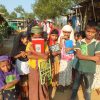
Rohingya Refugees Face Fresh Ordeal in Crowded Camps
Mariam Akhtar, 23, is desperately searching for her young daughter two weeks after arriving from Myanmar in Cox’s Bazar, a southeastern coastal district in Bangladesh.
First Use of Nuclear Weapons Would be Counterproductive
Over the past year, cavalier and reckless statements from President Donald Trump about nuclear weapons and his threat to unleash “fire and fury” against North Korea have heightened fears about Cold War-era policies and procedures that put the authority to launch nuclear weapons in his hands alone.
“Every Day Is a Nightmare”
Parul Akhtar,* a Rohingya woman in her mid-twenties, may never wish to remember the homeland she and her children left about three weeks ago.
Migrant Promoters and Musicians Spread Message of “One Africa”
The crowd in the park gave out roars of approval as the next act was announced: Mothusi Bashimane Ndlovu, one of Zimbabwe’s most popular singers and actors, who took to the stage with a small axe in hand.
Foreign Investment Expands in Cuba…Despite Everything
“Maybe many of us thought that this project was a dream six years ago, but not anymore. The geography has completely changed, because of everything that has been built and the investments that have been approved," said Nathaly Suárez, director of Construction Management at the Mariel Special Development Zone (ZEDM).
Combating Climate Change? Combat Land Degradation, Says UNCCD Chief
Land restoration is not a “glamorous subject even when you give all the numbers,” admits Monique Barbut, the Executive Secretary of United Nations Convention to Combat Desertification UNCCD). But she also stresses that by 2050, the world population will reach 10 billion. To feed that extra 2.4 billion, current food production would need to be increased by 75 percent.
White Elephants and the Urban Challenges of Brasilia
Two white elephants - a huge football stadium that draws almost no fans and an empty 16-building complex that was to be the new headquarters of the district government – reflect Brasília’s challenges as a metropolis, beyond its role as the capital of Brazil.
Coal Pollution Continues to Spread in Latin America
Despite growing global pressure to reduce the use of coal to generate electricity, several countries in Latin America and the Caribbean still have projects underway for expanding this polluting energy source.
The Mekong, Dammed to Die
In Laos, the lush forests are alive with the whines of drills that pierce the air. On the Mekong, a giant concrete wall rises slowly above the trees. The Don Sahong dam is a strong symbol, not only for a power-hungry Asia but also for what critics fear is a disaster in the making.
The Harsh Plight of 152 Million Child Labourers
While trillions of dollars are being spent on exploring remote galaxies, Planet Earth is still home to harsh realities that could be easily –and much less expensively—resolved. One of them is that worldwide 152 million children are currently victims of child labour.
Conservation Agriculture: Zambia’s Double-edged Sword against Climate Change and Hunger
As governments gather in Bonn, Germany for the next two weeks to hammer out a blueprint for implementation of the global climate change treaty signed in Paris in 2015, a major focus will be on emissions reductions to keep the global average temperature increase to well below 2°C by 2020.
Protein Plants Bolster Animal Feed in Cuba
Based on protein plants, pasture and fodder, Orlando Corrales produces cow and goat milk on a farm located next to a major road in the Cuban capital. "We do not use any industrial feed here," he says proudly.
Climate Change Summit a Step Further, Yes… But Where To?
The UN Climate Change Summit in Bonn is a step further, most experts say. Fine, but towards what?
Semaine mondiale de la croissance verte (GGGW)
 Plus de 600 représentants du gouvernement, de cellule de réflexion, du secteur privé et d'autres délégués de 40 pays ont participé à la Semaine mondiale de la croissance verte (GGGW) du 17 au 20 octobre 2017, organisée par la République fédérale démocratique d'Éthiopie et l'Institut mondial sur la croissance verte.
Locals Learn to Live in Harmony with Drought in Brazil’s Semi-arid Region
Irrigated green fields of vineyards and monoculture crops coexist in Brazil’s semiarid Northeast with dry plains dotted with flowering cacti and native crops traditionally planted by the locals. Two models of development in struggle, with very different fruits.
Sustainable Water Management as a Lever for Green Growth in Ethiopia and the Region
Sustainable water supply is imperative for economic growth, but so often gets side-lined in the rush for development. The unanticipated consequence is a global economy that is increasingly stunted by water resource challenges, with worldwide predictions suggesting that global water demand will increase by approximately 75% more than global water supply in the next 30 years!
Impending Drought? There’s an App for That – Or Should Be
Fostering and harnessing innovative technologies could significantly reduce the negative impacts from climate change, including drought, water scarcity and food insecurity in African countries.
Dr. Frank Rijsberman, GGGI Director General, speaks about the successes, lessons and opportunities that emerged from GGGWeek2017
The Global Green Growth Institute, in partnership with the Federal Democratic Republic of Ethiopia, held Global Green Growth Week 2017 from 17-20 October 2017, in Addis Ababa, Ethiopia. Attended by GGGI members, stakeholders from the public and private sectors, international organizations, and civil society, the GGGWeek2017 sought to strengthen and catalyze green growth in Africa under the theme “Unlocking Africa’s Green Growth Potential”. 
Cathy Oxby from Africa GreenCo: public-private partnerships could extend cheaper energy to consumers
Over 600 government, think tank, private sector and other delegates from 40 countries attended the Global Green Growth Week (GGGW) 2017, 17 – 20 hosted by the Federal Democratic Republic of Ethiopia and the Global Green Growth Institute (GGGI). Among key discussions was Africa’s Green Energy Challenges and Off-Grid Solutions. According to Cathy Oxby from Africa GreenCo, public-private partnerships could extend cheaper energy to consumers and help close the gap in cost currently covered by subsidies.
« Previous Page — Next Page »


The Week with IPS

NEXT STOP - SDGs
Tracking global progress towards a sustainable world
Tracking global progress towards a sustainable world
