Languages
Thursday, October 22, 2026



News and Views from the Global South
Reframing Rio

Forest Communities Draw a REDD Line
As the ink dries on a 3.6 million dollar agreement between Uganda and the World Bank to support the country's preparations for REDD, some analysts are pessimistic over the mechanism's potential.
Seeds of Conflict Sprout in the Balkans
This year, summer in the Balkans has been nice and warm, leaving behind a land of plenty, and enough food on the table. Except that people are talking about tomatoes “that don’t taste as they used to,” watermelons that are too watery, cabbages that are hard to slice through and onions that do not sting your eyes.
U.S. Debates Climate Impact of Development Investments
A debate is heating up here over the extent to which U.S. government-facilitated private-sector development investments should be required to take into account how those ventures impact on climate change.Broad Coalition Pledges to Cut “Super Greenhouse Gases”
An international coalition has agreed to begin working towards domestic regulation aimed at reducing the use of HFCs, compounds commonly used as refrigerants but referred to as “super greenhouse gases” for their particularly negative impact on global warming.
Five Caribbean States Join Pilot for Energy Efficiency
Every year, the Caribbean's electric sector burns through approximately 30 million barrels of fuel. Overall, the region imports in excess of 170 million barrels of petroleum products annually.
Critics Push to Stall New Obama “Social Cost of Carbon” Calculations
The U.S. Department of Energy has announced it is accepting a petition from a conservative advocacy group critical of a recent substantial increase to official calculations of the so-called “social cost of carbon”.
A Stark Choice: Extreme Heat or Dirty Fuels
Two reports released Wednesday reveal the dangerous gap between science and politics. New climate research shows that extreme events such as the severe heat wave in the U.S. last year will double in 2020, increase 400 percent by 2040, and then get far worse without significant carbon reductions.
Slum Farmers Rise Above the Sewers
Tucked deep in Kenya’s sprawling Kibera slum is the shanty that Alice Atieno calls home. It is just one among many small, badly-lit shacks built close together in this crowded slum where an estimated one million people live on about 400 hectares.
Soldiers Trade in Illegal Ivory
At a popular tourist art market in Goma, in eastern Democratic Republic of Congo, paintings and art sculptures made from bronze, copper, malachite, stone or wood attract visitors. It seems like an ordinary tourist market. But only the regulars know that this is also a black market for ivory products.
Smallholders Feed a Nation as Land Reform Fails
Moses Chiengerere is one of the Zimbabwe’s hundreds of thousands of smallholder maize farmers keeping this southern African nation’s granaries stocked with the grain.
Insuring Ghana’s Smallholder Farmers Against the Weather
Smallholder farmer Suleman Mustapha Simbia, 40, is pleased with the introduction of an insurance initiative called the Ghana Agriculture Insurance Programme. The programme is being implemented in this West African nation to help farmers who had been suffering from loss of income as a result of the bad weather conditions that affect their yields.
Promises to Gas Victims Only ‘Hot Air’
Ismaela Muhamadu was six years old when he lost his parents and siblings in a poisonous gas explosion at northern Cameroon’s Lake Nyos. The blast killed more than 1,800 people, and 3,000 cattle and wildlife over a 25-km radius.
In Kenya, Small Is Vulnerable
With the country's food security and farmers' livelihoods at risk from climate change, Kenya has divergent policy options. One is reliant on deploying new technologies as well as improving and expanding use of fertilisers and pesticides; while the other would turn to indigenous knowledge and the country's natural biodiversity.
Oiling the Palms of Cameroon’s Farmers
In Maleke village, western Cameroon, an oil palm tree is considered to be “black gold”. At least, that is what Joseph Tesse, the local processor of oil palm, tells IPS.
Q&A: Generating Global Governance to End Hunger
Sub-Saharan Africa may be home to six of the world's 10-fastest growing economies, but it also has a majority of the countries that are suffering from a food crisis.
Bright Ideas Will Help Feed Africa’s Poor
Across Africa, smallholder farmers, who are some of the world’s most impoverished people, are slowly being introduced to innovative approaches, such as entrepreneurial loan schemes and conservation practices, to combat food insecurity.
Ugandan Teen Turns to Poultry to Fight Poverty
When Eunice Namugerwa, an 18-year-old living in Kampala’s Kisenyi slum, decided to start a business to support her family last August, she scrawled three ideas down on a bit of scrap paper: a piggery, a fashion boutique and a chicken farm.
Diamond Mining Could Push Angola’s Antelope to Extinction
Environmental campaigners are urging the Angolan government to halt plans to mine diamonds inside a national reserve that is home to the world’s last wild population of a rare antelope, the Giant Sable.
Stealing Gas from the Poor to Power the Rich
In Kilwa District in southern Tanzania local community leader and fisherman Salim Riziki stands next to a set of turbines, newly imported from Dubai, talking about the gas finds on Songo Songo, an island 15 km off the mainland.
“Carbon Farming” Makes Waves at Stalled Bonn Talks
U.N. climate talks have largely stalled with the suspension of one of three negotiating tracks at a key mid-year session in Bonn, Germany.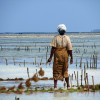
Zanzibar’s Encroaching Ocean Means Less Water
Khadija Komboani’s nearest well is filled with salt water thanks to the rising sea around Tanzania’s Indian Ocean island of Zanzibar.« Previous Page — Next Page »





The Rio Plus 20 United Nations conference on sustainable development in June 2012 raised hopes over ushering in an new development paradigm through scaled-up international commitment to equitable, climate-conscious growth. Its outcome was less sweeping, leaving the development, NGO and private sector to search for alternatives to address current and impeding crises caused by resource depletion, pollution and climate change, exacerbating endemic global inequality. This special section of our site covers the full spectrum of the Earth Summit, from the lead up to the height of the conference, while continuing to track post-Rio implementation and emerging initiatives for sustainable development.

Donors & Partners


International Institute for Environment and Development

This content has been produced with the financial assistance of the European Union. The content is the sole responsibility of IPS, and can under no circumstances be regarded as reflecting the position of the European Union.

Connect for Climate

Alliance of Communicators for Sustainable Development

This website is funded through the support of the International Fund for Agricultural Development (IFAD).
