Languages
Friday, November 13, 2026



News and Views from the Global South
Africa
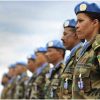
Women in Ethiopia Still Struggle Despite Leadership in Government
Following 2018 elections in Ethiopia, a record-breaking number of women now hold leadership positions in the country's government. But women still struggle to rise up the ranks in other sectors.
‘You Cannot Muzzle the Media’: Nigerian Journalists on Press Freedom under Buhari
When Nigeria's incumbent president Muhammadu Buhari won re-election this year, he campaigned (as he did in 2015) on an image of good governance and anti-corruption. Billboards in the capital, Abuja, bore the smiling faces of the president--who first led Nigeria as military ruler from 1983-1985--and his vice-president Yemi Osinbajo, and called for voters to let them "continue" their work and take the country to the "Next Level."
From Empowerment During War, Eritrean Women Must Fight Gender Discrimination in a New Peace
As the first anniversary of the swearing on Ethiopia’s Prime Minster Abiy Ahmed rolled around last week, Ethiopians – and observers worldwide – marvelled at the pace and scale of radical reform he has brought to the formerly repressed country in the past year.
Civil Society, Press Freedom & Human Rights Under Attack in Africa
The civic space in several African countries, including Tanzania, Burundi, Zambia, Sudan, Mozambique, Somalia and Eritrea, is gradually shrinking – and mostly under authoritarian leaders and repressive regimes.
‘The First City Completely Devastated by Climate Change’ Tries to Rebuild after Cyclone Idai
The city of Dondo, about 30 kilometres from Beira, central Mozambique, didn’t escape the strong winds of Cyclone Idai. It is estimated that more than 17,000 families were displaced and more than a dozen schools were destroyed in the city.
Devolution CS Eugene Wamalwa Commends UN Kenya support to national development priorities
Devolution and ASALs Cabinet Secretary Hon. Eugene Wamalwa has said that the reforms being carried out by the United Nations are enabling the global agency to align its activities better and coordinate more effectively in delivering on national development priorities.
Cyclone Idai: A Time to Reassess Disaster Management
It was one of the worst tropical cyclones hit Southern Africa in recent times. Cyclone Idai, which has been characterised by heavy rains and flooding including mudslides in some parts of Mozambique, Zimbabwe, and Malawi, has left more than 750 dead, with thousands marooned in remote rural areas, whilst others are still unaccounted for. More than 1,5 million people are affected by the cyclone in the region.
NHIF Reform Critical to Affordable Health For All in Kenya
Consider this. One million Kenyans fall into poverty every year due to catastrophic out of pocket health expenditures. For the almost four in every five Kenyans who lack access to medical insurance, the fear that they are just an accident or serious illness away from destitution.
Defining the End State Ecosystem: How Can We Get Better at it?
Restrictions on the movement of people impedes Africa's development, limiting economic integration and trade between African countries. Using a systems-thinking approach, champions and decision-makers have led the charge towards a visa free Africa.
World’s Best Teacher Prize and One Million Dollars Awarded to Kenyan Teacher from Impoverished Community
A maths and physical science teacher from an impoverished school in Kenya’s Rift Valley, Peter Tabichi, has won the one million dollar Global Teacher Prize, becoming the first teacher from Africa to clinch the prize established to honour the profession.
Call for Returnee Migrants to Join Forces to Fight Irregular Migration
Elhadj Mohamed Diallo wants to make sure that others won’t experience what he has lived through. The former irregular migrant who has returned home to Guinea from a jail in North Africa is calling on his fellow returnee migrants to establish associations in their respective countries, which will serve as powerful platforms to combat irregular migration across the continent.
How One Kenyan Teacher is Lifting His Students Out of Poverty With Science
Keriko Mixed Day Secondary School in Nakuru County, situated in a remote, semi-arid part of Kenya’s Rift Valley, could pass for an ordinary secondary school in any part of Africa. But ordinary it is not.
Guinea’s Returnee Migrants Harness the Strength of Unity
Elhadj Mohamed Diallo was a prisoner in Libya between October and November 2017, but he was not helpless. Far from his home in Guinea he understood the power of an organised union.
Becoming Drought Resilient: Why African Farmers Must Consider Drought Tolerant Crops
The latest UN Food and Agriculture Organization’s annual Africa Regional Overview of Food Security and Nutrition Report highlighted drought as one of the key factors contributing to the continuing rise in the number of hungry people in sub-Saharan Africa. And in South Africa, the Government’s Crop Estimates Committee announced that the country would harvest 20 percent less maize in 2019 because of drought conditions.
Using Climate-Smart Solutions to Promote Peace in South Sudan
Almost a month to go ahead of the traditional rainy season in Gbudue State, 430 kilometres west of South Sudan’s capital, Juba, smallholder farmers are already tilling their land as they prepare to plant purer, drought-tolerant seeds.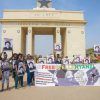
Free Stella Nyanzi, Demand Pan African Activists in Ghana
On Saturday 9th March, a small group of activists from Ghana, concerned by the continued incarceration of Ugandan feminist activist Dr Stella Nyanzi, rallied by the symbolic national independence Square to raise awareness on the dangers of remaining quiet to injustice.
Innovative Sustainable Business: A Three Trillion-Dollar Opportunity that UN Environment Wants People to Develop
In the East African region, communities around the continent’s largest water body, Lake Victoria, regard the water hyacinth as a great menace that clogs the lake and hampers their fishing activities. But in Lagos, Nigeria, some groups of women have learned how to convert the invasive weed into a resource, providing them with the raw material needed to make handicrafts.
UN Pays Homage to Staffers Who Died in Plane Crash
The United Nations headquarters is in mourning – and the UN flag is at half mast. The deaths of 21 UN staffers March 10, on board an Ethiopian Airlines flight in Addis Ababa, is one of the biggest tragedies in the extended UN family—with a flashback to the deaths of 22 people, mostly UN staffers, who lost their lives in the Canal Hotel bombing in the Iraqi capital of Baghdad in August 2003.
Nigeria Mourns the Loss of Leading African Academic Who Was in Ethiopian Airlines Crash
Nigeria is mourning along with the rest of the world after the downing of Ethiopian Airlines Flight, which claimed all of the 157 lives onboard. The fatalities included people from 35 countries, 19 United Nations officials and two Nigerians, one of whom was regarded as Africa's leading academic and labelled a genius by many.
Urgent Call for African Food Sovereignty Movements to Connect with Radical Feminist Movements on the Continent
Africa is facing dire times. Climate change is having major impacts on the region and on agriculture in particular, with smallholder farmers, and especially women, facing drought, general lack of water, shifting seasons, and floods in some areas.
International Women’s Day in Cameroon: A Day for All Women?
On March 8, women all over Cameroon will don custom-made dresses sewn of pagne, specially printed for International Women’s Day. They will parade through cities and towns, joining women around the world in celebration of the day.« Previous Page — Next Page » *#*

The Week with IPS

NEXT STOP - SDGs
Tracking global progress towards a sustainable world
Tracking global progress towards a sustainable world
