Languages
Friday, November 20, 2026



News and Views from the Global South
Regional Categories

Six Ways Rwanda Is Building Resilient and Sustainable Transport Systems
Over the last decade, Rwanda has invested in building efficient and resilient transport systems. Guided by the country’s Green Growth and Climate Resilience Strategy (GGCRS), the Government of Rwanda has carried out numerous initiatives to promote sustainable mobility and the green economy at large.
In Sri Lanka, Things Fall Apart
When I ended last month’s column hoping that April would not prove to be hapless Sri Lanka’s ‘cruellest month’ (in the words TS Eliot), I hardly anticipated the current turn of events.
UN Continues Financial Ties with a Vilified Russia Isolated by the International Community
The Russian Federation, which invaded Ukraine last February killing scores of civilians and destroying entire cities, has been condemned, vilified and ostracized by the international community. UN Secretary-General Antonio Guterres was emphatic last month when he remarked: “The use of force by one country against another is the repudiation of the principles that every country has committed to uphold. This applies to the present military offensive. It is wrong. It is against the Charter. It is unacceptable”.
Sri Lanka: Economic Meltdown Sparks Mass Protests
Economic crisis has provoked a great wave of protests in Sri Lanka. People are demanding the resignation of the president, blamed for high-handed and unaccountable decision making, exemplified by his introduction of an agricultural fertiliser ban in 2021 that has resulted in a food crisis. People don’t just want the president’s removal: they want a change in the political balance of power so that future presidents are subjected to proper checks and balances. Hope comes from the wide-reaching and diverse protest movement that has put aside past differences to demand change.
Pacific Community-Led Health Missions Arrive with Critical Support to Tonga and Kiribati Grappling with COVID-19 Surges
Before the pandemic emerged in 2020, health services in many Pacific Island countries were under-resourced, under-funded and under-staffed. Now following recent outbreaks of COVID-19, advancing the capacity and development of health and medical services in vulnerable nations, such as Tonga and Kiribati, is increasingly urgent.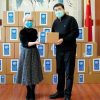
Omicron-led Surge Tests China’s Zero Covid Policy
When the Covid- 19 pandemic first broke out in Wuhan in 2020, no one imagined that it would wreak havoc on such a large scale. With over 6.2 million lives lost, countless infected and new variants emerging, the pandemic is still raging all around the world.
Out of Africa: Rich Continent, Poor People
Capital flight from the global South is immense, with widespread adverse effects. A new book proposes measures to curb, even reverse capital flight from Africa. It also offers pragmatic lessons for many developing countries.
Politics in Pakistan: The Captain’s Crisis!
The ship has weather’d every rack, the prize we sought is won,
The port is near, the bells I hear, the people all exulting,
While follow eyes the steady keel, the vessel grim and daring….”
Walt Whitman

Bringing Seeds of Hope to Farmers
Amidst a backdrop of rising food insecurity worldwide and a global food supply chain crisis, many countries are attempting to increase the level of food self-production. One improved input for farming which is receiving renewed attention is improved seed. The two most populous countries in the world, China and India, have recently made ground-breaking moves to improve their competitive position by developing new seeds which will improve their food production and increase resilience to climate change. So far, in 2022, new regulations on using biotechnology (genetic modification and gene editing) have been put in place by both countries to ultimately allow smallholder farmers to benefit from these new seeds.
English and Dutch Caribbean Rally Around UN Sustainable Development Framework
When Dominica signed on to the United Nations Multicountry Sustainable Development Framework for the English and Dutch Speaking Caribbean (MSDCF) in March, the country joined others like Saint Lucia, St. Vincent, and the Grenadines, Suriname, and Aruba as part of a 5-year framework to plan and implement UN development initiatives.
New Tactical Nuclear Weapons? Just Say No
Russian President Vladimir Putin’s brutal war on Ukraine, along with his implied threats of nuclear weapons use against any who would interfere, has raised the specter of nuclear conflict.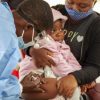
Commitment to African Medicines Agency Needs More Than Words
Across Africa, local manufacturing and pharmaceutical companies are responding to the urgent need for locally produced medical products and technologies despite the existing regulatory challenges. We can support manufacturing capacity by expediting the establishment and operationalisation of the African Medicines Agency (AMA).
INDIA: Healthcare Inequities Exposed by COVID-19 Pandemic
Public health specialists say that an ongoing wrangle between the Indian government and the World Health Organization (WHO) over the COVID-19 death toll in this country is symptomatic of a long-ailing public health delivery system.
Breaking Vicious Cycle of Trafficking for Sexual Exploitation
Desperate to escape the rural area where she was engaged in the informal economy in Kayonza, a district in Eastern Rwanda, Sharon* made a long and arduous journey to Kenya in the hope of a well-paid job.
Government Ministries Must Collaborate to End Teenage Pregnancy Crisis in Kenya
The Ministry of Health in Kenya recently reported there were 45,754 cases of adolescent pregnancies between January and February this year - that translates to 700 cases a day. Of the total number, at least 2000 of these cases resulted from sexual and gender based violence (SGBV), a figure which is likely lower than the reality.
Biodiversity: Indigenous Peoples, the Last Custodians
Every now and then, experts remind that the Indigenous Peoples are the best (and last?) custodians of the essential web of life: biodiversity.
UN Aims at People-Centered Governance in a Post-Pandemic World
The recently disseminated Zero Draft Ministerial Declaration of the High-Level Political Forum on Sustainable Development (HLPF)-- the main UN event to track the member states’ progress to achieve the Agenda 2030 slated to be held in the first half of July-- is a disappointment.
World Press Freedom Faces a Perfect Storm
Empowered by a global pandemic and the drum beats of war, the strongest despots are growing more despotic, and criminal cartels even more brazen in their violence. Extremists of various hues are also stepping out of the shadows. Just when the world most needs press freedom to thrive, the liberties that societies only really treasure when they are emasculated are coming under more pressure from different directions, old and new.
With Violence on the Rise, Asian Americans Establish Support Groups for Help
Dr Boyung Lee, a widow and the Senior Vice President for Academic Affairs and Dean of the Faculty at Iliff School of Theology, would use a short break in her working day to walk around her neighborhood. The fresh air helped her deal with her grief and work-related stress.
Misogynistic Online Abuse Poses Major Threat to Women Journalists
Women journalists around the world are experiencing an exponential increase in misogynistic online abuse, which poses a grave risk to women's media participation in the digital age.
Landmark UN Report Issues Stark call for Sustainable Land Management to Save Human Health
With 50% of humanity affected by land degradation, the world must move to a ‘crisis footing’ to conserve, restore and use land resources sustainably, a major UN report has said.« Previous Page — Next Page »


The Week with IPS

NEXT STOP - SDGs
Tracking global progress towards a sustainable world
Tracking global progress towards a sustainable world
