Languages
Friday, November 27, 2026



News and Views from the Global South
Regional Categories
UAE heads 44th meeting of UNWTO Commission for the Middle East in Egypt
The UAE headed the 44th meeting of the United Nations World Tourism Organisation, UNWTO, Commission for the Middle East, which began in the Egyptian city of Sharm el Sheikh, with the participation of tourism ministers and officials from Middle Eastern countries and a senior UNWTO delegation, headed by Zurab Pololikashvili, Secretary-General of the UNWTO.
Renewable energy jobs reach 10.3 million worldwide in 2017
The renewable energy industry has created more than 500,000 new jobs globally in 2017, a 5.3 percent increase from 2016, according to the latest figures released by the International Renewable Energy Agency, IRENA.
The Role of Voting in Reviving Democratic Practice
Since the beginning of the year the world has witnessed 24 national elections in which nearly 100 million people cast their votes. All together in 2018, there will be a total of 68 planned electoral processes in 45 countries ranging from presidential and legislative to local elections. Elections remain one of the key democratic processes through which people express their opinion on the way their country and communities are managed.
Economic and Social Survey for Asia and the Pacific 2018 – Mobilizing finance for sustained, inclusive and sustainable economic growth.
Asia and the Pacific remains the engine of the global economy. It continues to power trade, investment and jobs the world over. Two thirds of the region’s economies grew faster in 2017 than the previous year and the trend is expected to continue in 2018. The region’s challenge is now to ensure this growth is robust, sustainable and mobilised to provide more financing for development. It is certainly an opportunity to accelerate progress towards achieving the 2030 Agenda for Sustainable Development.
Despite Setbacks, Africa Viewed as Continent of Hope, Promise & Vast Potential
Africa has long been one of the world’s most beleaguered continents – singled out mostly for its conflicts, political and economic instability, rising poverty and hunger, inequalities and its environmental challenges. And in international circles, it is described as “Afro-pessimism.”
First Regional Biodiversity Forum kicks off in Abu Dhabi
The First Regional Biodiversity Forum kicked off in Abu Dhabi today with the attendance of more than 100 biodiversity experts and specialists from the region and around the world.
From the Syrian War to Argentina – Or How to Start a New Life
Fares al Badwan moved to Buenos Aires alone, from Syria, in 2011. He was 17 years old then and the armed conflict in his country had just broken out. Since then he has managed to bring over his whole family and today he cannot imagine living outside of Argentina. "I like the people here. No one makes you feel like a foreigner," he said.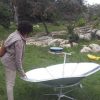
Low Awareness Restrains Growth of Solar Technologies
Every year, Amos Chandiringa, 43, a farmer in Nemaire village in Makoni district in northeastern Zimbabwe, laboriously waters his tobacco nursery with a watering can. The toil of the job often leaves him without the energy or time to do other household chores.
Protests, Strikes, Solidarity – France Revisits May ‘68
“It’s good to be in Paris on a sunny May day and see many universities occupied … and the strikes against neo-liberalism,” declared British Pakistani writer and activist Tariq Ali at an event in the Paris suburb of Nanterre on May 3. “That’s very pleasing.”
Time to Get Serious About Peace & Development
Four months ago UN Secretary-General Antonio Guterres issued a “red alert”, noting that instead of progressing towards greater peace, the world had moved in reverse towards deepening conflicts and new dangers: “Global anxieties about nuclear weapons are the highest since the Cold War.
To Sustain Peace: Heed the Warnings & Prevent the Next War
New York and Washington DC may be three hours apart geographically, but in global affairs, they are worlds apart. With the wars in Syria, Yemen and elsewhere unabating, at the UN in New York, terms like ‘conflict prevention’ and ‘sustaining peace’ are back in vogue, with world leaders attending a major summit. Meanwhile in Washington while the talks with North Korea took center stage behind the scenes the drum roll of war against Iran is revving up.
Protecting the Health & Rights of People on the Move
A staggering 258 million people migrated internationally in 2017. While many of these migrants chose to leave their home countries in search of jobs, education, or to reunite with family, many others had no choice but to leave--to escape poverty, violence or a dearth of opportunities for a better life.
FAO Releases Alarming Report on Soil Pollution
Soil pollution is posing a serious threat to our environment, to our sources of food and ultimately to our health. The Food and Agriculture Organization of the United Nations (FAO) warns that there is still a lack of awareness about the scale and severity of this threat.
In South Sudan, Denial of Humanitarian Aid is a War Tactic
When I visited South Sudan last year, I heard story after story about health professionals and humanitarian workers being prevented from doing critical work. Government officials regularly increased fees for nonprofits trying to alleviate the effects of conflict, stopped humanitarian convoys from delivering life-saving supplies, and erected bureaucratic obstacles designed to impede access to civilians in need.
Central Americans Demand to be Consulted About Mining Projects
Rosa Dávila is busy cooking ears of corn, to be eaten by the men and women who have set up a checkpoint on the side of the road to block the passage of supplies sent to a mining company that operates in the area.
Steady Old Hand of Repression Seeks to Strangle New Media in East Africa
In African countries where journalists are targeted with killings and beatings while traditional news outlets have been muzzled by governments and other actors unhappy with criticism, bloggers and social media users have become the new independent media by providing much-needed coverage, commentary and analysis.
Leading from the Front: Zambia Launches Plant a Million Trees Initiative
As global climate experts meet in Bonn this week to discuss how to take climate action forward, Zambia counts itself amongst the leaders as President Edgar Lungu officially launches the Plant a Million (PAM) trees Initiative.
UNHCR, OIC join efforts in addressing a Comprehensive Refugee Response Framework
The United Nations High Commissioner for Refugees, UNHCR, and the Organisation of Islamic Cooperation, OIC, yesterday concluded a two-day workshop on the Comprehensive Refugee Response Framework, CRRF. The workshop was hosted by Jordan with the attendance of representatives of more than 45 member states, specialised agencies and international institutions participated in the workshop.
A Free Press Is Indispensable for Good Governance and Transparent Societies Chair of the Geneva Centre for Human Rights
On the occasion of the 2018 World Press Freedom Day commemorated on 3 May 2018, the Chairman of the Geneva Centre for Human Rights Advancement and Global Dialogue, Dr. Hanif Hassan Ali Al Qassim, highlighted the importance of promoting freedom of the press to facilitate “good governance and transparent societies.”
African Governments Mark World Press Freedom Day with Crackdown Against Online Journalism
When Uganda in April ordered Internet service providers to shut down all news sites that had not been authorized by the communications regulator (pdf), it was the latest attempt by President Yoweri Museveni’s government to constrict the space for independent media.
Free Media Under Threat Globally
Buoyed on by the likes of United States’ President Donald Trump, a growing number of political leaders are encouraging hostility towards news media and journalists across the globe are finding it harder than ever to do their jobs. This is among the main findings in Reporters Without Borders’ (RSF) annual World Press Freedom Index which examines 180 countries and their relationship with the media.« Previous Page — Next Page »


The Week with IPS

NEXT STOP - SDGs
Tracking global progress towards a sustainable world
