Languages
Saturday, October 10, 2026



News and Views from the Global South
South-South
For Iran and Pakistan, Energy Trumps Enmity
Iran appears to be putting its immediate economic and strategic needs ahead of religious solidarity as it seeks to promote ties with neighbouring Pakistan.U.S. “Stalling” Could Force Acceptance of Onerous TPP
Civil society opposition here has strengthened against a U.S.-proposed free trade zone that would include some dozen countries around the Pacific Rim.China Maps Out Venezuela’s Valuable Mining Resources
An agreement signed by the government of Venezuela and the Chinese state-owned company Citic Group for prospecting and mapping the country's mining reserves is being challenged by both the opposition and experts who argue that it will leave valuable natural resources dangerously exposed.
New Development Bank to be Key BRICS Building Block
Emerging market leaders want their Brazil, Russia, India, China and South Africa club to be taken seriously, and next month they are expected to make a decisive move towards setting up a development bank to give it real substance and credibility.
Q&A: South Korean Brands Invade Global Markets
When U.N. Secretary-General Ban Ki-moon, a former foreign minister of South Korea, met with Psy last October, he jokingly told the wildly popular rapper that he was "a bit jealous" of him.
Tourism Lies at the Heart of the BRICS
As tourism between the emerging nations of Brazil, Russia, India, China and South Africa starts to increase, South Africa is determined to weld the iron while it is hot.
BRICS Summit Means Business
African nations and other emerging countries are expected to soon outperform the developed world, and South Africa wants to take advantage.Climate Change Threatens Caribbean Coral Reefs
Scientists and researchers are working together in a new initiative to collect data that will help determine the effects of climate change on coral in the Caribbean Sea.
Land Is Life, and It’s Slipping Away
Nean Narin, a humble man and father of three children, says his family is going hungry. Narin lives in the village of Boeung Kak, situated on the edge of Cambodia’s capital, Phnom Penh. For years, he and other villagers relied on the Boeung Kak Lake for fish and plants, which they would eat and sell.In the Land of Gas, the Residents Have None
The 19,000 inhabitants of the municipality of Caraparí, the area supplying a third of Bolivia’s gas exports, do not have access to gas or petrol, six years after the nationalisation of the mega deposit and almost a quarter century after its discovery.
Draft Arctic Oil Spill Agreement “Inadequate”
Environmentalists are warning that a meeting of environment ministers that took place Monday in Sweden has agreed on a weak and inadequate response plan in case of an oil spill in the Arctic Ocean.
Solar Streetlights Light the Way Toward Green Energy in Caribbean
The tiny federation of St. Kitts-Nevis and its larger neighbour to the north, Jamaica, are leading the Caribbean's search for new ways to become more energy efficient by installing new solar streetlights, a green alternative to traditional ones.
Building Angolan-Brazilian Ties on Infrastructure
Brazil has turned to large infrastructure as a unique way to globally expand its economy and build up its political influence, with the added bonus of furthering the development of small nations. But this strategy is not without its risks.
Q&A: Raising Tariffs “Common Sense” Not Protectionism
South Africa has denied that it is taking a protectionist stance to protect its own producers against foreign competition, but says it is justified in boosting tariffs where this is allowed under international trade agreements.Cuban Diplomacy Bypasses U.S. via CELAC
Cuban diplomacy will be working full blast this year, promoting its own approach to integration in line with the needs and goals of the Community of Latin American and Caribbean States (CELAC), a regional body that excludes the United States, Cuba's leading ideological opponent.
Latin America and Caribbean Aim for “Unity in Diversity”
Openly conceding the differences in their ideological, economic and geopolitical views, leaders and high-level representatives of the 33 member countries of the Community of Latin American and Caribbean States (CELAC) committed themselves to integration at their first ever summit.
Latin America Flexes Muscles at Joint EU Summit
The nations of Latin America and the Caribbean strengthened their position with respect to Europe at the CELAC-EU summit held this weekend in the Chilean capital, reaching agreements that protect their natural resources from foreign investors and securing a joint condemnation of the United States’ trade embargo against Cuba.
Can Europe and Latin America Meet as Equals?
The European Union's serious economic and financial crisis stands in stark contrast to the relative stability and decade-long growth enjoyed by Latin America and the Caribbean and could put the two blocs on equal footing, giving the Southern region more leverage to further its demands and economic growth.
China-Mexico Ties Grow Thin
"We are completely 'clueless' when it comes to China." This statement by Enrique Dussel, director of the Centre for China-Mexico Studies of the National Autonomous University of Mexico, perfectly describes the currently stale state of relations between the two countries.
Digging for Water, But Striking Oil
The volatile politics of the Middle East have long been dominated by the fluctuating fortunes of a single commodity: oil.
In Caribbean, Climate-Smart Agriculture Bolsters Farm Production
A new initiative is catching on in the Caribbean that aims to increase and sustain agricultural productivity by incorporating information about weather and climate into the farming process, all under the umbrella of climate-smart agriculture.« Previous Page — Next Page »





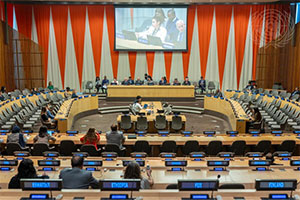 Panel Discussion on International Day for South-South Cooperation 2023. Credit: UN Photo/Cia Pak
South-South cooperation – collaboration between developing countries – is a growing and dynamic phenomenon, an important process that is vital in confronting shared challenges. Led by emerging giants, India, Brazil and South Africa (IBSA), the Global South is a tremendous source of tested solutions to development challenges, including the Millennium Development Goals (MDGs). China’s Belt and Road Initiative (BRI), launched in 2013, has further transformed South-South cooperation by enhancing infrastructure, trade, and investment linkages across Asia, Africa, and Latin America. Meanwhile, new platforms like the expansion of BRICS to include other countries such as Thailand, Nigeria, and Cuba are reshaping global economic governance and offering alternatives to traditional Western-led institutions. The Nairobi Outcome of the 2009 High-Level United Nations Conference on South-South Cooperation in Nairobi, Kenya highlights growing political and economic ties within the developing world, as countries from the Global South assume leading roles in decision-making on hot global issues ranging from economic recovery to food security, energy transitions, debt relief, and climate change. Today, the African Continental Free Trade Area and India’s “Voice of the Global South” summits have advanced frameworks for regional self-reliance, while G77 has reaffirmed commitments to resilient and inclusive economies ahead of the 16th UN Conference on Trade and Development.
Updated by Yilan Batista and Shuli Wong August 2026

The Week with IPS

NEXT STOP - SDGs
Tracking global progress towards a sustainable world
Tracking global progress towards a sustainable world
