Languages
Thursday, November 19, 2026



News and Views from the Global South

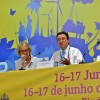
RIO+20: Ignoring Science, Negotiations Become Political Battle
The science is crystal clear: humans are threatening Earth's ability to support mankind, and a new world economy is urgently needed to prevent irreversible decline, said scientists and other experts at an event on the sidelines of the Rio+20 Earth Summit.
RIO+20: The Two Faces of BRICS Development Aid
The BRICS countries (Brazil, Russia, India, China and South Africa) face a key choice: to opt for "good" development aid, based on sustainable development, or for the "bad" old traditional model, which they criticised when they were its recipients.
Hoping To Save Millions, Antigua Turns to Backyard Gardening
As a boy, Hilson Baptiste remembers going to his neighbour's home and giving them a large slice of pumpkin grown in his family's backyard garden. In return, he would be given two fish for his family.Resolution on Arms Trade ‘Bold but Not Bulletproof’
The European Parliament sent a bold message to the world last week with its comprehensive and ambitious resolution to put an end to the illicit global arms trade. But analysts regret the new resolution ignores several key factors, such as the impact of the arms trade on the socio-economic development of recipient countries, and the involvement of civil society in future negotiations.
Europe and Former Colonies Urge Action at Rio+20
Europe and 79 of its former colonies have sent a strong message to the U.N. Conference on Sustainable Development in Brazil next week that it should use the opportunity to both fulfill past promises and deal with "new and emerging challenges".G20 to See Showdown on IMF Reforms
The head of the International Monetary Fund (IMF), Christine Lagarde, on Wednesday urged countries to act on a suite of reform measures that would significantly increase the voices of developing countries within the agency.Students Flock to Online Black Market
Former university graduates, current students and professors are embroiled in an unusual scandal this exam season, as news reports filtering in from around the Balkans reveal a major online trade in stolen final papers.Poverty Encourages Early Marriages in Tajikistan
When she was 16, Kibriyo Khaitova’s parents told her that if she didn’t marry, she’d soon be a spinster. So, like many girls from Tajikistan, Khaitova married a man her family found for her. Now 20, she has two children, no husband and is fending for herself.
Q&A: “Social Unrest Can Be a Creative Force”
Social unrest and demands for change are not a negative thing during times of crisis like today, says Rubens Ricupero, a Brazilian diplomat and thinker.Washington Struggles to Find a Path Forward on Syria
As the Syrian army has stepped up its attacks against opposition strongholds in Homs and elsewhere, the U.S. and its allies have achieved little consensus in choosing a course of action to oust President Bashar al-Assad.Could Europe’s Anti-Counterfeiting Pact be a “Pandora’s Box” of Rights Violations?
Foggy details surrounding Europe’s anti-counterfeiting trade agreement (ACTA) have divided pubic opinion, with activists on one end of the spectrum claiming it to be the end of Internet freedom and the generic drug market, while proponents continue to defend the act as a “modest” agreement to protect Europe’s intellectual property.Malaysians Fight Radioactive Waste From Oz
Malaysians protesting against an Australian-owned rare earth refinery, that will generate radioactive waste, are determined to agitate until the project is abandoned.Abolitionists Target Funds Behind Nuclear Arms Industry
The world's nuclear weapons industry is being funded - and kept alive - by more than 300 banks, pension funds, insurance companies and asset managers in 30 countries, according to a new study.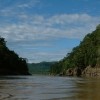
Tense Tug-of-War over Peru-Brazil Energy Agreement
Brazil is keen to move ahead quickly with the construction of hydropower plants in neighbouring countries to supply its demand for electricity. But Peru is still stalling on an agreement between the two countries, due to a number of conflicting interests and demands.Little Money to Promote Gender Equality in Eastern Europe
Despite pushes from international bodies such as the United Nations (UN) or the European Union (EU) to promote gender equality in Central and Eastern Europe, access to funding for such initiatives remains largely conditional upon national governments’ willingness to embrace this agenda.
Pictures Worth a Thousand Memories
There’s a story behind each of the 1,100 photos. Each photo is worth a thousand words and memories. Seventy-four-year-old Bracha Aris is a Holocaust survivor. She’s always kept her lips sealed about the past – until recently...‘When’ to Attack Iran, Not ‘If’
“The quiet before the storm” is how Israeli pundits describe the countdown – not to Israel going solo on Iran’s nuclear and military installations, but to the meeting between due Monday next week between U.S. President Barack Obama and Israeli Prime Minister Benjamin Netanyahu.Warming to Ignite the Carbon Bomb
Rising temperatures are drying out northern forests and peatlands, producing bigger and more intense fires. And this will only get much worse as the planet heats up from the use of ever larger amounts of fossil fuels, scientists warned last week at the end of a major science meeting in Vancouver.MALAYSIA: Privatisation of Healthcare Turns Election Issue
KUALA LUMPUR, Feb 26 (IPS) - A plan by the Malaysian government to privatise its public healthcare system and get consumers to pay for it through salary cuts is rapidly turning into a major election issue.

Rural Women Are Leading the Way – Will the World Follow? – Part 1
Agriculture currently provides a livelihood for roughly 1.3 billion smallholder farmers and landless workers, of which nearly half – close to 560 million – are women.SPAIN: Demonstrators Protest Bank Bailouts and Spending Cuts
Demonstrators in nearly two dozen cities in Spain raised their voices Friday to protest against the use of public funds to bail out banks while the budgets for basic services like education and health are being slashed.« Previous Page — Next Page »


Due to significant overlap in the themes and stories of interest to subscribers of both our European and UN newsletters, we have decided to consolidate both under the flag of IPS' popular daily TerravivaUN newsletter. Existing subscribers to the TerravivaEurope newsletter will continue to receive a daily selection of stories through the IPS TerravivaUN list and readers interested in global policy and development news from the EU, the UN and beyond are encouraged to subscribe below.

The Week with IPS

NEXT STOP - SDGs
Tracking global progress towards a sustainable world
Tracking global progress towards a sustainable world
