Languages
Saturday, November 21, 2026



News and Views from the Global South


Q&A: Tigray – the Fighting will Continue & Exacerbate Civilian Suffering
While Ethiopia’s federal government may have administrative control of the Tigrayan capital, Mekelle, and other main cities in the region, including Shire, Adwa, and Aksum, after removing the regional government from power in late November — armed resistance in Tigray is not over and could continue for months.
Switzerland Buys itself Good Sustainability Scores at the Expense of Other Countries
According to the Sustainable Development Report 2020, Switzerland ranks at a shameful 163 of 165 in terms of so-called spillover effects. This means that Switzerland buys better sustainability scores in a number of areas, placing considerable burdens on other countries and the global environment.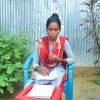
Overcoming the Learning Divide: Assessing What Students Missed During School Closings for COVID-19
School closings and the varied impacts of remote learning amid the COVID-19 pandemic are a global challenge. Educators worldwide have been struggling to meet contemporary educational standards in this environment. But this challenge is followed by yet another: how to assess the readiness of students to resume in-school education when schools open. At BRAC, the international nongovernmental organization that operates 25,000 schools in Bangladesh, serving 750,000 students, we have developed an approach that could be helpful.
Elections in Catalonia: What Now?
The recent result of the elections for the Parliament of Catalonia has presented a mixture of repetition of certain previous aspects and some spectacular novelties. But the everlasting dimension of any parliamentary confrontation of the proportional variant remains unscathed.
Pacific Islanders Turn to Local Economies to Drive Post-pandemic Recovery
While Pacific Island countries have, so far, been spared a catastrophic spread of COVID-19, their economies have been devastated by the effects of border closures, internal lockdowns and the demise of international tourism and trade. With the global pandemic far from over, Pacific Islanders are looking to their local and regional economies to drive resilience and recovery.
The UN: From the Sublime to the Hilarious
The United Nations is an institution mired in politics focusing primarily on military conflicts, civil wars, economic sanctions, peacekeeping, plus sustainable economic development.
Corporate Reporting on SDGs: Challenges and Opportunities
Since the launch of the Sustainable Development Goals (SDGs) in 2016, the role of the private sector in fulfilling the 2030 Agenda has been widely acknowledged, as set out under SDG 12. Yet to assess how companies are actually contributing towards these Global Goals, we need greater transparency on their impacts.
Suu Kyi Appears in Closed-Door Court Session Without Lawyer as Protests Continue
Myanmar’s top generals have begun the process to prevent Aung San Suu Kyi – the country’s popular civilian leader – from ever holding political power. Both she and president Win Myint were arraigned in a closed-door court session via video link Tuesday, Feb. 16. This is the beginning of a trial that is expected to take about six months to conclude. If convicted, it will prevent Suu Kyi from standing in future elections.
“Why Was I Ever Born”– Righting the Wrong
The bombing continues unabated. The explosions are heard in the distance. A family with seven children is cowering in fear in a corner of their shack, not daring to step out, dreading instant death from shrapnel or a sniper’s bullet.
Successful Crop Innovation Is Mitigating Climate Crisis Impact in Africa
17 February - African smallholder farmers have no choice but to adapt to climate change: 2020 was the second hottest year on record, while prolonged droughts and explosive floods are directly threatening the livelihoods of millions. By the 2030s, lack of rainfall and rising temperatures could render 40 percent of Africa’s maize-growing area unsuitable for climate-vulnerable varieties grown by farmers, while maize remains the preferred and affordable staple food for millions of Africans who survive on less than a few dollars of income a day.
Leveraging AI to Fight Climate Change
International organisations, researchers and data scientists say artificial intelligence (AI) and big data are critical to combat years of promises but inadequate action on the climate, biodiversity and pollution crises.
India Glacier Disaster: In a Warming World is there no Less Lethal Way to Power Development?
On Sunday morning, Feb. 7, as most of the working-class in India’s Himalayan State of Uttarakhand went about their chores, the glacier-fed Rishi Ganga river started rising. Two hours later, swollen with rock debris and snowmelt, its waters rose 53 feet — the height equivalent of a five-storey building.
Making the UN Tax Committee More Effective for Developing Countries
The United Nations Committee of Experts on International Cooperation in Tax Matters (UN Tax Committee) is an important and influential subsidiary body of the Economic and Social Council (ECOSOC) that shapes standards and guidelines on international taxation. These are the rules through which Multinational Enterprises (MNEs) are taxed.
Climate Change & Policy Making in Nepal
Raju Pandit Chhetri is one of the most acclaimed climate change policy experts in Nepal and South Asia. As Director of the Prakiriti Resource Centre, an action focused think tank based in Kathmandu, Pandit Cheetri shares his opinion on the latest climate focused policies being undertaken by the Government of Nepal, especially the 2nd Nationally Determined Contribution NDC that was recently submitted by the Government.
IP, Vaccine Imperialism Cause Death and Suffering, Delay Recovery
Vaccine developers’ refusal to share publicly funded vaccine research findings is stalling broader, affordable vaccinations which would more rapidly contain COVID-19 contagion. The pandemic had infected at least 109 million people worldwide, causing over 2.4 million deaths as of mid-February.
Peace in Yemen, But not Without Women’s Role in Peacebuilding
The armed conflict in Yemen which has lasted six years, has killed and injured over thousands of civilians, displaced more than one million people and given rise to cholera outbreaks, medicine shortages and threats of famine. By the end of 2019, it is estimated that over 233,000 Yemenies have been killed as a result of fighting and the humanitarian crisis. With nearly two-thirds of its population requiring food assistance, Yemen is also experiencing the world's worst food security crisis. The United Nations has called the humanitarian crisis in Yemen “the worst in the world”.
History of Female (Im)Mobility in Nepal
A proposal by Nepal’s Immigration Department requiring consent from a guardian and local government for women under the age of 40 travelling to the Gulf or Africa has sparked public fury, and is taken as yet another proof of a misogynist, bungling bureaucracy.
Why Incarceration further Disadvantages Australia’s Indigenous
Keenan Mundine grew up in the Aboriginal community social housing called The Block, infamous for poor living conditions, alcohol and drug use, and violence, in Sydney’s Redfern suburb. At the age of about seven, soon after losing his parents to drugs and suicide, he was separated from his siblings and placed in kinship care.
The Perils of Child Marriage & the Promise of Freedom
How much is a girl worth? If you are Maja, the answer is a chicken, a six-pack of beer and 100 euros. That is how much her family, living in a Roma settlement in Serbia, received in exchange for her hand “in marriage.” She was 11 years old at the time. “They benefited maybe a month from it, and I was left with a problem for my whole life,” Maja, now 18, said.
Transition to Digital Economy Must Ensure Access to Those in the Digital Gap
It is crucial to ensure that any transition to a digital economy has mechanisms in place that are non-digital to avoid “double exclusion”, according to Shahrashoub Razavi, director of the social protection department at the International Labour Organisation (ILO).
In Tanzania, a Radio Programme for Girls Yields Unexpected Results
Last fall, a 45-year-old father of four named Moses turned on the radio at his home in Arusha, Tanzania. Searching for his favorite station, he heard the introduction to a program about girls that he would later describe as ‘ear-catching.’ He wanted to know what would come next.« Previous Page — Next Page »


Want to keep up with the latest news and views from the Global South? Sign up for IPS Daily News Report for daily emails with our top stories about international development, climate change, gender and more. (Formerly IPS TerraViva since 1993).

The Week with IPS

NEXT STOP - SDGs
Tracking global progress towards a sustainable world
Tracking global progress towards a sustainable world
