Languages
Saturday, November 21, 2026



News and Views from the Global South


A Growing Shift in the Narrative about Climate Action
A keen awareness about the intersection of our ecosystem and the “accelerating destabilisation of the climate” is helping shift the narrative for climate action and can help us transition from being polluters to becoming protectors of the climate, said Marco Lambertini, Director General at the World Wide Fund for Nature.
Drug Use is a Health Issue – We Need to Decriminalize
Earlier this month, and in December 2020 the Government of Samoa conducted operations that resulted in the confiscation of a total of 1,400 grams of methamphetamine at the border, smuggled from the US. The law enforcement officials (from the Ministry of Customs and Revenue and the Ministry of Police and Prisons) that intercepted these drugs deserve congratulations for their professionalism and skill. Meth is destructive and harmful - and it is good to see this potential threat removed from the community.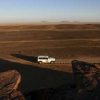
Western Sahara, Africa’s Last Colony, to Resume Liberation Struggle on Hold Since 1991
The question of Western Sahara, known as Africa’s last colony, has recently gained great visibility in international media interestingly due to two drastic developments.
The Global Insecurity of Climate Change
For Sudanese youth, climate change is synonymous with insecurity. “We are living in a continuous insecurity due to many factors that puts Sudan on top of the list when it comes to climate vulnerability,” said Nisreen Elsaim, Sudanese climate activist and chair of United Nations Secretary General's Youth Advisory Group on Climate Change.
Mexico to Ban Glyphosate, GM Corn
Presidential Decree Comes Despite Intense Pressure from Industry, U.S. Authorities
Mexican president Andrés Manuel López Obrador quietly rocked the agribusiness world with his New Year’s Eve decree to phase out use of the herbicide glyphosate and the cultivation of genetically modified corn. His administration sent an even stronger aftershock two weeks later, clarifying that the government would also phase out GM corn imports in three years and the ban would include not just corn for human consumption but yellow corn destined primarily for livestock. Under NAFTA, the United States has seen a 400% increase in corn exports to Mexico, the vast majority genetically modified yellow dent corn.

Is the USA Fit to Rejoin the UN Human Rights Council?
A month into Joe Biden’s presidency, the U.S. has rejoined nearly all the multilateral institutions and international commitments that it withdrew from under Trump. These include the World Health Organization and the Paris Climate Accords.
Cuba Prioritises Sustainable Water Management in the Face of Climate Challenges
With the construction of aqueducts, water purification and desalination plants, and investments to upgrade hydraulic infrastructure, Cuba is seeking to manage the impacts of droughts and floods that are intensifying with climate change.
Myanmar: Heroes and Villains
Myanmar’s State Counsellor was recently deposed and arrested along with other leaders of her ruling party – National League for Democracy (NLD). The Leader of Tatmadaw, the Military, Min Aung Hlaing, announced that elections in November last year had been fraudulent and in an “effort to save democracy” the military would now rule the nation for at least one year, until new elections could be organised. Counsellor Aung San Suu Kyi is accused of “importing ten or more walkie-talkies” and of violating the nation’s “Natural Disaster Law”. Some might agree that Suu Kyi deserves to be locked up. As an admired role model and Nobel Peace Prize winner, she was globally depicted as an almost saintlike being, canonized in movies like Luc Bessons’s The Lady. U.S. Secretary of State, Hillary Clinton, watched the movie before she in 2011 visited Suu Kyi, who by then had spent altogether fifteen years in house imprisonment, deprived of the company of an ailing and eventually dying husband and two sons. In spite of her forced isolation she became an eloquent representative for her compatriots’ resistance and perseverance under almost fifty years of military dictatorship.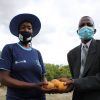
Natural Enemies: How Mango Farmers are Tackling an Invasive Fruit Fly Pest
Every harvest season, Susan Zinoro, a mango farmer from Mutoko, Zimbabwe, buries half the mangoes she’s grown that season. They have already started rotting either on the tree or have fallen to the ground before harvest. It’s a difficult task for Zinoro because she knows she is throwing away food and income meant for her family.
How Technology Can Promote Multilingualism & How it Cannot
Some of you may remember Sophia, the talking robot. In 2017 and 2018 she toured UN meetings and TV studios, wowing audiences with her thoughts on the future of technology and seemingly engaging in conversations with UN deputy chief, Amina Mohammed and British broadcaster, Piers Morgan.
Developing Countries Struggling To Cope With COVID-19
The ongoing COVID-19 pandemic is adversely impacting most developing countries disproportionately, especially the United Nations’ least developed countries (LDCs) and the World Bank’s low-income countries (LICs). Years of implementing neoliberal policy conditionalities and advice have made most developing countries much more vulnerable to the COVID-19 pandemic by undermining their health systems and fiscal capacities to respond adequately.
Coup in Spain, Yesterday and Today
Forty years ago, on February 23, 1981 (later known as 23-F), in the middle of the afternoon in a cold Madrid atmosphere, the most serious attack against the reborn Spanish democracy took place. An armed contingent of more than 200 Civil Guard agents invaded the Congress of Deputies and threatened the dissolution of the government and the establishment of a dictatorship.
Sustainable Energy Key to COVID-19 Recovery in Asia and the Pacific
The past year is one that few of us will forget. While the impacts of the COVID-19 pandemic have played out unevenly across Asia and the Pacific, the region has been spared many of the worst effects seen in other parts of the world. The pandemic has reminded us that a reliable and uninterrupted energy supply is critical to managing this crisis.
The Boon and Bane of LDC Graduation: The Bangladesh Experience
Bangladeshis at the present time share a modicum of justifiable pride in the fact that the world merits this country worth watching in terms of its economic potentials. To my mind , we have reached this stage for the following reasons: First, effective utilization of early foreign assistance; second a steady ,albeit sustained, move away from a near -socialistic to an open and liberal economy; third , a shift from agriculture to manufacturing as land-space shrank to accommodate urbanization; fourth , an unleashing of remarkable entrepreneurial spirit among private sector captains of industry, as evidenced in the Ready Made Garments industry: fifth, the prevalence of a vibrant civil society intellectually aiding the social transformation with its focus on health, education, and gender issues: and finally ,a long period of political stability notwithstanding the traditional predilections of Bengali socio-political activism.
A Moral Obligation to Protect the Planet
Legends are the lodestars of history, the marriage of Sir Dorabji Tata with Meherbai on Valentine’s Day of 1898 among the most lyrical of them. Two years later, he gifted her the Jubilee Diamond, the sixth largest diamond in the world, twice as large as the Kohinoor.
Is This The End of Myanmar’s Quasi-Democracy?
On February 1st, 2021 the military of Myanmar overthrew the country’s democratic government in a coup d’etat followed by arresting more than 40 government officials including Aung San Suu Kyi. The military declared a year-long state of emergency under the rule of it’s Commander-in-Chief Senior General Min Aung Hlaing. Troops took over the streets, a night-time curfew has been put into force. Tens of thousands of protestors have taken to the streets across Myanmar, in what is seen as the biggest street protests in more than a decade. The anti-coup demonstrators are undeterred by police attacks and increasing violence from the security forces.
Q&A: UN Environment Assembly Kicks Off With a Call to Make Peace with Nature
Its time for the world to radically change our ways if we are to make peace with the planet and create the environmental conditions so that all of humanity can thrive, delegates attending the Fifth Session of the United Nations Environment Assembly (UNEA-5) heard this morning.
In Argentina’s Chaco Region, the Forest Is Also a Source of Electricity
The forest is the main resource in the Chaco, a vast plain shared by Argentina, Bolivia and Paraguay. And how to use it sustainably is the most difficult question. Two recently inaugurated power plants fired by forest biomass provide a possible answer, although they are not free of controversy.
UN Blueprint that Could Urgently Solve Earth’s Triple Climate Emergencies
“Our war on nature has left the planet broken. This is senseless and suicidal. The consequences of our recklessness are already apparent in human suffering, towering economic losses and the accelerating erosion of life on Earth,” António Guterres Secretary-General of the United Nations said.
Money vs. Happiness
The question whether the rich are more satisfied with their lives is often taken for granted, even though surveys, like the Gallup World Poll, show that the relationship between subjective well-being and income is often weak, except in low-income countries in Africa and South Asia. Researcher Daniel Kahneman and his collaborators, for example, report that the correlation between household income and reported life satisfaction or happiness with life typically ranges from 0.15 to 0.30. There are a few plausible reasons. First, growth in income mostly has a transitory effect on individuals’ reported life satisfaction, as they adapt to material goods. Second, relative income, rather than the level of income, affects well-being — earning more or less than others looms larger than how much one earns. Third, though average life satisfaction in countries tends to rise with GDP per capita at low levels of income, there is little increase in life satisfaction once GDP per capita exceeds $10,000 (in purchasing power parity). This article studies the relationships between subjective well-being, which is narrowly defined to focus on economic well-being in India, and variants of income, based on the only panel survey in India Human Development Survey (IHDS).
Yemen Heads towards Worst Famine World has Seen in Decades
Yemen is heading towards the worst famine the world has seen in decades, the United Nations Security Council was warned in a briefing yesterday.« Previous Page — Next Page »


Want to keep up with the latest news and views from the Global South? Sign up for IPS Daily News Report for daily emails with our top stories about international development, climate change, gender and more. (Formerly IPS TerraViva since 1993).

The Week with IPS

NEXT STOP - SDGs
Tracking global progress towards a sustainable world
Tracking global progress towards a sustainable world
