Languages
Saturday, November 28, 2026



News and Views from the Global South


The Weinstein effect: The Global Scourge of Sexual Harassment & Exploitation
When the United Nations Population Fund (UNFPA’s) Goodwill Ambassador Ashley Judd, detailed an incident involving the Hollywood mogul Harvey Weinstein for The New York Times in their eyepopping investigation into decades of alleged sexual harassment, it came as a shock to many.
Got Climate Questions? Climate Watch Has Answers
Negotiators and stakeholders headed to Bonn, Germany, for next week’s UN climate summit continue to confront a range of questions surrounding one essential query: How do we meet the imperative to lower greenhouse gas emissions now — quickly — to minimize the most severe impacts of climate change?
Locals Learn to Live in Harmony with Drought in Brazil’s Semi-arid Region
Irrigated green fields of vineyards and monoculture crops coexist in Brazil’s semiarid Northeast with dry plains dotted with flowering cacti and native crops traditionally planted by the locals. Two models of development in struggle, with very different fruits.
‘Never Again’: Investing in Prevention and Early Action
After the Rwandan genocide, the United Nations promised ‘never again.’ But has the international community kept their word? From Mexico to Myanmar, conflicts and humanitarian crises have multiplied.
Widespread Natural Disasters Threaten Development Goals
This year in the Caribbean and on the American mainland, hurricanes have left millions of people in need of assistance.
Four Die, Survivors in Critical Condition as Second Boat Carrying Rohingya Refugees Capsizes in Two Days
Around 2.00 am two nights ago (30/10), approximately 40 Rohingya refugees left Gorgondia, Myanmar, for Bangladesh on a small fishing boat. Early yesterday morning (31/10) around 8.00 am, the boat capsized off Baillakhali Sea Point in Jaliapalong Union, Ukhiya sub-district. It had just crossed the Bangladesh border and was trying to reach Shamlapur in Teknaf sub-district. They were 10 kilometres away from their destination.
An Urgent Need to Transform World’s Energy Systems
When we discuss global interconnection in relation to energy, we are at the centre of the two key words that express our global concerns - sustainability and inclusivity.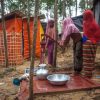
Clean Water, Sanitation Vast Challenges as Bangladesh Copes with 607,000 New Refugees
Since 25 August, over 607,000 Rohingya refugees have crossed the border into Bangladesh from Myanmar. Although the number of new arrivals is now slowing, people continue to arrive in the makeshift settlements of Cox’s Bazar every day, bringing the total Rohingya population of the district to over 820,000.
Women and Malnutrition in Africa
Undernutrition is widespread and a key reason for poor child health in many developing countries. In Sub-Saharan Africa, around 40 percent of children under the age of five suffer from stunted growth, that is, severely reduced height-for-age relative to their growth potential. Stunting is a result of periods of undernutrition in early childhood, and it has been found to have a series of adverse long-term effects in those who survive childhood. It is negatively associated with mental development, human capital accumulation, adult health, and with economic productivity and income levels in adulthood.
Mounting Illicit Financial Outflows from South
Although quite selective, targeted, edited and carefully managed, last year’s Panama Papers highlighted some problems associated with illicit financial flows, such as tax evasion and avoidance. The latest Global Financial Integrity (GFI) report shows that illicit financial outflows (IFFs) from developing countries, already at alarming levels, continue to grow rapidly.
Sustainable Water Management as a Lever for Green Growth in Ethiopia and the Region
Sustainable water supply is imperative for economic growth, but so often gets side-lined in the rush for development. The unanticipated consequence is a global economy that is increasingly stunted by water resource challenges, with worldwide predictions suggesting that global water demand will increase by approximately 75% more than global water supply in the next 30 years!
UN Member States, With Exceptions, Pay Lip Service to Women & Peacekeeping
A UN Security Council (UNSC) resolution adopted on 31 October 2000, underlying the role of women in peacekeeping, has long been described as both historic and unprecedented.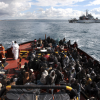
A New Global Compact on Safe, Orderly and Regular Migration
At this crucial juncture of international migration, where numerous push and pull factors have engendered unprecedented migration flows across the globe, the ongoing discussions at the United Nations must lead to meaningful and practical outcome.
Slave Labour, Another Setback for the Government of Brazil
The wave of conservativism is testing its limits in Brazil, as reflected by a Labour Ministry decree that seeks to block the fight against slavery-like working conditions, which has been provisionally revoked by the justice system.
Impending Drought? There’s an App for That – Or Should Be
Fostering and harnessing innovative technologies could significantly reduce the negative impacts from climate change, including drought, water scarcity and food insecurity in African countries.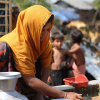
Without Water
You could not see it in their faces and they could no longer physically feel it but Mohammed and Jameelah’s pain was consuming their minds - in the memories of what they had lost.
The Roots of Exodus: Why Are People Compelled to Leave their Homes?
Facts are facts, and one of them is that while everybody talks about the growing forced movement of people --be they migrants or refugees—decision-makers haven’t seriously acted on the root causes of why millions of humans are compelled to leave their homes.
Western Sahara’s Locked Positions Might be Loosening
In August last year armed forces from both sides pushed forward into the desert and into the no-go buffer zone that the UN had established.
Adolescent Health Congress Skirts Issue of Abuse, Trafficking
Twenty-year-old Gogontlejang Phaladi of Mahalapye, Botswana is grateful she was never sent to a so-called “hyena” like scores of girls in neighboring Malawi were.
Historic Resolution on Women & Peacekeeping Remains Mostly Unimplemented
At the 26 October launch of GNWP’s (Global Network of Women Peacebuilders) manual “No Money, No NAP” on dedicated budgetary allocation to fund the implementation of the 1325 National Action Plans, Executive Director of UN Women Phumzile Mlambo-Ngcuka characterized UNSCR 1325 as the most unimplemented resolution of the UN Security Council.
Stopping Child Marriage Forever
The mother moved in like a tigress to save her cub. In 2015, when her 13-year-old daughter Shumi Akhter was about to be married off, Panna Begum pleaded with her husband, Dulal Mia, to cancel the marriage he’d arranged for their daughter.« Previous Page — Next Page »


Want to keep up with the latest news and views from the Global South? Sign up for IPS Daily News Report for daily emails with our top stories about international development, climate change, gender and more. (Formerly IPS TerraViva since 1993).

The Week with IPS

NEXT STOP - SDGs
Tracking global progress towards a sustainable world
