Languages
Saturday, November 28, 2026



News and Views from the Global South


Kashmir’s Farmland Plowed Under in Wave of Urbanization
In central Kashmir’s Ganderbal district, 40-year-old Javaid Ahmad Hurra remembers vividly how his small hamlet used to be lush and green when he was a child. It is now subtly turning into a concrete jungle, with cement structures dominating the scenery.
Developing World Faces Challenge of Large Ageing Population
Experts on population ageing converged in Seoul this week to discuss how to make reaching one's "golden years" a happy and sustainable process across the world.
Cuban Immigration in the Eye of the Storm
Cuban migration to the United States is the great loser under Donald Trump's hostile policy toward Cuba, and creates additional difficulties for citizens of this Caribbean island nation who were accustomed to benefits that their neighbors in the rest of Latin America never enjoyed.
Who is Really Responsible for Collapse of Zimbabwe’s Health Services?
On October 22, 2017, the World Health Organization (WHO) announced that it had removed Zimbabwean president Robert Mugabe as a goodwill ambassador following outrage and concerns raised by his appointment just two days before.
Cooking to Fight Climate Change
What you eat doesn’t only affect your own health – it also affects our planet’s health. From deciding which food to buy, to how you store and prepare it, you are making decisions that have profound effect on your personal health, as well as the health of your environment.
Bangladeshis Open Their Hearts, Homes to Rohingya Refugees
When primary school headmaster Abdul Jabbar Mahmoud set off from Shamlapur on his motorbike heading to Teknaf town, at the southern tip of Bangladesh for his monthly education department meeting, he had no idea that by the end of the day he would return home with seven extra mouths to feed.
Ending the Male Monopoly on Peace: Women Still Need More Seats at the Table
Whether targeted by perpetrators of sexual violence, oppressed by ideological extremists, or uniquely threatened by the bombing of hospital maternity units, women often bear the brunt of conflicts. Yet when it comes to peace negotiations, women too often don’t have a seat at the table. The continuing reality that men, particularly armed men, enjoy an almost exclusive role in peace processes defies both logic and evidence.
Congo’s Wake Up Call
Late last week, the humanitarian community activated a Level 3 emergency for the Democratic Republic of the Congo (DRC). This trigger in the global humanitarian system is seldom used, and only after serious deliberation by the top echelons of the UN system.
Pollution or How the ‘Take-Make-Dispose’ Economic Model Does Kill
The prevailing “Take-Make-Dispose” linear economic model consisting of voracious depletion of natural resources in both production and consumption patterns has proved to be one of the world’s main killers due to the huge pollution it causes for air, land and soil, marine and freshwater.
Time Running Out for Somaliland’s Crumbling and Neglected Treasures
The name alone—Berbera—ripples with exotic resonance, conjuring images of tropical quays, swarthy traders and fiery sunsets imbued with smells of spices, incense and palm oil.
Deliberate Famine Should Be a War Crime, UN Expert Says
The deliberate starvation of civilians could amount to a war crime and should be prosecuted, said an independent UN human rights expert.
Russian & US Vetoes Protect Client States
The vote on the latest American-sponsored resolution in the UN Security Council (UNSC) on Syria was predictable: of the five big powers, China abstained and Russia vetoed, while the US, UK and France voted for it.
When a School Is Turned into a War Zone
It was 32 degrees Celsius outside, a sunny day in the last week of August. Yet, I vividly remember getting the chills.
Open or Closed Borders, or Something in Between?
Recent elections around the world have clearly shown growing public support for candidates and political parties advocating the deportation of migrants and stricter restrictions on immigration, including halting it altogether. At the same time, opposition, challenges and resistance to deportations and immigration restrictions have become more widespread, visible and vocal.
Latin America Heads to Climate Summit with Uneven Progress
Difficult to measure and unequal in their scope are the advances that the countries of Latin America will have to show, regarding their voluntary commitments to greenhouse gas emissions, during the climate summit to be hosted by Bonn, Germany in November.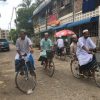
Myanmar’s Democracy Feels Strain of Religious Fault Lines
I try to hold on tight as my driver navigates his motorbike over a bumpy and muddy track. His helmet is decorated with a swastika and an eagle, part of an ill-inspired fashion trend called Nazi chic. It's symbolic for a country where hate and racism seen to have become normalized.
Why 1997 Asian Crisis Lessons Lost
Various different, and sometimes contradictory lessons have been drawn from the 1997-1998 East Asian crises. Rapid or V-shaped recoveries and renewed growth in most developing countries in the new century also served to postpone the urgency of far-reaching reforms. The crises’ complex ideological, political and policy implications have also made it difficult to draw lessons from the crises.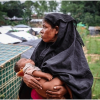
UN Day: Another Day, Another 34,000 Refugees
Oct. 24 is not just another day on the calendar. It is United Nations Day, an excellent time to take note of one of the accomplishments the world body has achieved in its 72-year history.
Rohingya Crisis Stokes Fears of Myanmar’s Muslims
In a quiet street, the sound of children's voices can be heard from an open window. They are reciting verses of the Koran in unison. The small Islamic school lays hidden in a walled neighborhood where only Muslims live. This is an island of tranquility in Mandalay, the second-largest city of predominantly Buddhist Myanmar.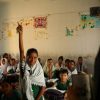
Rules and Regulations. We Need them to Protect Minimum Standards in Education
Two years have already passed since the global education goal, SDG 4, was set by governments. But the vision of that goal has not yet fully trickled down to the country level. We need to know who is responsible for achieving this goal.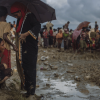
No Food, No Water, No Shelter: Two Days of Muck, Rain and Uncertainty
Last week, the Government of Bangladesh moved near 7,000 Rohingya refugees, who had been stranded in “no man’s land” near the Anjuman Para border crossing point in Cox’s Bazar’s Ukhia District, into more appropriate settlement areas. The Rohingya are fleeing violence, which broke out in Myanmar on 25 August.« Previous Page — Next Page »


Want to keep up with the latest news and views from the Global South? Sign up for IPS Daily News Report for daily emails with our top stories about international development, climate change, gender and more. (Formerly IPS TerraViva since 1993).

The Week with IPS

NEXT STOP - SDGs
Tracking global progress towards a sustainable world
