Languages
Sunday, November 29, 2026



News and Views from the Global South


400 Million People Live with Hepatitis But They Do Not Know
With some 400 million people around the world infected with hepatitis B or C, mostly without being aware, the United Nations top health agency encourages countries to boost testing and access to services and medicines for people in need to combat the 'ignored perils' of this disease.
Fertilizer Access Grows Farmers, Food and Finance
Brightly coloured cans, bags of fertilizer and packets containing all types of seeds catch the eye upon entering Nancy Khorommbi’s agro dealer shop tucked at the corner of a roadside service station.
Modern-day Slavery in Oman? Domestic Workers in Peril
In order to escape poverty and support their families back home, thousands of domestic workers from South and South-East Asia migrate to Oman with the promise of stable employment in local households.
Uganda Ill-Equipped for Growing Cancer Burden
Lying on a dirty bed in a crowded, squalid hostel in Kampala, emaciated Jovia, 29, managed a weak smile as a doctor delivered her a small green bottle containing a liquid.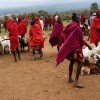
Rights of Indigenous Peoples ‘Critical’ to Combat Climate Change
No longer it is about restoring the legitimate rights of over 370 indigenous peoples spread across 70 countries worldwide, many of them living in dire situation, but now about their central, critical role in combating climate change.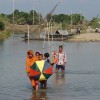
Indian Climate Activist Ponders the ‘Unthinkable’
For acclaimed Indian novelist and essayist Amitav Ghosh, the future of humankind as global warming impact events spread worldwide looks grim. So grim that the 60-year-old pamphleteer has titled his new book of three climate-related essays "The Great Derangement."
El Salvador Faces Dilemma over the Prosecution of War Criminals
The ruling of the highest court to repeal the amnesty law places El Salvador in the dilemma of deciding whether the country should prosecute those who committed serious violations to human rights during the civil war.
Beyond Rhetoric: UN Member States Start Work on Global Goals
UN member states “are going beyond rhetoric and earnestly working to achieve real progress” towards the Sustainable Goals, the members of the Group of 77 and China said in a ministerial statement delivered here on 18 July.
There is No Honour in Killing
“Honour” is a paradoxical word. Initially, it draws to mind characteristics of integrity and dignity combined with an all-knowing air of greatness. However, tradition has conditioned many men into the association of being “honourable” with an assertion of superiority over their female counterparts.
Devastating Droughts Continue as El Nino Subsides
Although the devastating El Niño of 2015 to 2016 has now subsided, in many parts of Africa, Central America and Southeast Asia rains and harvests are not expected to recover until 2017.
San Juan City: The Smart City of the Future
The Philippines has so much to offer to the world, not only ecological treasures by way of tourism, but brilliant minds, visionaries, and craftsmen. Other nations find the uniqueness and diversity of our ecology unimaginable—such as having the third-longest coastline in the world as well as endemic species of plants and animals. Another unimaginable phenomenon, our economy remains strong despite the fact we are crossed by an average of 21 typhoons a year and is located in the Pacific Ring of Fire—prone to eruption of active volcanoes, and earthquakes.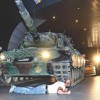
Is Kemalism on Its Way out in Turkey?
The enigmatic coup-attempt in Turkey on the night of July 15 and 16 signals something ominous about the future of Turkey, NATO, and the entire region. There's more to read into the event than what appears on the surface. We don't know much about the nature of the coup, but it has definitely tarnished the “Turkish Model” of success, which its Arab neighbours envied, and European ones admired for the co-existence of liberal Islam, secularism, and democracy. The “abortive coup” seems to have further consolidated Erdogan's power, at least for the time being. Seemingly, Erdogan and his followers are marching together toward “illiberal democracy”, if not toward the utopia of Islamist totalitarianism.
Economic Recovery Needed To Enhance Food Security
After a half century of decline, agricultural commodity prices rose with oil prices in the 1970s, and again for a decade until 2014. Food prices rose sharply from the middle of the last decade, but have been declining since 2012, and especially since last year, triggering concerns of declining investments by farmers.
Feminism Slowly Gaining Support at United Nations
Achieving gender equality has long been one of the United Nations’ top priorities yet the word feminism has only recently begun to find its way into speeches at UN headquarters.
Lessons of a Failed Coup
The spectacle of unarmed civilians blocking army tanks, overpowering soldiers and forcing them to the ground in the streets seemed surreal. It was a rare show of people’s power defeating a coup attempt. What happened in Turkey last weekend is a sign of changing times.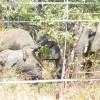
Malawi Leads Africa’s Largest Elephant Translocation
One of the world's largest and most significant elephant translocations kicked off earlier this month within Liwonde National Park in southern Malawi.
International Trade Favours Multinational Corporations
Trade is sometimes thought of as an economic activity that only favours the large corporations. While we may disagree, the reality of international trading is often harder and more expensive for Micro, Small and Medium Enterprises (MSMEs). The smaller the business, the bigger the barriers can seem.Kashmir on Fire
Kashmir is bleeding once again. Many innocent civilians have been brutally killed and many more injured by the Indian security forces. Surprisingly, there is a deafening silence in the local media. No views, no comments whatsoever have appeared. Strangely, the media, which is otherwise very active and springs into action on the slightest violation of human rights, kept mum as if Kashmiris are not human, their blood carries no importance and is cheaper than water. Many nowadays are voicing serious concerns about the rights of drug addicts killed by the police but not a single word for Kashmiris.
We Ignore Greenhouse Gas Emissions from the Livestock Industry at Our Own Peril
According to the UN Food and Agricultural Organization, the production of meat and other animal-based products is responsible for around 18 to 20 percent of all anthropogenic greenhouse gas emissions.
The Importance of Soft Power
The world is at war with extremists. Developed and developing nations, whether it is France, the United States, Russia or China, the Middle East or countries in the sub-continent, we are all battling one form of Muslim militancy or another. And while alliances are being forged on a regional or trans-continental basis to fight outfits like the Boko Haram, Al Qaeda or the Islamic State (IS), and battles are being fought out on land in Iraq Syria, Libya or Yemen, on the streets of Paris or in Dhaka, every nation that has faced the onslaught of extremists who are connected to a global network of jihadists that is increasingly sophisticated, the realisation that they are now battling for the 'hearts and minds' of the populace is emerging.
Forests: To Farm or Not to Farm? This Is the Question!
The dilemma is critical: on the one hand, there is an absolute need to produce more food for the world’s steadily growing population; on the other, there is pressing urgency to halt -and further revert- the increasing trend to deplete the forests, which are as necessary for human survival as it is for ensuring their dietary needs.« Previous Page — Next Page »


Want to keep up with the latest news and views from the Global South? Sign up for IPS Daily News Report for daily emails with our top stories about international development, climate change, gender and more. (Formerly IPS TerraViva since 1993).

The Week with IPS

NEXT STOP - SDGs
Tracking global progress towards a sustainable world
