Languages
Monday, November 9, 2026



News and Views from the Global South
Africa

Africa: Resolved to Address African Problems Using African Solutions
The African Union (AU) representing 54 countries and home to 1,2 billion inhabitants, will be in Istanbul to participate in the May 23-24, 2016, first-ever World Humanitarian Summit (WHS) with two key demands—that the international humanitarian system be redefined, and a strong, firm own commitment to itself, to the continent and its people, anchoring on the primacy of the states.
Humanitarian Summit Must Address Weapons Shipments Too
Boats carrying refugees and boats carrying aid supplies will be on the agenda at the World Humanitarian Summit this week, but advocates say discussing the free flow of shipments carrying bombs and guns might be even more critical.
County Governments in Kenya Must Take Lead in Fight for Gender Equality
The 3rd Devolution Conference that took place in Meru, Kenya between 19 and 21st April was an opportunity to discuss how the post-2015 development agenda will be localized and how county governments will deliver on the Sustainable Development Goals (SDGs).
Now 1 in 2 World’s Refugees Live in Urban Areas
It is true that millions of refugees, especially in Africa and the Middle East, reside in camps. But in all they represent only one-quarter of the total number of refugees. Meanwhile, more than 1 in 2 of all the world’s refugees live in slums or in informal settlements and on the fringes of cities, in overcrowded neighbourhoods and in areas prone to flooding, sanitation hazards and diseases.
Many Cities Don’t Know How Dangerous Their Air Pollution Is
China and India are not the only countries with an air pollution problem. Ninety-eight percent of cities in developing countries don’t meet World Health Organization (WHO) air quality standards, according to new research published by the UN body.
Kenya’s Young Inventors Shake Up Old Technology
Emma Masibo and Lucy Bwire have many things in common.
‘Human Suffering Has Reached Staggering Levels’
“Human suffering from the impacts of armed conflicts and disasters has reached staggering levels.”
Analysis: Why the UN Needs a “Peace Industrial Complex”
In a world where annual defence spending is over 1.6 trillion dollars and the UN Peacebuilding Fund receives less than 700 million dollars, it would seem that the military industrial complex is unwaveringly entrenched.
Bees and Silkworms Spin Gold for Ethiopia’s Rural Youth
Beekeeping and silkworm farming have long been critical cogs of Ethiopian life, providing food, jobs and much needed income.
Progress of The World’s Least Developed Countries to be Reviewed
The United Nations will undertake a major review of progress made in the world’s 48 Least Developed Countries (LDCs) later this month.
Biomass Could Help Power Africa’s Energy Transition
As fuel, firewood remains the dominant source of energy in Uganda. It has a long history of being unsustainably harvested, leading to severe depletion of the country’s forest cover. But with new technology, biomass is now cleaning up its act.
Kenyan Refugee Camp Closures will have Disastrous Consequences
The Kenyan government's decision to close its refugee camps will have disastrous consequences and must be reconsidered, international organisations have stated.
UN Releases Plan to Increase Refugee Responsibility Sharing
The UN wants to create a new Global Compact to encourage countries to share the responsibility for hosting the 19 million refugees who have fled their home countries.
Nobel Peace Laureates to Help Achieve Food Security
The Food and Agriculture Organisation (FAO) believes that ongoing military conflicts, which have also devastated agricultural crops and livestock, are one of the primary causes of food shortages in war zones in Africa and the Middle East.
Farmers Can Weather Climate Change – With Financing
Merian Kalala, a farmer in Solwezi, capital of the North-Western Province of Zambia, knows firsthand that climate change is posing massive problems for agricultural productivity.
No Farmers, No Food — True But Not Enough
Agriculture is the primary sector of all economies. It is the sector responsible for granting food and nutrition security to all human beings. Consequently it is responsible for social stability and health. And it provides work opportunities to families, men, women and youth, and largely contributes to the country Gross Domestic Product (GDP).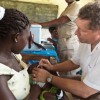
Religious Leaders Can End Harmful Cultural Practices & Advance Women’s Empowerment
Any views expressed in this article are those of the author and not of Thomson Reuters Foundation.
Is the System Broke or Broken?
Though the upcoming World Humanitarian Summit may seem timely, a debate ensues on an important question: is the world humanitarian system broke or broken?
New Generation Aims to Plug Africa’s Research Deficit
The tonnes of uncollected garbage piling up on the streets of her home in Cairo was a brain wave for Sherien Elagroudy.
Grilled for a Retweet: Press Freedom in Kenya
In early January, Judith Akolo, a journalist with the Kenya Broadcasting Corporation, found herself in unfamiliar territory when she was summoned and grilled by the Directorate of Criminal Investigations for retweeting a Twitter message.
Media Freedom in Africa Remains Under Attack
Imagine a world without the media, where we have no verified information about what’s going on around us. Where everything is hearsay and gossip, where there are no trusted sources of information. It would be hard to operate in a world like that: to make decisions about what to do about the things that affect our lives.« Previous Page — Next Page »





The Week with IPS

NEXT STOP - SDGs
Tracking global progress towards a sustainable world
Tracking global progress towards a sustainable world
