Languages
Monday, November 9, 2026



News and Views from the Global South
Africa

Plan for Poorer Countries to Fund HIV Response Raises Concerns
Calls for low and middle income countries to contribute an additional 6.1 billion dollars to the global HIV response by 2020 could see some vulnerable groups left behind, said HIV activists meeting at the United Nations last week.
Focusing on Future of Food: What’s Next for Global Agricultural Research?
Food security scientists from around the globe gathered in Johannesburg last week with one objective: to work towards the transformation of agriculture as engine for growth in developing regions of the world. The gathering was also an opportunity to examine what farmers need to prosper in the face of social and environmental challenges.
Ethiopia’s Smoldering Oromo
The Ethiopian government's most serious domestic political crisis in more than a decade began over a scruffy football field appropriated by local officials for development.
Turning to Agriculture
Facing an unprecedented economic crisis, South Sudan -- the newest nation of the world -- has urged its 12 million inhabitants to turn to agriculture instead of depending on declining oil revenues.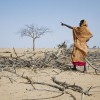
‘Little Boy’ Devouring African Food
There is a ‘Little Boy’ who has nothing to do with the atomic bomb that the United States dropped on the Japanese city of Hiroshima on 6 August 1945. This time it is about another ‘Little Boy’ who has been devastating the harvests in many regions, especially in Africa.
Saving Beira
Mozambique’s second largest city, Beira, is heading for climate change-induced disaster. Cyclones, floods, storm surges and the rising sea level are threatening to annihilate this important Indian Ocean coastal city; a city which is strategic for landlocked countries like Zimbabwe and Zambia.
OPINION: Why South Africa Must Not Lose Plot on Civil Society
South Africa celebrated human rights month this March with President Zuma recalling the “heroism of our people who stood up for their rights.” However, this same month which commemorates the sacrifices of those who took part in the struggle against apartheid and those who died in the Sharpeville Massacre of 21 March 1960 was not a happy one for today’s civil society activists and organisations engaged in defending human rights. Two shocking incidents raise troubling questions for the future of civil society in the country.
Balancing Economic Potential of Marine and Social Life
When Africa’s oldest protected marine area, Tsitsikamma -- the largest in the world, incorporating 80 km of rocky coastline, bustling with marine life, much of it endangered -- was opened as a pilot for public fishing on December 15, 2015, there was a big outcry.
Women Benefit From Simple Economic Ventures
Angelina Chiziane starts her day by getting her husband ready for work in a small village in the southern province of Gaza, Mozambique, some 216 kilometers away from the capital, Maputo.
Benefits of Backpack Biogas
Billions of dollars of aid has been pumped into Africa. Yet effective change too often remains an elusive outcome, leading to a vicious cycle: more needs, more aid but still little change. How to resolve this seemingly intractable dilemma?
Press Freedom in Peril
A single phone call from an irate security official is enough to shutdown a newspaper in Sudan. Security agents sometimes employ unorthodox methods: they storm the premises of a newspaper or a printing press and confiscate print runs in full view of employees. No reasons are provided. And there is no legal recourse.
Opinion: World Bank Reinvents Tainted Aid Program for Ethiopia
I was taught that responsibility means admitting your mistakes and being accountable when you make a mistake. I still believe this to be true for individuals and institutions. So when a powerful group like the World Bank makes a mistake, I expect it to be accountable for its wrong-doings, and to do everything possible to make sure those mistakes don’t happen again.
The Rise of Investor-State Dispute Settlement in the Extractive Sectors
African countries have been active in concluding international investment treaties. According to the United Nations Conference on Trade and Development (UNCTAD), as of end 2013, 793 bilateral investment treaties (BITs) have been concluded by African countries, representing 27% of the total number of (BITs) worldwide.
Saving Children’s Lives Through Drones
The first successful test-flight of an unmanned aerial vehicle (UAV) or drone was an unhindered 10 km journey from a community health centre to the Kamuzu central hospital laboratory in the capital Lilongwe. Local community members watched with excitement as the drone rose into the sky, after being launched by the United Nations Children’s Emergency Fund (UNICEF) and government of Malawi at the area 25 health centre.
Tree Regeneration Restoring Hope
Maurice Kaduka Lukaro, 54, is a farmer in Oljorai, an area with short grasses and small-scattered bushes in Nakuru county in Kenya’s Great Rift Valley. Crop production has declined tremendously in this region. Like the rest of the arid and semi-arid lands (ASAL) in the Sub Saharan region, Maurice Kaduka Lukaro, 54, is a farmer in Oljorai, an area with short grasses and small-scattered bushes in Nakuru county in Kenya’s Great Rift Valley. Crop production has declined tremendously in this region. Like like the rest of the arid and semi-arid lands (ASAL) in the Sub Saharan region, Kenya hosts a population worst hit by the reality of climate change. Kenya hosts a population worst hit by the reality of climate change.Decolonising Education
The University of Cape Town in South Africa, perched on the bottom of the world, is a well-known and highly respected institution in both that country and the world at large. On March 9 last year, a blacl< student named Chumani Maxwele, studying on a scholarship at the elite school, did something bizarre. Maxwele lives in a Khayelitsha, a black township in Cape Town so crammed with people that most of its plastic and cardboard shacks are barely large enough for a person to stand. There is no sanitation; people defecate in plastic boxes that are left on the kerb. On that March morning, Maxwele took one of these plastic boxes. When he reached the university, he took the box and hurled its contents at a statue of Cecil Rhodes, a famous British colonialist.
The PELIS Factor
Peter Wainaina’s focus is on the fresh Irish potatoes he has just harvested. He assembles them into a 90-kilogramme bag while sorting out the unmarketable ones like sliced and tiny tubes. He lives on a small plot of land in Njabini, 600 metres away from a farm in Aberdares forest, west central Kenya, where he has been growing this fast-maturing crop for the past three months.
Water Crisis in Zimbabwe
A narrow dirty trail snakes through what used to be a small dam in Mpudzi Resettlement Scheme south of the eastern border city of Mutare. And what remains of this once perennial dam is just a small puddle of mudded water; the dirty water is completely covered with thick green algae.
Food Insecurity in the Far North
“They have reduced the quantity of food they used to give us and we still do not know why. But we are managing. We are refugees and we have no choice. All they give us is rice and some soya beans” John Guige, a Nigerian resident and primary school teacher in the Minawao refugee camp in Cameroon’s Far North region, told IPS.
A “Colombian Triangle” for Daesh in Libya?
Besieged by US, UK, French, Russian and Syrian war crafts and ground intelligence, both in Syria and Iraq, the Islamic State of Iraq and Levant (Daesh from its original acronym in Arabic) has reportedly been searching for a new base in the North of Africa, specifically in Libya, in what has been called the “Colombian Triangle.”
Improving Rural Livelihoods Boost Agrarian Economies
For two decades, Dickson Kamau only grew maize on his 0.5 hectare (ha) of land earning himself the nickname Kamau wa mbembe or Kamau who owns maize in his native Kikuyu language.« Previous Page — Next Page »





The Week with IPS

NEXT STOP - SDGs
Tracking global progress towards a sustainable world
Tracking global progress towards a sustainable world
