Languages
Monday, November 16, 2026



News and Views from the Global South
Africa

KENYA: Post Election Violence Victims Still Suffer
The Mawingu camp for internally displaced persons affected by Kenya’s 2007- 2008 post-election violence is a desolate place. Located in the Rift Valley, the camp is a collection of tattered, sagging and forlorn tents.SOUTH AFRICA: Failing Women as Maternal Mortality Quadruples
Only six sub-Saharan African countries have failed to reduce the number of women dying in childbirth over the last two decades. High-spending South Africa is among them, with maternal mortality rates more than quadrupling since 1990. Human Rights Watch researcher Agnes Odhiambo says this is largely due to a lack of accountability.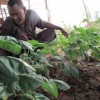
KENYA: Relief Food Sourced from Local Farmers
Mourid Abdi Dolal and Wilson Rotich are both small-scale farmers who grow staple crops. But while one sells his produce at the local village market, the other farms to feed the growing number of refugees in Kenya.DR CONGO: Fresh Start for DR Congo’s Coffee Producers
Long years of civil war and instability set off a crippling decline in coffee production in the Democratic Republic of Congo: the country's output in 2010 was less than a tenth the harvest twenty years earlier. Now the DRC government has a strategy to bolster recovery of the sector.
SWAZILAND: Impossible for Children to Access Public Information
Many public officials in Swaziland do not think that access to information is a public right, but rather a privilege – which can be withdrawn at anytime.NIGERIA: Refined Oil Shortage Continues for Africa’s Largest Producer
"We are suffering in the midst of plenty." That was how Nelson Ilemchi summed up his plight as he spent an entire day queuing to buy kerosene. Since January Africa’s largest producer of crude oil has been experiencing a protracted nationwide scarcity of the refined product.
ZIMBABWE: Women Seeking Justice Face Archaic Rules and Discrimination
The four armed robbers who gang raped her may be serving time for their crimes, but six years later justice has turned out to be a myth for Mildred Mapingure.
HEALTH: Battling Hepatitis in West Africa
West African health experts are calling for governments to take the prevalence of hepatitis B and C more seriously, and to act to reduce the cost of treatment as part of more effective control of the disease.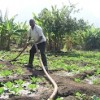
MALAWI: Water Drives Integrated Agriculture on Small Farm
When the original owners of a 3.5 hectare piece of land put it up for sale because it was too waterlogged to farm on, Diana Sitima and her husband, Wilson, jumped to buy it.HEALTH-MALI: Community Also Has a Role in Preventing TB
Tuberculosis remains a leading cause of death in Mali despite the availability of free treatment. The resurgence of the illness, linked to poverty and HIV infection, could be reduced by changing behaviour, doctors say.COTE D’IVOIRE: Help For Small Businesses Key to Relaunching Economy
The Ivorian government has begun compensating small and medium-sized businesses for damages suffered during the post-election crisis, in order to relaunch the economy.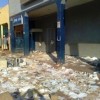
MALAWI: Concerns of Protesters Need to be Taken Seriously
Unless Malawi’s government does something to find solutions to its economic and governance problems, the country will see more nationwide protests like the ones last week where 18 people were killed and 275 arrested, analysts say.AFRICA-DEVELOPMENT: Governments Need to Reach Out to Rural Women
Governments, especially in Africa, need to have strong accountability measures in place in order to effectively reach women in rural areas through gender responsive budgeting.Displaced Ivorians ‘Too Afraid to Return’
More than half a million people remain displaced by Ivory Coast's post-election conflict and many are too afraid to return home for fear of ethnic reprisals, Amnesty International says in a report.
SOMALIA: “I Carried Him a Whole Day While He Was Dead, Thinking He Was Alive”
As the first of food aid from the United Nations World Food Programme was airlifted into Mogadishu on Wednesday, it came too late for Qadija Ali's two- year-old son Farah.
ZIMBABWE: Bleak Future for Second-Hand Clothes Traders
It is becoming increasingly difficult for second-hand clothes traders like Susanne Jabavu to do business because of rising costs to import bales of clothing from neighbouring countries.
EAST AFRICA: ‘It’s Not a Heartless Mother Leaving a Child Behind, Just One Who Wants to Survive’
On the road between the Kenyan and Somali border lie the dead bodies of children who have succumbed to the famine and the hardships of making the journey from their drought-stricken villages to Kenya.SOUTH SUDAN: Row Over Exorbitant Fees for Pipeline Use
Less than three weeks after gaining independence, South Sudan is embroiled in a row with Sudan over pipeline fees charged by the latter to export oil.
SWAZILAND: Irrigation Waters the Hopes of a New Village
A transboundary water project is reinforcing the fight against food insecurity and poverty along the Komati River which flows through South Africa, Swaziland and Mozambique.
RWANDA: Women Parliamentarians Outnumber Men, But Gender Budgeting Still Needed
Rwanda is the first country in the world where women outnumber men in parliament, with women occupying 45 out of 80 seats. However, despite this, experts say that the country still needs a gender equality perspective on how national resources and programmes are implemented.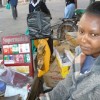
KENYA: Gender Responsive Planning and Budgeting at Work
For the first time ever, the Kenyan finance minister has allocated almost four million dollars, about 3.6 percent of the primary education budget, to provide free sanitary pads to schoolgirls.« Previous Page — Next Page »


The Week with IPS

NEXT STOP - SDGs
Tracking global progress towards a sustainable world
Tracking global progress towards a sustainable world
