Languages
Friday, November 6, 2026



News and Views from the Global South
Africa

Dissenting Voices at Nairobi Soil Health Forum Over Increased Fertilizer Use
As the Africa Fertilizer and Soil Health Summit convened in Nairobi to review the progress made in terms of increasing fertilizer use in line with the 2006 Abuja Declaration, experts, practitioners, activists, and even government officials pointed out that accelerated fertilizer use may not be the magic bullet for increased food production in Africa.
Beyond the Fields: Unraveling Zambia’s Drought Crisis and the Urgent Call for Climate-Health Solutions
For most families in Zambia, April is traditionally a month of plenty—it is typically the beginning of a harvest season for various food and cash crops. Both fresh and dried maize, groundnuts, pumpkins, and a whole variety of both traditional and exotic food crops are usually in full supply and readily available for consumption, supporting household food security and nutrition.
Trade Liberalisation Kicked Away African Development Ladder
Africans have long been promised trade liberalisation would accelerate growth and structural transformation. Instead, it has cut its modest production capacities, industry and food security.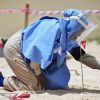
Many African Nations Making Progress in the Rule of Law
The United Nations Office of Rule of Law and Security Institutions (OROLSI) supports the promotion of the rule of law, security, and peace in conflict-affected countries.
WHO Africa Advances African Science by Promoting Peer-Reviewed Research
The World Health Organization's African regional office and partners published over 25 peer-reviewed articles in scientific journals in 2023 as part of efforts to address the imbalance in global research and ensure that Africa was better represented in the production of health research academic literature, a new report shows.
Niger’s Military Coup Triggers Child Marriages, Sex Work in Neighboring Countries
A group of young girls aged between 15 and 17 sit tight, following attentively a lesson being taught by a Mualim (Islamic teacher) in a makeshift madrassah (Qur’anic school) located in one of the impoverished townships of Benin’s economic capital, Cotonou. They arrived in Benin recently, fleeing poverty, hunger, climate change, and rising insecurity in their home country, Niger, in the aftermath of the military coup that toppled democratically-elected president Mohamed Bazoum.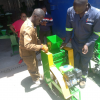
Portable Ginnery Could Revive Kenya’s Ailing Cotton Industry
Kirinyaga University may have just breathed new life into Kenya’s ailing cotton industry as varsity dons develop a portable cotton ginnery. For an industry that has been struggling to survive, this news came as a relief to cotton farmers, whose lives the invention is expected to change, and to a government pushing for job creation and self-reliance through manufacturing.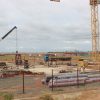
‘Living in Fear’: Landowners in Uganda’s Oil Field on Brink of Eviction
When Mugisha Jealousy Mulimba learned that the government of Uganda was dragging him to court, he expected justice. But he says he has realized these courts are being used to deprive him of his rights to a fair hearing and the right to fair and adequate compensation for his land and property.
Africa Pushing Limits To Boost Renewable Energy Supply Chain, Security
Investors, regulators, researchers, policymakers, and representatives of renewable energy companies, acknowledged the key challenges of shifting away from fossil fuels to renewable energy in Africa when they gathered in Abu Dhabi, United Arab Emirates (UAE) this week.
Trade Deception Returns in Pan-Africanist Guise
The World Bank has exaggerated probable gains from the African Continental Free Trade Area (AfCFTA) to promote partial and uneven trade liberalisation that is unlikely to enhance development on the continent.
Rural Entrepreneurs Thriving Against All Odds in Zimbabwe
With heavy sweat drenching his face and his shirt soaked in the sweat, 39-year-old Proud Ndukulani wrestled with a homemade knife, which he dipped in some used oil, before turning the glistening knife upon a rather tough and dusty tyre obtained from what he said was a forklift. His assistant stood by his side as he (Ndukulani) cut some tough rubber from the giant tyre lying outside an open shade roofed with aging asbestos sheets at Juru Growth Point, located 52 km east of Harare in Zimbabwe’s Goromonzi district in the country’s Mashonaland East province.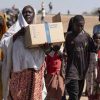
Conflict’s Long Shadow Has a Name: It’s Hunger
Scarce food and drinking water. Limited and inconsistent healthcare. Rapidly deteriorating mental health. With conflict on the rise globally, this is the grim reality for millions around the world.
Leaders Need to Break the Chokehold of Debt and Austerity. Our Health Depends on it
As leaders gather for the Spring Meetings of the IMF and World Bank amid the cherry blossom trees of Washington, DC, there is some good news to celebrate.
Food Security and Food Safety in Africa Must Go Hand in Hand
Russia’s invasion of Ukraine has restricted international exports and sent food costs soaring – particularly for vulnerable populations still experiencing shocks from the pandemic and who can least afford to pay more to feed their families. Two years on, global food supply chains are still just as susceptible to serious disruptions caused by war, disease, and climate change. Those inevitable disruptions are leaving those on the African continent particularly vulnerable.
Rwanda: A Ravaged Country That Bounced Back
As we contemplate the clouded futures of Gaza, Ukraine, and other dire conflict zones that get far less coverage, it may be instructive to recall the surprising success story of a ravaged country that bounced back: Rwanda.
Women Affected by ‘Gender-Biased’ Climate Change Deserve Justice
While research into the unequal impacts of climate change on women is growing, more is needed to enable them to realize their rights to climate justice. Researchers argue that women and girls have unequal access to food, water, health, education, and even income, thanks to climate change. This makes them more vulnerable.
Kwibuka30: Learning from the Past, Safeguarding the Future Against Genocide
One should never lose sight that for people who experienced genocide, the warning signs were there. Genocide is a process. It requires preparation and capacities to carry it out.
30 Years On, Genocide Survivors Embark on a Journey To Build a Resilient Future
A minute of silence was observed on April 7 across Rwanda as the country held a memorial ceremony to mourn more than one million people, overwhelmingly Tutsis, who were systematically killed in the 100 days of atrocities between April and July 1994.
Senegal’s Democracy Passes Crucial Test
The fact that Senegal’s election took place on 24 March was in itself a triumph for civil society. That an opposition candidate, campaigning on an anti-establishment and anti-corruption agenda, emerged from jail to become the continent’s youngest leader offered fresh hope for democracy.
Breaking the Silence: Gender-Based Challenges in the Lesotho Highlands Water Project ll
In the journey towards gender equality and justice, recent decades have seen strides made, yet the road ahead remains treacherous. In the race to achieve the Sustainable Development Goals (SDGs) by 2030, attention is turning to the role that over five hundred public development banks worldwide could play.
Endowment Funds Can Revolutionise Sarcoma Care in Developing Countries
Despite global childhood cancer mortality rates dropping by half over the past 50 years, these promising statistics do not extend to Africa and the Global South, where limited resources mean that most cancers are diagnosed at advanced stages.« Previous Page — Next Page »





The Week with IPS

NEXT STOP - SDGs
Tracking global progress towards a sustainable world
Tracking global progress towards a sustainable world
