Languages
Friday, September 18, 2026



News and Views from the Global South
Africa
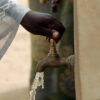
From Resolution to Reality: Delivering Water and Sanitation for “The Africa We Want”
When Africa’s Heads of State and Government gathered in Addis Ababa on 14 February 2026 for the African Union’s 39th Ordinary Session, they did more than adopt another resolution. They made a choice: to place at the centre of the agenda the most fundamental, life-sustaining and strategic resource our continent possesses: water.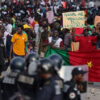
The Ballot Box Illusion: How Authoritarians Repackaged the African Ballot
In many countries across Africa, people have recently lined up to vote. But in country after country, there has been no real choice on offer. As CIVICUS’s 2026 State of Civil Society Report documents, what has frequently been on display is a procedural ceremony of democracy, orderly enough to satisfy observers, but hollow enough to leave those who hold the reins of power untroubled. Laws and structures that were supposed to promote democratic decisions have been manipulated into compliance checks, ticking all procedural requirements while lacking democratic substance. In too many cases, the ballot box has become a public relations exercise.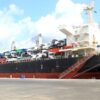
Global Shipping Reforms Cast Shadow Over Tanzania’s Fishing Communities
At dawn, as the sun rises across the Indian Ocean, Venance Shayo perches on the edge of his boat, hauling in a net. The sea gently ripples under the breeze and the sound of revving engines.
Africa’s Future Depends on Innovation, Data, and Frontier Technologies
Across the continent, GDP has risen on the back of more workers, more capital and a commodity super-cycle, rather than through genuine gains in productivity and innovation. Too little labour has moved out of subsistence agriculture into higher-productivity manufacturing and modern services.
AI: ‘African Governments Are Using “smart City” Systems to Monitor Dissent and Consolidate State Control’
CIVICUS discusses the spread of AI-powered surveillance in Africa with Wairagala Wakabi, executive director of the Collaboration on International ICT Policy for East and Southern Africa (CIPESA) and co-editor of Smart City Surveillance in Africa: Mapping Chinese AI Surveillance Across 11 Countries, the latest report by the African Digital Rights Network (ADRN) and the Institute of Development Studies (IDS).
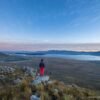
The Cape Water Performance-Based Bond: A New Alliance for Cape Town’s Water Future
In 2018, Cape Town came perilously close to becoming the first major city in the world to run out of water. Known as “Day Zero”, it was more than just a crisis, it marked a pivotal moment. It made clear that water insecurity is not a distant threat, but an immediate reality.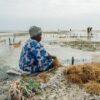
Explainer: How the GEF Funds Global Environmental Action
The Global Environment Facility, widely known as the GEF, plays a central role in financing environmental protection across the world. It supports developing countries in tackling climate change, biodiversity loss, land degradation, pollution, and threats to ecosystems.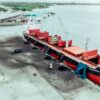
Shipping Industry Seeks Certainty as Experts Back Strong Net-Zero Framework
As global shipping braces for another round of high-stakes negotiations, a volatile mix of rising fuel costs, geopolitical tensions and deep political divisions is testing the fragile consensus around a proposed Net-Zero Framework (NZF) aimed at decarbonising one of the world’s most polluting industries.
Civil Society Launch a Campaign Against Extractive Industry Exploitation and Land Grabs
Over 800 households in Ikolomani Constituency in Kakamega County, Western Kenya, fear eviction to pave the way for a British firm, Shanta Gold Limited, to begin extracting gold valued at Sh683 billion ($5.29 billion) on an estimated 337 acres of residential and agricultural land.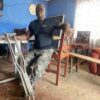
Will Sierra Leone’s Democracy Make Room for Persons with Disabilities?
As Sierra Leone prepares for its next national election in 2028, political parties across the country have begun setting strategies and preparing to select their candidates. However, persons with disabilities say they remain poorly represented and are calling on political parties to nominate them as candidates ahead of the election.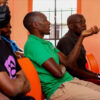
Unexpected Ally Stepping Up Against Sexual Assault in Kenyan Slums: Landlord
Trigger warning: This article discusses child rape. Their quiet latent power comes from being ever-present eyes and ears on the ground. As they move around their compounds, collecting rent and checking on anywhere from 10 to 20 houses occupied by as many as 200 people, they see and hear things.
Nations pledge $3.9bn to Global Environment Facility as Race to Meet 2030 Goals Tightens
With just four years left to meet a series of global environmental targets, governments are committing to shore up one of the world’s main environmental funds, the Global Environment Facility (GEF), with a $3.9 billion pledge.
Stateless at Home: Kenyan Somalis Struggle to Reclaim Citizenship from Refugee Records
In 2006, Amina Saida was only two years old when her parents moved to the Dadaab refugee camp in northern Kenya, near the border with Somalia.
Cambodia Unveils Statue Honouring Tanzanian-Born Bomb-Sniffing Rat Magawa
At Mazimbu village, not far from Tanzania’s Sokoine University of Agriculture (SUA), Stephano Jaka still remembers the night he trapped and killed a rat that had been feasting on his maize cobs – stored in a meticulously woven basket designed to protect grains from rodents.
Ugandan Farmers Sue EACOP in London in Last Minute Effort to Stop Crude Oil Pipeline
Environmental activists and farmer groups opposed to the construction of the East African Crude Oil Pipeline (EACOP), the world's longest heated oil pipeline, are mounting a last-ditch legal effort meant to stop its construction in a suit they plan to have filed in London, UK, believing that it stands a chance to stop the controversial project despite being at the 78 percent completion stage.
Iran War: What African Countries Can do to Get Through the Crisis and Emerge in a Better Place
By Easter 2026 it was still not clear when – or how – the war initiated by Israel and the US against Iran would end. But what was already clear was that it would harm Africa in a number of ways.
It Is Time For Africa to Fund Its Health Security
Relying on foreign aid is bad for Africa's health and it must stop if the continent is to enjoy health security.
Artisanal Miners in Western Kenya Move Away From Mercury
They call this land Bushiangala. Gold has been mined here for nearly a century. In 1931, colonial prospectors arrived after traces were found in the nearby Yala River, setting off a rush that changed this quiet corner of western Kenya.
UNECA Warns Africa Risks Remaining Uncompetitive, Urges AI Adoption
Africa must move swiftly to harness data and frontier technologies such as Artificial Intelligence (AI) to drive its economic growth and make the continent globally competitive in the digital economy, a senior official at the United Nations Economic Commission for Africa (ECA) has told policymakers.
CONGO: ‘The Result Was Already Decided Before Polling Stations Opened’
CIVICUS discusses the presidential election in the Republic of the Congo with Ivan Kibangou Ngoy, executive director of Global Participe, a civil society action-research organisation focused on democratic governance based in Pointe-Noire.
Escalating Violence and Influx of Returnees in DRC Fuel Regional Instability
In the month following the reopening of the Burundi-Democratic Republic of Congo (DRC) border, the humanitarian crisis in the DRC has deteriorated considerably, recently marked by an influx of Congolese refugees returning home, where they face overcrowded conditions and a severe shortage of essential services. This comes in the midst of escalating clashes between rebel groups AFC and M23, and forces affiliated with the Kinshasa government, with drone strikes causing widespread destruction and pushing violence closer to Burundi’s borders, where conditions are most dire.« Previous Page — Next Page »


The Week with IPS

NEXT STOP - SDGs
Tracking global progress towards a sustainable world
Tracking global progress towards a sustainable world
