Languages
Sunday, November 8, 2026



News and Views from the Global South
Africa

Ghana’s Grains and Groundnuts Face Increasing Contamination Amid Increasing Temperatures
Adwoa Frimpomaah, a smallholder farmer from Dandwa, a farming community in Nkoranza, in Ghana's Bono East Region, and her two children have been consuming insect-infested and discoloured grains produced from their three-acre farm.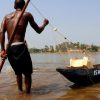
The IPCC’s Special Report on Oceans and Cryosphere – What it means for Africa’s coastal cities
The latest Intergovernmental Panel on Climate Change (IPCC) Special Report on Oceans and Cryosphere in a Changing Climate highlights the urgency of prioritising ambitious and coordinated actions to address the unprecedented and continuing changes that are taking place in the ocean and cryosphere (Earth’s frozen lands).
How the Oceans and the Cryosphere are Under Threat and What it Means for Africa- IPCC Author Explains
 “Special reports come to address issues that need deeper understanding and deeper research,” Dr James Kairo, one of the lead authors of the ‘Special Report on the Ocean and Cryosphere in a Changing Climate,’ a special report by the Intergovernmental Panel on Climate Change (IPCC), told IPS.

Huge moment for Ethiopia as Abiy Ahmed wins Nobel Peace prize
Ethiopia found itself in the global spotlight for all the right reasons after Abiy Ahmed, its young, dynamic prime minister was awarded the Nobel Peace Prize.
Africa’s Mineral Wealth May Just have to Stay in the Ground to Protect a Changing Climate
As a result of climate change, resource extraction industries in Africa will be impacted by asset stranding, researchers say.
South Sudan’s Authorities Allow Serious Human Rights Abuses to Flourish and go Unpunished – Report

Human rights movement Amnesty International has accused South Sudanese authorities for lack of independence as they have allowed allowing human rights abuses, war crimes and crimes against humanity to go unpunished.
Q&A: Holistic Land Management – Only a Movement can Prevent Desertification
Desertification is not cheap. It has social, cultural, environmental and of course economic costs to reverse what it destroys.
Human Trafficking – It Came Disguised as the Opportunity of a Lifetime
Six years ago Mary Njambi* received news of a once-in-a-lifetime job opportunity far away from her poverty-stricken village situated in the heart of Kiambu County, Central Kenya. She was 20 years old, a single mother and out of work.
Investments to Cushion African Countries against Climate Shocks Not Enough
African Development Bank (AfDB) President Akinwumi Adesina unveiled millions of dollars of new pledges at the United Nations this week amid growing fears of climate change ravaging the continent and derailing anti-poverty targets.
Oceans in Crisis as they Absorb the Brunt of Climate Change
Warnings of strong winds, high waves and reduced visibility along the East African coastline are increasingly common. But local fisher folk like Ali Sombo from Kwale County, situated along Kenya's Indian Ocean Coastline, don't always heed the warnings by the Kenya Meteorological Department (KMD) to stay clear of the open sea during rough waters.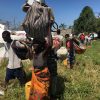
Climate Emergency: A Humanitarian Call to Action
We saw this coming. As humanitarians, our risk assessments in different parts of the world have always factored in the potential for extreme weather events and the spread of vector-borne diseases, of drought, desertification, and mass displacement. Emergency first responders like us work up scenarios for interventions and gain experience each time we put our planning to the test in real crises.
Africa’s Industrial Development: Turning Challenges into Opportunities
When world leaders gathered in New York for the 70th session of the General Assembly back in 2016, and proclaimed the period 2016-2025 as the Third Industrial Development Decade for Africa (IDDA III), it reaffirmed the importance of industrialization in supporting Africa’s own efforts towards sustained, inclusive and sustainable economic growth and accelerated development.
‘I Want my Kids to Know What a Rhino and Turtle Are’ – #ClimateStrike Kids Say
From Nigeria, to Kenya to the Democratic Republic of Congo, to South Africa, thousands of African climate campaigners have taken to the streets joining millions around the world for the global Climate Strike ahead of the United Nations Climate Action Summit 2019, which starts in New York next week.
Not Enough Good Information About Africa’s Climate for Adaptation
"We don't have a good appreciation of our local weather systems," says Dr James Kinyangi head of the African Development Bank's climate and development Africa special fund, which supports investments in climate and weather observations networks in Africa. 
Boko Haram’s Youngest Victims
“Khadija” was just 8 years old when Boko Haram fighters attacked her village in northeast Nigeria and took her by force to their camp. Her abductors tried to marry her and other captives to members of the armed Islamist group, she told me. When the captives refused, they were locked in a room.
When the Search for Jobs Ends in Slavery
In 2017, Zubedah Nakitende’s electronics shop was robbed with thieves taking her entire stock. But she had heard from a colleague about lucrative jobs in Jordan and decided to take on work as a domestic helper, earning an income of 740 dollars a month.
Tana River Bears the Cost of Development
The damming of Kenya's River Tana and the environmental degradation upstream, has reduced the amount of silt and water reaching the Tana River Delta over time. Hence the sea has been pushing further and further inland unhindered, jeopardising livelihoods. 
African Development Bank Plans for a Self-sufficient, Integrated and Industrialised Continent
Arama Sire Camara, a fruit and vegetable seller in the province of Kindia, some 135 km from the Guinean capital of Conakry, feels safer trading well into the night thanks to the Rural Electrification Project, financed by 21-million-dollar investment by the African Development Bank. “With lighting on the road at night and illuminating our goods, it means we are safer, especially with all the cars on the road. You can work for longer after nightfall, and so we can make more of our products,” she says.G5 Sahel Summit: African Development Bank, partners, commit to light up and power the Sahel with the Desert to Power initiative
Dr. Akinwumi Adesina, president of the African Development Bank, has arrived in Ouagadougou, capital of Burkina Faso, ahead of the G5 Sahel Summit, and was received by Burkina Faso’s president, Mark Roch Christian Kaboré.
UNAIDS and WHO Africa Leaders Should Prioritize Women’s Health
Two African women were recently appointed to top global health positions: Winnie Byanyima as the Executive Director of UNAIDS and Dr. Matshidiso Moeti reappointed as the World Health Organization (WHO) Regional Director for Africa.
AfDB ‘s Solar Project Aims at Making Africa a Renewable Power House
When UN Secretary-General Antonio Guterres launched the International Solar Alliance last October, he applauded the goal of mobilizing about $1 trillion dollars towards the deployment of some 1,000 gigawatts of solar energy by 2030.« Previous Page — Next Page »





The Week with IPS

NEXT STOP - SDGs
Tracking global progress towards a sustainable world
Tracking global progress towards a sustainable world
