Languages
Friday, October 2, 2026



News and Views from the Global South
Europe

A Stress Test for Nuclear Deterrence
This month, the Tenth Review Conference of the Non-Proliferation Treaty (NPT) is taking place in New York (and scheduled to conclude August 26). The meeting of states parties, postponed four times because of the Covid-19 pandemic, had originally been scheduled for April 2020.
Yezidis in Armenia: From Reincarnation to Exodus
There are those cows watching the fight in the mud of rusty Soviet cars; there are those tethered dogs that bark next to bathtubs full of rainwater, or those cats that frolic in freedom. This is Armenia, a state of three million deep in the heart of the Caucasus region.
Aid Workers Encounter Courage, Damage, Dislocation and Resilience in War-Torn Ukraine
During Todd Bernhardt’s visit to Ukraine’s conflict zones, he encountered untold damage to hospitals, healthcare clinics, and communities. The Senior Director of Global Communications at the International Medical Corps also encountered enormous courage.
UN Chief Urges Governments to Tax “Immoral” & Excessive” Oil and Gas Profits
The war in Ukraine continues to have a devastating impact on the people of that country. Civilians are dying in the most tragic circumstances every day. Millions of lives have been destroyed or put on hold.
The Vision of a World Divided into two Blocs: China & Russia vs Europe & the United States
For years, Russia's relations with the European Union and the United States have been one of the main areas of conflict in the media. Washington and Brussels accuse Moscow of manipulation and disinformation and, after the invasion of Ukraine, decided to close their media outlets to Russian companies.
Rights Groups Question ‘Pregnancy Register’ for Polish Women
Women’s rights groups fear a new legal provision in Poland requiring doctors to collect records on all pregnancies could create what they have described as a ‘pregnancy register’ to monitor whether women are having abortions.
EU’s Exclusionary Migration Policies Place People on the Move toward Europe at Greater Risk
A mass attempt on June 24, 2022, of about 2000 African migrants to scale the border fence between Morocco and the Spanish enclave of Melilla left at least 37 people dead.
The Weaponization of Energy & Europe’s Way Out
The fast-changing environment requires Europe’s energy system not only to adapt but to also find the right mechanisms to ensure its unity in the face of turbulent challenges.
At Half-time, the European Green Deal is Still Grounded
This month marks the mid-point of the much-heralded European Green Deal. Taking office at the end of 2019, the European Commission went into rhetoric overdrive. This was Europe’s ‘man on the moon’ moment, we were told. The Green Deal would herald an economic paradigm shift, and “reconcile the economy with our planet…to make it work for our people” the new President, Ursula von der Leyen, said.
War & Peace 2.0: Ukraine Showing the World How to Fight Back
 It has been over 100 days since Russia first invaded Ukraine on 24 February 2022, turning the country into a slaughterhouse. The United Nations (UN) in this report says that, as of 1 June, 2022, more than 6.9 million refugees have left Ukraine and 2.1 million have returned, while eight million people are displaced inside Ukraine itself. War in Ukraine has caused the fastest growing refugee crisis since World War II.
Ukraine Points Up the Threat to Education During War
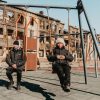
Conflict has taken a horrific toll on civilians in Ukraine over the past three months with many families struggling to meet even their most basic needs, including education. Over 1,800 schools and universities have been damaged or destroyed since Russia’s invasion on February 24, according to Ukraine’s Education Ministry. Russian forces have shelled and bombed numerous schools. Both sides have used schools as military bases or for storing weapons.
Not Enough Clean Water in Europe? Who Cares…
So busy as they are with strengthening military alliances and devoting billions of taxpayers' money to double their war budgets and subsidise fossil fuels, European Governments seem not to care about the reiterated alerts that their continent faces a serious risk: the reduced availability -and more polluted– drinking water.
Ukraine Refugee Rape Survivors Struggle to Access Abortions in Conservative Poland
An ultraconservative group in Poland has begun checking with hospitals to find out if Ukrainian refugees are being offered terminations in line with the country’s strict abortion laws amid warnings refugee victims of rape are struggling to access local help and clinical services.
Ukraine to Set Record for US Security Assistance
Less than halfway through the year, the May 19, 2022 passage of more than $41 billion in emergency funding for Ukraine positions the country to become the largest single recipient of U.S. security sector assistance in 2022.
The Time to Support the Global South is Now
While the Russian war of aggression against Ukraine is shaking up the European security order, other parts of the world are being particularly affected by the war’s ‘side effects’.
Russian Invasion Blamed for 44 Million People Marching Towards Hunger & Starvation
The Russian invasion of Ukraine last February has triggered multiple crises in several fronts: the deaths of thousands of civilians, the destruction of heavily populated cities, the rise in military spending in Europe, a projected decline in development assistance to the world’s poorer nations; the demolition of schools and health-care facilities — and now the threat of hunger and starvation.
War and Famines – Warnings of Potential Outcomes of the War in Ukraine
An entirely unnecessary and all too tangible nightmare continues to scourge Ukraine. Without doubt, one catastrophe after another still awaits. Much of Ukraine’s harvest, of paramount importance to global food supply, is at risk of being lost due to Vladimir Putin’s and the Russian army’s belligerent actions. Last year, Ukraine harvested a record of 106 million tonnes of grain – 25, or even 50 percent of this amount is currently feared to be lost during this year while most experts add that “this is an optimistic forecast.”
Women Leading Humanitarian Efforts in Ukraine, Now Include them in Leadership, say UN Women and CARE
A joint UN Women and CARE report on the gender disparities in the wake of the Ukrainian crisis calls for donors and humanitarian partners to take greater care to promote the voices of women and marginalized communities in the humanitarian effort.
Civil Society Responds — as Health-Care Facilities in Ukraine Come Under Attack
Alongside the devastation caused by bombs and bullets, the war in Ukraine has wrought another danger that can be as deadly as the violence itself: the disruption of access to health services for people who will not survive if cut off from health care.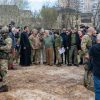
Ukraine’s EU Membership Ambition
Before the war, Ukraine's dream to become part of the EU was exactly that – a dream. But the new political reality could make it come true. Russia’s invasion of Ukraine changed and to some extent even destroyed the familiar international political reality. Up until 24 February, Russia had been integrated into the global economy, had excellent growth prospects, and the construction of the Nord Stream 2 gas pipeline was almost finished.
UN Continues Financial Ties with a Vilified Russia Isolated by the International Community
The Russian Federation, which invaded Ukraine last February killing scores of civilians and destroying entire cities, has been condemned, vilified and ostracized by the international community. UN Secretary-General Antonio Guterres was emphatic last month when he remarked: “The use of force by one country against another is the repudiation of the principles that every country has committed to uphold. This applies to the present military offensive. It is wrong. It is against the Charter. It is unacceptable”.« Previous Page — Next Page »


The Week with IPS

NEXT STOP - SDGs
Tracking global progress towards a sustainable world
Tracking global progress towards a sustainable world
