Languages
Sunday, October 18, 2026



News and Views from the Global South
Europe

“Take My Iraqis and Give Me Some Syrians” – Europe to Turkey
In a yet another violation of international laws and their own human values, 28 European countries have just agreed with Turkey to open a new “bazaar” of refugees, this time using the old barter system. i.e. Iraqis and Afghans in exchange of Syrians.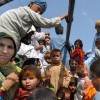
Border Restrictions Violate 1951 Refugee Convention
When the United Nations commemorated “Zero Discrimination Day” on March 1, there was an implicit commitment by the 193 member states to abhor all forms of discrimination – including against women, minorities, indigenous people, gays and lesbians and those suffering from AIDS.Big Question for the UK on the European Union
The British have a problem. A referendum on continuing membership of the European Union scheduled for June may lead to Brexit- Britain heading for the exit. Anybody with any knowledge of Europe’s war-like history knows this would be totally self-defeating.
Europe: The Schengen Agreement In Danger
Exclusion of Greece from the European free travel zone established by the Schengen Agreement is pending. The European Commission has ruled that the Athens government has “seriously neglected its obligations to control its own borders,” and if the deficiencies are not corrected within three months, the other member states of the Schengen area may exclude it from the agreement. In 2015, some 850,000 people seeking asylum and work in northern European countries passed through Greece, and the influx is continuing.
EP worried over rights situation
A European Parliament (EP) delegation has expressed concern over the human rights situation in Bangladesh, and called for an impartial investigation into all the cases of blogger killings.Spanish Member of Congress Causes Controversy after Breastfeeding in Parliament
A member of the Spanish Congress, Carolina Bescana, of the anti-austerity Podemos Party, created a controversy last week when she took her six-month old baby to work and openly breastfed him during a session. The delegate was widely criticized by almost all parties for her action and the event has spurred a lively debate on the image of mothers who juggle motherhood with their jobs.
Turkey Elections: AKP Strategy Pays Off, Kurds Continue to Struggle
Despite months of violence and unrest, spirits were high in Diyarbakir, Turkey's largest Kurdish town in the country's southeast, prior to Sunday's elections. In the previous weeks, multiple curfews had been declared in the city and in several towns in the region.Brazil and Germany Take Lead in Tackling Climate Change
Brazil and Germany, the two largest national economies within their respective continents, are taking the lead in tackling climate change through outstanding policies and bilateral relations, according to experts.Strong Climate Deal Needed to Combat Future Refugee Crises
Climate change has been held responsible many of the social and economic woes affecting mainly the poorest in the global South and now many are seeing it as one of the root causes of refugee crises.
Migrants Waiting Their Moment in the Moroccan Mountains
In the middle of the mountains behind the border fence of Ceuta, the Spanish enclave in Morocco, and eight kilometres from the nearest Moroccan village of Fnideq, an uncertain number of migrants live in the woods. No one knows exactly how many they are but charity workers in Melilla, Spain’s other enclave in Morocco, say they could be in their thousands.
European Residents Offer Support, Homes to Refugees
As the migration crisis in Europe continues to grow and government response remains slow, European citizens have taken it upon themselves to act by opening up their homes to those in need.Italy Joins Internet Rights ‘Club’
Italy has finally joined the restricted club of states in the world that have chosen the constitutional path for regulating the Internet – or at least has taken a significant step in that direction – by adopting a Declaration of Internet Rights.
Stop Food Waste – Cook It and Eat It
A new grassroots initiative born in the northern England city of Leeds has set itself the ambitious goal of ending food waste, once and for all.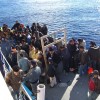
Europe Squabbles While Refugees Die
As tens of thousands of refugees continue to flee conflict-ridden countries, including Afghanistan, Iraq, Libya and Syria, Western European governments and international humanitarian organisations are struggling to cope with a snowballing humanitarian crisis threatening to explode.
Opinion: Misinformation Hides Real Dimension of Greek “Bailout”
The long saga on Greece is apparently over – European institutions have given Athens a third bailout of 86 billion euros which, combined with the previous two, makes a grand total of 240 billion euros.
Time to Work Out a Plan C for Greece
Just over a month ago, Greek citizens were asked to go to the polls for a referendum that posed the country with an unprecedented existential dilemma and challenged the EU with the possibility of its collapse.
Opinion: The Sad Historical Consequences of the Greek Bailout
In recommendations to German Chancellor Angela Merkel at the end of July, the German Council of Economic Experts outlined how a weak member country could leave the Eurozone and called for strengthening the European monetary union.
Opinion: European Federalism and Missed Opportunities
"A serious political and social crisis will sweep through the euro countries if they do not decide to strengthen the integration of their economies. The euro zone crisis did not begin with the Greek crisis, but was manifested much earlier, when a monetary union was created without economic and fiscal union in the context of a financial sector drugged on debt and speculation.”
Opinion: The End of the Greek Tragedy?
The decisive result of the Greek referendum held Jul. 5, in which voters overwhelmingly rejected (61.3 to 38.7 percent) the terms of an international bailout, has opened a new chapter not only for the future of Greece, but also in terms of the essence of the European Union itself.
Opinion: Love & Mercy, the Croatian Way
Last week, I went to see the new flick “Love & Mercy,” about the life of Brian Wilson, a singer, songwriter, and the genius behind The Beach Boys. I hadn’t heard much about the film. In fact, I was expecting a summer movie about surfing and fun; The Beach Boys playing Kokomo, Good Vibrations, and Surfin’ U.S.A. on sunny California beaches.
Opinion: If You’re Against Coal Mining, Walk In and Stop It
“If you’re against coal mining, why don’t you just walk into a coal mine and stop the excavators?”« Previous Page — Next Page »





The Week with IPS

NEXT STOP - SDGs
Tracking global progress towards a sustainable world
Tracking global progress towards a sustainable world
