Languages
Saturday, November 7, 2026



News and Views from the Global South
Global
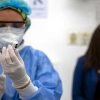
How to Assess the Willingness of US to Suspend Patent Protection on Vaccines?
The news of the Biden Administration's willingness to lift intellectual property rights protections in the case of the Covid-19 pandemic has sent the world into turmoil, even though in recent days this willingness had become increasingly airy.
CORRECTED VERSION: Struggle for the Future of Food
Producers and consumers seem helpless as food all over the world comes under fast growing corporate control. Such changes have also been worsening environmental collapse, social dislocation and the human condition.
Is the Campaign for a Female UN Chief a Good Try in a Lost Cause?
As negotiations for the upcoming election—or re-election-- of a UN Secretary-General gather momentum, one undeniable fact looms heavily over the final decision: the choice of a UN chief is the intellectual birthright of the five big permanent members (P5) of the Security Council, namely, the US, UK, France, China and Russia.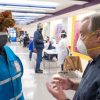
High-Dose Vitamin D Supplements Significantly Reduce ICU Admissions & COVID-19 Deaths
There is considerable evidence that vitamin D reduces the risk and severity of COVID-19 (Mercola 2020 ; Wimalawansa, 2020). More than 50 clinical studies have published confirming that high doses of vitamin D administered early in persons with COVID-19 significantly reduce complications and the need for ICU admissions.
Youth Voice and Action Critical to Reforming the World’s Food Systems
Global youth advocates have been told that they play a crucial role in ensuring that the world produces and consumes food with greater attention to nutrition, food security, equality and sustainability. As the United Nations prepares to host the inaugural Global Food Systems Summit in September, the organisation is hosting a series of dialogues to correct flaws in the way food is grown, processed, packaged and marketed, hoping to tackle growing world hunger, water scarcity and climate change.
UN Women Launches New Programme to Foster Economic Participation in Care Industry
The lockdowns and illnesses brought on by the COVID-19 pandemic have dramatically increased the need to care for children, the elderly and the sick. And in societies where gender inequality and biased norms persist, most of this burden has fallen on women, many of whom have had to leave their regular jobs with no idea of when they can return.
Is Press Freedom Incompatible with Gender Empowerment?
In the contemporary world of journalism, female reporters face a double jeopardy: they are increasingly targeted both as journalists and as women-- particularly in repressive regimes and misogynistic societies.
A Year Later, COVID-19 Continues to Show the Fragility of Food Security
More than a year after the start of the COVID-19 pandemic, food and nutrition security continues to show its fragility.
Online Violence: Weaponization of Deeply Rooted Misogyny, Sexism & Abuse of Power
Every time a woman journalist receives threats of physical and sexual violence, cyber attacks and surveillence, doxxing, public humiliation, damage to her professional & personal credibility, the driving forces behind these intents are deeply rooted misogyny, sexism and abuse of power.
Internet Restrictions Harm the Press & Public Alike
When Myanmar’s military seized power from the elected government in February, one of its first actions was to further squeeze the already restricted free flow of information in the country. It obstructed news stations, temporarily shuttered phone and internet access, and blocked social media platforms.
UN Banks on Water as the ‘Game Changer’ in Food Production and Consumption
As the United Nations prepares for its solutions-based Global Food Systems Summit in September, officials say resolving issues around water scarcity, pollution and wastage is crucial transforming food production and consumption.
A Free & Accessible Vaccine is Just out of Reach for Palestinians
We were able to keep the coronavirus at bay for five months in Gaza, the densely populated Palestinian strip of land surrounded by Israel that I call home. But the Coronavirus doesn’t respect walls or artificial borders. While preparations were made for the pandemic to inevitably breach a blockade so few Palestinians can, we waited for it to come for us. And it did.
World Press Freedom in an age of remoteness
Edmund Burke called the press the fourth estate, the fourth pillar of democracy, with an oversight role on the remaining three pillars – the legislature, executive and the judiciary. In an ideal world, this fourth estate would have unimpeded access to the other three pillars so that the citizenry could be kept informed at all times. This freedom was conceived to be so sacrosanct that many countries have included it as a fundamental right, e.g., the US Constitution enshrined it as the very first amendment.
Press Freedom Vital in the Fight Against the Pandemic
Access to accurate information is vitally important during the pandemic, so that people can understand how to protect themselves and their families, and to hold their governments to account for their response to the health emergency.
Spyware Threatens Press Freedom’s Privacy Imperative
Spyware’s repeated use to target journalists and those close to them poses an existential threat to the privacy required for press freedom to flourish. Without the ability to privately communicate with sources, conduct research, and compile information, journalists are hampered in their ability to keep the public informed and hold the powerful to account.
Why Experts are Saying It’s a ‘Make or Break’ Moment for Forests
A new global report on forests says that while the COVID-19 pandemic is the latest threat to achieving ambitious forest protection goals, it has brought the importance of forests to global well-being into sharp focus, and that this recognition must now be met with collection action.
State of COVID-19 in Sri Lanka: Are Government Policies Effective in Controlling it?
The SARS-CoV-2 infection (COVID-19) affected the entire world; many died, millions got sick, and the misery continues. Second and third waves of SARS.Cov-2 infection are devastating most countries.
Sacred Words
is all that you can't say.
Years gone by and still
words don't come easily,
like forgive me, forgive me.
Tracy Chapman
Transparency Offers Pathway to a More Sustainable Earth
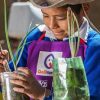
Last week, the world marked Earth Day – an opportunity to put the spotlight on the pressing needs of our planet, in the face of ever-growing impacts by humanity, and galvanize action to change practices and behavior. Yet these issues were not, and cannot be, addressed in a single day. Resolve and action to protect the environment is a 365 days-a-year endeavor.
To Effectively Combat Climate Change, Listen and Act on Ideas from the Youth
Recently, I participated in Kids Climate Summit 2021, a virtual event that gave younger students an opportunity to take a stance on climate change, express their concerns, and learn about global climate and the actions we all can take to mitigate climate change.
US-China Cold War Could Lead to a More Dangerous Nuclear Stand-off
Despite the negotiation of the Treaty on the Prohibition of Nuclear Weapons (TPNW), we are confronted by the increasing dangers of great power war, even nuclear war.« Previous Page — Next Page »





The Week with IPS

NEXT STOP - SDGs
Tracking global progress towards a sustainable world
Tracking global progress towards a sustainable world
