Languages
Sunday, November 22, 2026



News and Views from the Global South
Latin America & the Caribbean

BRAZIL: Rainforest Defenders Marked for Death
Raimundo Francisco Belmiro dos Santos, a defender of the Amazon jungle, has requested urgent protection from the authorities in Brazil after reporting that a number of hired gunmen are looking for him, because landowners in the northern state of Pará have offered a 50,000 dollar contract for his death.
Q&A: “When People Are Mad, They Start to React” to Corruption
The fight against corruption has taken centre stage in the government of Brazilian President Dilma Rousseff, and has led to the resignation or dismissal of several ministers over just a few months.SOUTH AMERICA: Leap in Mercosur Bloc Exports “Not Just Commodities”
The boom in exports from South America's Mercosur trade bloc is due not only to commodities sold to China and other large emerging economies, but also to industrial goods bound for other Latin American and Caribbean markets.MEXICO: Games that Kill
Experts and activists are calling for the reinstatement of the ban on casinos in Mexico, saying they foment not only problem gambling but also links to organised crime. The debate was revived after at least 52 people were killed in a fire set by armed men in the Casino Royale in Monterrey.
COLOMBIA: Microcredit Growing Steadily at 15 Percent a Year
The more than 1.2 million microenterprises operating in Colombia are responsible for around 50 percent of all employment. And many of these small businesses owe their existence to the microfinance system, according to a report by Visión Económica, a local business research group.
BRAZIL: Organised Crime Raises the Stakes
The assassination of Brazilian Judge Patrícia Acioli, who was investigating militias made up of off-duty police and death squads, points to a new stage of organised crime, which is expanding into the vacuum left by the impunity surrounding 90 percent of murders in the state of Rio de Janeiro.
CHILE: “We Are Prepared to Give Our Lives for Education”
As students and teachers continue their massive protests in the streets of Chile's cities, one of the most extreme methods of demanding higher-quality, free public education is the hunger strike being undertaken by 28 youngsters at secondary schools across the country, four of whom have not taken food for nearly 40 days.CENTRAL AMERICA: ‘Green Economy’ Not a Panacea
The "green economy" will not solve the problems of poverty and natural disasters in Central America as long as the development model continues to be based on over-consumption and over-production, regional experts say.BRAZIL: Fight for Gay Rights Making Strides
Brazil is making progress in cracking down on homophobia and upholding the rights of homosexuals. The latest step was the introduction in Congress of a bill on sexual diversity, sponsored by the bar association in consultation with civil society.
BOLIVIA: Morales Clashes with Native Protesters over Road through Tropical Park
The lack of regulations for consulting indigenous communities in Bolivia on initiatives that affect their territories is at the heart of a dispute over a road to facilitate traffic from Brazil, which would run through an enormous tropical national park self-governed by indigenous communities.
Haiti’s Earthquake Victims: ‘Abandoned Like Stray Dogs’
Eighty thousand tiny houses dot the countryside near this coastal city, located just west of the epicentre of the Jan. 12, 2010 earthquake that killed some 200,000 and displaced over one million.
BRAZIL: Industrial-Port Complex Fuels Growth in Desolate Northeast
The port of Pecém in Brazil's impoverished Northeast region received a large order to unload and store cement factory equipment imported from China. The port authorities were unable to accept the original order, as the cargo would have occupied 40,000 square metres of storage space, nearly half the total available.
Mexican Fisherwomen Organise Against Climate Change
Every night, Adlemi Marrufo goes out to catch bait crabs used to fish for octopus in this small seaside town and others along Mexico's Yucatan Peninsula, as part of a women's cooperative that is working to adapt to and fight climate change.
Fragmented Efforts to Save Honduran Mangroves
A mix of local and international initiatives are aimed at saving the mangrove forests and other coastal wetlands of Honduras, home to an abundance of marine life and a natural protective barrier against hurricanes, which have shrunk by over 80 percent on the Caribbean coast and almost a third on the Pacific coast.MEXICO: Maquiladora Factories Manufacture Toxic Pollutants
Since the 1960s, maquiladoras or export assembly plants have been the cornerstone of Mexico's strategy to attract foreign direct investment and boost exports. But the environmental and social costs have been high.GUATEMALA: Activists Worried that Clenched Right Fist Will Take Power
Activists in Guatemala are alarmed at the prospect of a victory by the right in the September general elections, recalling the dismal records of past regimes in the areas of human rights, the economy and justice.HAITI: Martelly Still Unable to Appoint New PM
Almost three months since he was sworn in as the country’s president, Michel J. Martelly has already attempted to appoint two prime ministers to guide his government. Bernard Gousse, a minister of justice under the Gérard Latortue dictatorship (2004-2006) and businessman Daniel Rouzier, were both rejected by Haitian lawmakers.
Q&A: “Put Yourself in Our Shoes, Mr. President”
"I repeat: there will be no peace talks without concrete actions. Words are not enough," Colombian President Juan Manuel Santos said on a visit to Argentina this week. Earlier, in Chile, he said for the first time since taking office a year ago that he was "willing" to eventually sit down to talks with the guerrillas.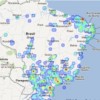
LATIN AMERICA: Citizens Chart Crime Using Online Maps
"I was walking down the street, talking on my cell phone, when a guy on a motorbike came by and grabbed the phone out of my hand. I ran after him but I couldn't catch him. He had probably been following me."
BRAZIL: Biofuel Production – Local Development or Social Breakdown?
Biofuels are an alternative energy source that can drive local development by generating jobs, know-how and technology. But they can also cause social damage, as locals fear in the case of industrial-scale exploitation of babassu palm trees, which grow abundantly in the wild in central and northern Brazil.
Q&A: Native Peruvians ‘More Marginalised Despite Growth’
For the first time, a representative of the indigenous communities in Peru's Amazonas region is sitting in Congress: Eduardo Nayap, an Awajún leader who played a central role in the lengthy protests against laws that opened up native territories in the rainforest to oil, mining and logging companies.« Previous Page — Next Page »


The Week with IPS

NEXT STOP - SDGs
Tracking global progress towards a sustainable world
Tracking global progress towards a sustainable world

