Languages
Sunday, November 22, 2026



News and Views from the Global South
Latin America & the Caribbean

New Scientific Network on Climate Change Adaptation
In Central America the temperature is rising and forests are taking longer to grow, while farther south, the Amazon rainforests have yet to feel the effects of global warming. This is just one example of how climate change is manifested differently in different parts of the region.ECUADOR: 40 Percent of Children Suffer Chronic Zinc Deficiency
The diets of people in Ecuador and other countries in South America's Andean region suffer from chronic deficiency of zinc, a mineral essential to childhood nutrition, as demonstrated by studies led by paediatrician Dr. Fernando Sempértegui.
COLOMBIA: Grassroots Rural Movement Unites Behind Call for Peace Talks
"Dialogue is the Path" is the slogan that drew 25,000 people to this northern Colombian oil port city on the Magdalena river that has a history of social struggle. Most of the participants came from remote corners of the country where the brutality of war is experienced in daily life in ways unimagined by city dwellers.
Q&A: “Climate Change Is Affecting Traditional Knowledge”
The traditional knowledge of nature developed since ancestral times by Colombia’s indigenous peoples is increasingly challenged by the unnatural effects of climate change, a phenomenon that is deeply troubling to the keepers of this knowledge, says biologist Brigitte Baptiste.
VENEZUELA: Caribbean Town Declares Plastic Bags Non Grata
A Venezuelan municipality where the main industry is oil refining, and that has an import-export "free zone", is set to become a plastic bag-free area.MEXICO: Activists Organise Against Spiralling Threats
"Open the door! Open the door, you SOBs!" Policemen dressed in black, wearing balaclavas and carrying "what I suppose were high-power rifles" broke down the door of the home of Efraín Bartolomé, a poet who lives on the south side of the Mexican capital. They had no warrant.ARGENTINA: Needs Outstrip Efforts to Build Affordable Housing
The Argentine economy has grown steadily since 2003, and hundreds of thousands of social housing units have been built. Nevertheless, the protests and conflicts that periodically break out make it clear that the solutions have failed to keep up with the need for affordable housingBOLIVIA: Amazon Road Plan Has Native People on the March Again
Indigenous people in the eastern lowlands of Bolivia are again preparing to make the long march to La Paz, 21 years after their first such protest. They have vowed to make the trek in defence of their lands, which they say are threatened by plans for a highway to be built with the backing of the Brazilian government.ENVIRONMENT-LATAM: Shrimp Industry Bites Hand That Feeds It
Mangrove forests in silt-laden intertidal coastal ecosystems provide a natural habitat for countless marine species, as well as livelihoods for thousands of families in Latin America and the Caribbean. But mangrove swamps are shrinking year by year, besieged by aquaculture, especially shrimp farming, environmentalists warn.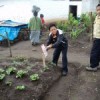
School Gardens Promote Learning While Fighting Hunger
"Yesterday I planted 20 broccoli plants at home. God willing, they will grow and we will be able to eat them," said 12-year-old Juan Francisco Ordóñez, a student at a school in San Cristóbal Totonicapán where a school garden has been established in an attempt to alleviate hunger.
RIGHTS-COLOMBIA: Government Apologises for Senator’s Murder
"I accept this apology as a sign of a new time in Colombia, when democratic participation by all political forces will be possible," leftwing legislator Iván Cepeda said – and a ripple ran through the crowd in the packed gallery in Congress.
CUBA: Petrochemical Complex Poses Major Environmental Challenge
As it gears up for the creation of a major petrochemical complex of regional scope, this Cuban city faces the challenge of ensuring the sustainability of development that could compromise the health of the Bay of Cienfuegos, its main natural resource.GUATEMALA: First Lady’s Divorce Fails to Secure Presidential Bid
The decision by the Constitutional Court of Guatemala to bar Sandra Torres, the former wife of President Álvaro Colom, from running in the Sept. 11 elections strengthens the national justice system, according to activists and analysts.
EDUCATION-CHILE: Protests Demand Deeper Reforms of Unequal System
The problems plaguing Chile's education system are not unknown in the rest of Latin America, but are especially complex in this long, narrow country sandwiched between the Andes mountains and the Pacific ocean.
COLOMBIA: Displaced Embera Indians a Long Way from Their Land
"I give something, you give something," an Emberá indigenous craftswoman displaying her beautiful handiwork on a sidewalk in the Colombian capital told this reporter, saying she would pose for a photo in exchange for selling a pair of earrings.
BRAZIL: Soy Boom Drives Westward Expansion of Railroads
Despite challenges like high interest rates and high household electricity tariffs, the Brazilian economy has been growing at the highest rates seen in decades. Another problem that, although it has not stood in the way of growth, must be overcome is the costly use of roads for transporting farm products – an issue that is being addressed by the expansion of railway networks.
COLOMBIA: Paramilitaries Dig in to Fight Return of Stolen Land
While President Juan Manuel Santos described his government's land restitution policy as "a veritable revolution" during a speech in northwest Colombia, some 300 far-right paramilitaries were taking up positions less than 100 km from there to fight the effort to return land to small farmers displaced by the violence, human rights activists say.
South America Unites Against “Irresponsible Debtors” in the North
Default, insolvency, fiscal irresponsibility, debt crisis and similar terms form part of the vocabulary used to describe countries in the developing South in the 1980s and 1990s. A decade later, the world seems to have turned upside down.
ARGENTINA: One Poor Woman Who Feeds Thousands
The endeavour gave a deeper meaning to her life and turned her into an internationally recognised community organiser. Nevertheless, the real wish of Margarita Barrientos is that there would be more need for soup kitchens for the hungry, like the one she founded in the capital of Argentina.EL SALVADOR: New Child Protection Law Starved of Resources
Lack of budget resources and political will, according to activists, is preventing fulfilment of the provisions of El Salvador's long-awaited new law for the comprehensive protection of children and adolescents.
COLOMBIA: Native Reserve Braces Itself as Conflict Escalates
Sitting outside her small shop, high in the mountains in the Tacueyó indigenous reserve in southwest Colombia, Liliana Alarco tries to hold back tears as she recalls the day her young son was injured.« Previous Page — Next Page »


The Week with IPS

NEXT STOP - SDGs
Tracking global progress towards a sustainable world
Tracking global progress towards a sustainable world

