Languages
Monday, November 23, 2026



News and Views from the Global South
Latin America & the Caribbean
BRAZIL: Major Microlaboratory Against Poverty
Microcredit in Brazil still has huge potential for expansion, even though microloans have already grown much more than traditional credit in the last eight years.
MEXICO: Citizen’s Trial Finds State Guilty in Deaths of 49 Children
"We didn't expect support from so many people in the capital. The authorities have to answer for this, and they must understand that we will not give up until justice is done," Manuel Rodríguez Amaya told IPS, his eyes still wet from bursting into tears at the end of the citizen's trial.HONDURAS: Zelaya Says Coup Was International Conspiracy
After his return to Honduras put an end to two years of exile, former President Manuel Zelaya said the coup in which he was removed on Jun. 28, 2009 was the work of an "international conspiracy" that should be investigated.CENTRAL AMERICA: Caught in the Rain Without an Umbrella
"A year ago the river burst its banks; my house was ruined, I lost everything and I'm still waiting for help," Candelaria Peneleu told IPS from her modest home in Palín in the southern province of Escuintla, an area of Guatemala that was devastated last year by tropical storm Agatha.ARGENTINA: Power Still Overwhelmingly in Men’s Hands
In Argentina the overwhelming majority of decision-making posts in the most diverse areas are occupied by men, with the exception of the presidency, held by Cristina Fernández.
BRAZIL: Red Tape Undermines Witness Protection – Part 2
The scarce funds and abundance of red tape that plague Brazil's federal witness and victim protection programme, PROVITA, effectively discourage people from stepping forward with information and hinder criminal investigations, while weakening the protection of the families whose lives depend on the service.
BRAZIL: Protected Witness Speaks Out – Part 1
Despite the risks involved, a man who is under the witness protection programme in Brazil and his wife decided to tell their story to IPS, to denounce flaws in a system that, in their case, has added neglect and isolation to the total anonymity in which they must live.
DOMINICAN REPUBLIC: Macadamia Trees Offer Lifeline to Small Farmers
A project to help reforest after the devastation of Hurricane David 32 years ago has grown into a plan to lift small coffee farmers out of poverty, all by the introduction of a gourmet ice cream.
A Dark Day for Brazil’s Amazon Jungle
The same day that the lower house of the Brazilian Congress approved a reform of the forestry code that would make it easier to clear land in the Amazon jungle for agriculture, a husband and wife team of activists who spent years fighting illegal deforestation in the rainforest were murdered.CHILE: Dictatorship-Era Law Used to Squelch Activism
"What is happening in Chile isn't justice; it's a pantomime, because under the anti-terrorism law, there is absolutely no way justice can be done," José Venturelli, spokesman for the European Secretariat of the Ethics Commission against Torture, said on a recent visit to this South American country.
BRAZIL: Amazon Dams Mean Progress for Some, Lost Livelihoods for Others
The Amazonian town of Mutum-Paraná, in the northern Brazilian state of Rondônia, is disappearing. Its last remaining buildings must be dismantled before it is flooded by the construction of the Jirau hydroelectric dam on the Madeira River.Working to Uproot Impunity in Guatemala
The controversial acquittal of former Guatemalan President Alfonso Portillo of embezzlement charges was a new frustration for anti-corruption groups who are pushing for reforms to fight impunity in a country where 98 percent of crimes go unsolved.ARGENTINA-PARAGUAY: Giant Dams Touted as Development
The Yacyretá hydroelectric dam run by Argentina and Paraguay is fully operational, supplying the energy it was designed to provide when it was built 40 years ago. But critics complain about severe social and environmental impacts.
ENVIRONMENT-CHILE: Wilderness Dams Galvanise Protesters
Environmental approval for the construction of five hydroelectric dams in Chile's southern Patagonia region has triggered nationwide protests in Chile, giving rise to a citizen's movement whose focus has gone beyond the question of the dams.LATIN AMERICA: Digging Deep for Transparency in Oil and Mining
Oil and mineral resources are abundant in several Latin American countries but will not last forever, and should be used to fuel the transition to a more diversified economy.
Q&A: “The Battle for Patagonia Has Just Begun” in Chile
The HidroAysén hydroelectric project in Chile’s Patagonia region is causing "a credibility crisis for institutionality and (President) Piñera," environmentalist Sara Larraín told Tierramérica.
PERU: No Easy Choice for Women in Presidential Runoff
In other circumstances, many women in Peru would be celebrating the possibility of a female president for the first time in the history of their country, or the alternative: the triumph of a candidate who promises to improve things for the poor. But both candidates taking part in the Jun. 5 runoff draw heavy opposition or awaken serious doubts among women's groups.BOLIVIA: Deforestation Devours Rich Ecosystems
Occupations of land for agriculture over the last four decades in Bolivia, whether by individuals or in organised collective initiatives, have led to severe ecological damages and low levels of productivity because of the intensive use of machinery and the failure to take into account the limitations of the soil, said environmentalist Marco Ribera.
Ethics and Politics Get Divorced in Guatemala
"She got a divorce because of her ambition and love of money," shopkeeper Dulce Álvarez told IPS, about Guatemalan former First Lady Sandra Torres' decision to end her marriage in order to sidestep the legal bar to the president's family members running for the presidency.Guatemala Looking Increasingly Like a ‘Narco-State’
The violence and the state of siege in the northern Guatemalan province of Petén, following the massacre and decapitation of 27 farm labourers, has been building up for years.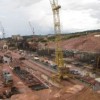
BRAZIL: Megaprojects Revive Class Struggle
The rage was proportional to the size of the crowd cornered between the jungle and the wall that will dam up the Madeira River in northwest Brazil. Over the space of three days, workers set fire to some 50 buses and other vehicles, work installations and even their own lodgings, which were built to house 16,000 people.« Previous Page — Next Page »


The Week with IPS

NEXT STOP - SDGs
Tracking global progress towards a sustainable world

