Languages
Thursday, October 8, 2026



News and Views from the Global South
Middle East & North Africa
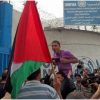
‘Born A Refugee, I Dream of a Place Called Home’
I am a refugee, born to a refugee family. I was granted that status on the day I came into this world. I was not aware of what had happened before then. I did not fight any battle, I did not threaten anyone. I did not even choose my own race or ethnicity. I just came to this world to find myself a displaced person.
An Uncertain Future for Palestinian Refugees
The United Nations Relief and Works Agency for Palestine Refugees in the Near East (UNRWA) has been forced to justify its existence at the United Nations ahead of a pledging conference later this month.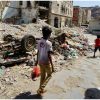
US “Emergency” Arms Sales to Mideast Nations Under Fire
When the UN Security Council met last week to discuss the deaths and devastation caused to civilians in ongoing military conflicts and civil wars, the killings in Yemen and the air attacks on hospitals, schools, mosques, and market places—whether deliberate or otherwise-- were singled out as the worst ever.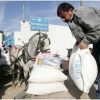
US Threats to Dismantle Palestinian Refugee Agency Trigger Protests
As it relentlessly pursues its strongly pro-Israeli policy – along with its disdain for multilateralism – the Trump administration continued to display its hostility towards the United Nations and its humanitarian agencies at a meeting of the UN Security Council focusing on the recent escalation of violence in Gaza.
Stop The War on Children
Too many children are dying as a result of explosive weapons, and the international community must step up to protect and declare children off limits in war.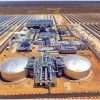
Is UAE Leading the Way for Concentrated Solar Power in GCC?
In April 2019, the International Renewable Energy Agency (IRENA) published a report on a “roadmap to 2050” in terms of renewable energy.
From Sanctioning Iran to War?
With the recent military moves announced uncharacteristically by the White House first, the world is witnessing with grim fascination what could turn out to be the early moves towards a war against Iran. How plausible is this scenario and what is likely to happen geopolitically if and when the US belligerence leads to an actual military confrontation with Iran?
US Withdrawal From Iran Nuclear Deal: One Year On
On 8 May last year, US President Donald J. Trump announced that the United States would pull out of the Joint Comprehensive Plan of Action (JCPOA), which sets limits on Iran’s nuclear programme to ensure that it cannot produce nuclear weapons.
Building a More Energy-Efficient Neighbourhood in Dubai
Dubai is an Emirate in the United Arab Emirates (UAE) with a population of about 3 million. The discovery of oil in the 1960’s transformed Dubai from a sleepy port town to a global metropolis. The recent shift to address environmental sustainability in Dubai draws attention to energy issues in the city.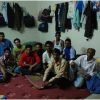
Are Migrant Workers Humans or Commodities?
The United Nations has estimated a hefty $466 billion as remittances from migrant workers worldwide in 2017—and perhaps even higher last year.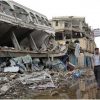
US & Western Arms in Yemen Conflict Signal Potential War Crime Charges
When US political leaders urged the Trump administration to either reduce or cut off arms supplies to Saudi Arabia – largely as a punishment for its indiscriminate bombings of civilians in the four-year old military conflict in Yemen—President Trump provided a predictable response: “If we don’t sell arms to Saudi Arabia, the Chinese and the Russians will.”
Egypt’s Food Challenge: a Good Effort but Not Enough
“Unfortunately the overall nutritional panorama of Egypt does not look well,” says Dr. Sara Diana Garduno Diaz, an expert concentrating on nutrition and biology at the American University of the Middle East. Diaz’s research focuses on dietary patterns and ethnic-associated risk factors for metabolic syndrome.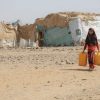
Trump’s Veto Will Trigger More US Arms to Kill Civilians in Yemen
President Donald Trump’s decision to veto a bi-partisan Congressional resolution to end US military involvement in a devastating Saudi-led four-year conflict in Yemen-- is expected to escalate the ongoing war in the trouble-plagued region.
Syrian Crisis Enters Ninth Year with 11 Million Refugees Overseas & 6 Million Home
The bell rings and the halls erupt with the sounds of chatter and excitement as hundreds of children run to the dusty courtyard for recess. I joined them to play football but the game instead turned into a round of questions.
“A Year of Shame” for Middle East and North Africa
Human rights violations are at an all-time high in the Middle East and North Africa, and global indifference is only making it worse.
De-radicalization and the Defeat of Isis: Radicalization Will Not Disappear by Itself
The defeat of ISIS in Middle East and North African battlefields is now a reality. The terrorist group - which brought bereavement to the populations of the Arab region - has been defeated militarily in Iraq and in Syria.
The Upcoming Generations Can Lift the Arab Region out of Its Current Crisis
History testifies that there is no end to its evolution despite what some have claimed. This is because aspirations of its actors are in constant flux and because the quest for an « ideal city » is asymptotic. Each generation wants to put its imprint on the present and to be the architect of its future in the pursuit of its own ideal.
A Salty Dilemma
As the threat of water scarcity increasingly grows, many have turned to the Earth’s plentiful oceans for a solution. However, this has created a new risk threatening public and environmental health: brine.The Evolution of Moroccan Immigration: a Lesson for All Countries
One of the reasons Morocco embraced hosting the Global Compact on Migration is because it is country in which the story of immigration is deeply embedded.
Why Did You Come to Marrakech?
The whole world met at Marrakech, Morocco, during the two days of the Global Compact for Migration. IPS met six people to ask what led them to come to this international event.

Final Thoughts as the Global Compact for Migration Starts its Own Long Journey Against the Odds
As the red carpets are rolled up in Marrakesh after two days of intense declarations and commitments by more than 160 countries, what are the smaller players in this global phenomenon taking back with them?
« Previous Page — Next Page »





The Week with IPS

NEXT STOP - SDGs
Tracking global progress towards a sustainable world
Tracking global progress towards a sustainable world
