Languages
Thursday, October 1, 2026



News and Views from the Global South
City Voices: The Word from the Street
CUBA: Keeping the Festival Magic Alive
As the cinema lights switched off, the groups of painters, impromptu filmmakers and craftspeople who filled the parks and plazas of this eastern Cuban town over the past week began to drift away. The musicians who played every night till dawn are gone, and so are the vendors of prawn cocktails, crabmeat pies and roast suckling pig.
URUGUAY: Tools Needed for Those Most Vulnerable to Climate Change
Water-borne diseases and illness related to natural disasters are on the agenda for plans of officials and civil society to help the precarious settlements in the outskirts of the metropolitan area of Montevideo and in other Uruguayan cities.ENVIRONMENT-BRAZIL: A Tragedy of Local and Global Dimensions
The people who live in the favela of Guararapes are probably unaware that the heavy rains that forced them to flee their homes were caused by a phenomenon that is affecting the whole planet: global warming.ARGENTINA: Sweeping the (Garbage) Problem Under the Rug
To live up to the "Zero Garbage" law that went into effect in 2006, the volume of waste ending up in landfills in the Argentine capital was to be significantly reduced every year, with the ultimate aim of eradicating landfills by 2020. But environmentalists are skeptical that the goal will be reached.HEALTH: Putting the Focus on Cities
The world's public health policy-makers should focus on urban health problems, since for the last three years the majority of the planet's population is living in cities, World Health Organisation (WHO) experts say.
CUBA: Old Havana Reaches Out to Hearing Impaired
An innovative programme in Old Havana has given the hearing impaired greater access to the historical and cultural wealth of the restored historic city centre.
CHILE: Quake a Chance for Sustainable Rebuilding
Although there is not yet an official tally of the environmental consequences of Chile's Feb. 27 earthquake and tsunami, environmental groups and experts are calling for quick and sustainable responses to the problems.
DEVELOPMENT: Mega-Inequality in Urban Mega-Regions
Basic services that are collapsing or non-existent, overcrowding, pollution: these are big-city problems that are compounded in developing countries by poverty and inequality.CHILE: Restoring National Heritage in Wake of Quake
The major earthquake that recently shook Chile - the fifth most powerful in the world since 1900 - and the subsequent tsunami not only destroyed thousands of homes, but wreaked havoc on historical monuments, museums, theatres, churches, parks and heritage zones.BRAZIL: Fewer Slum Dwellers Thanks to Upgrading
A United Nations report published ahead of the Fifth World Urban Forum in Brazil says the proportion of the population of this country living in "favelas" or shantytowns was reduced 16 percent between 2000 and 2010.WORLD CUP: But South Africa Will Win
Less than a hundred days to go, and the world looks on, often more with scepticism than anticipation.CUBA: A Good Old Age in Old Havana
In the centre of Old Havana, historic buildings are being restored without neglecting the occupants who are their heart and soul. The priority is to care for elderly residents with programmes that could become a model for the rest of Cuba, whose population is ageing fast.MIDEAST: Palestinian Homes on ‘David’s Garden’ Spared for Now
Outside the Bedouin-style protest tent in the heart of this Palestinian neighbourhood, the anger is palpable, but controlled.ENVIRONMENT-LEBANON: Coastal Pollution Threatens Fisherfolk
Pollution, oil spills and difficult living conditions are some of the challenges that fishermen in this eastern Mediterranean country face daily.
URUGUAY: A Return to Mud and Straw
More and more Uruguayans are keen on building ecological homes. The problem is that there is hardly any market or specialised labour for what is known as "bio-building."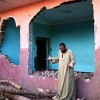
RIGHTS-EGYPT: Families Uprooted as Sphinxes Revive
Hajj Khodari lifts a defiant fist at the demolition machinery now just meters away from his front door.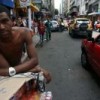
HEALTH-BRAZIL: When the City Makes You Sick
Limiting your cholesterol through diet may not be enough to maintain cardiovascular health in polluted cities like São Paulo in Brazil: the particulates suspended in the air alter the molecular composition of LDL, popularly known as "bad cholesterol," making it even more dangerous.
MUSIC-BRAZIL: ‘Enchanted’ Guitars for Social Change
Perfectly in tune, in spite of the off-key world of Terra Encantada ("Enchanted Land"), a shanty town in this Brazilian city, the guitars of Daniel Sant'Anna's orchestra strike up the "Ode to Joy", played by children and teenagers who are looking for a way forward in their lives.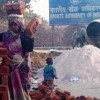
RIGHTS-INDIA: Commonwealth Games: No Medals for Labourers
If medals are being given out for backbreaking labour on miserable wages and impossible working conditions, thousands of migrant workers, slaving to complete stadia and other facilities for the October Commonwealth Games in the Indian capital, will be the champions.
CUBA: Women Knitting for Change
A neighbour started calling Andrea del Sol "Perseverance," and the name stuck. Since 1998, she and a small group of women from Alamar, on the outskirts of the Cuban capital, have been throwing their combined energies behind a common purpose: "changing things."MEXICO: Women – Casualties in Army’s Counternarcotics War
Human rights organisations in Mexico and the United States sounded the alarm about abuses against women by the Mexican armed forces in the context of the government's all-out offensive against drug trafficking in the border state of Chihuahua.« Previous Page — Next Page »


The Week with IPS

NEXT STOP - SDGs
Tracking global progress towards a sustainable world
Tracking global progress towards a sustainable world
