Languages
Thursday, September 24, 2026



News and Views from the Global South
Climate Change Justice
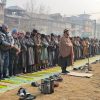
Snowless Winter and a Climate Crisis: Kashmir’s ‘Unprecedented’ Weather
Abdul Gani Malik, a 75-year-old goldsmith living in Kashmir’s capital, Srinagar, has witnessed eras of tranquility and turbulence in the Himalayan region. What he has not seen, however, is a snowless Kashmir during the winter.
Nepal Farmers Face Another Year of ‘Agricultural Drought’, Threatening Food Security
Najboon Khatun looks up at the sky every day, searching for the possibility of rain. Clouds come and go without a drop of water. “Winter crops like wheat and vegetables need water, but like last year, there has been no rainfall yet,” says 65-year-old Khatun, expressing her anguish. In her village in Dhanusha, one of the agricultural hubs in the southern plains of Nepal, farmers mostly depend on rain as a source of irrigation. However, they are facing yet another year of drought, affecting winter crops, including wheat, mustard, lentils, and vegetables.
Snow Tales: ‘Too Little, Too Late,’ Say Climate Experts
Alpine skier, 28-year-old Muhammad Karim, has spent the winter with his eyes skyward, wishing and hoping for deep and abundant snow. “My bread and butter depend on the snow,” said the Olympian, who is also a ski trainer, at Naltar Ski Resort, in the valley by the same name nestled in the Gilgit-Baltistan’s Karakoram mountain range.
Under the Scorching Sun Kenyan Farmers Find New Ways to Beat Climate Change
In the tranquil village of Kotiang, perched on the shores of Lake Victoria in Kenya's lakeside region, Yvonne Atieno, a dedicated mother in her early thirties, tends to her fish pond under the relentless equatorial sun. Her young daughter eagerly joins her mother in this nurturing endeavor. Yvonne, a certified accountant by profession, reflects on how her decision to embrace regenerative farming has not only enriched her life but also imparted invaluable life lessons.
IPS Offers Climate Change Justice Fellowship
IPS Noram and its UN Bureau is offering an exceptional opportunity for two journalists to develop their understanding of climate change justice.
From Chemical Engineer to Climate Justice Avenger: A Journey with Yamide Dagnet
As a child on the French-Caribbean island of Guadeloupe, Yamide Dagnet dreamed of launching rockets into space. She stuck to science, discovering her path in chemical engineering. She became a scientist focused on critical reactions to solving real-world problems like improving water quality in the United Kingdom.
Saving Energy, Saving Forests: How Kindle Stoves Are Changing Women’s Lives
Five years ago, farmer Sehlisiwe Sibanda would walk into a nearby forested area to fill a scotch cart with huge wood logs for cooking and heating; a pile of firewood would last her a week during the summer. But now she does not need a cartful of huge logs. Small branches and twigs are enough to last for more than a month.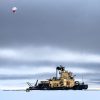
Watching the Arctic Melt, Meteorologist’s Experience on Icebreaker Oden
Conflicting emotions greet the outcomes of COP28. After 28 years of climate conferences, an agreement has, for the first time, proclaimed that fossil fuels are the biggest culprit behind the warming of our planet and stated that it would encourage all nations to “accelerating action in this critical decade so as to achieve net zero by 2050 in keeping with the science." The agreement calls for, among other things, a tripling of renewable energy by 2030, but also an increased pace in the work to develop technical solutions for the separation and storage of carbon dioxide, an extremely expensive and, so far, limited effort.
Peru’s Andean Peoples ‘Revive’ Water that the Climate Crisis Is Taking From Them
"The rich world has caused the climate change that is drying up our water sources, and here we are doing everything we can to recover them because otherwise we will die," said Juan Hilario Quispe, president of the small farming community of Muñapata, just over 50 kilometers from the Peruvian city of Cuzco.
It’s Time To Align Climate Finance and Social Justice, Says Youth Climate Activist
During his childhood, Joshua Amponsem spent a lot of time in his dry rural community collecting water from the streams. “It was normal,” the co-director of the Youth Climate Justice Fund says in an interview on the sidelines of COP28. “We didn’t talk about climate change.”
Climate Justice is the Responsibility of the Wealthier Nations, Says Bangladesh Climate Envoy
Wealthier nations must deliver the finances so developing countries can adapt—the time for excuses is over, says Saber Hossain Chowdhury, Bangladesh's Special Envoy for Climate Change in the Prime Minister's Office.
Why Climate Justice and Global Financial Reform Are Inseparable
An award-winning international development expert and a climate justice expert have called for a rethink of the global financial system that would bring reparatory justice to small, climate-vulnerable nations while offering concessionary development financing to the countries most in need of assistance. Hannah Ryder, the Chief Executive Officer of international development consultancy Development Reimagined, and Yamide Dagnet, Director of Climate Justice at the Open Society Foundations, for a side event on the margins of the Dubai Climate Talks on December 7.
Smallholder Farmers Gain Least from International Climate Funding
Smallholder farmers from the Global South benefit from a grossly disproportionate 0.3% of international climate finance despite producing a third of the world's food and despite holding the key to climate-proofing food systems.
Time to Convert Climate Change Rhetoric into Action, Says WFP’s Gernot Laganda
It is crucial to narrow the gaps and ensure that climate finance goes to where people are most vulnerable, says Gernot Laganda, Director of Climate Change Adaptation and Disaster Risk Reduction at the United Nations World Food Programme (WFP)—especially as the most fragile states only receive USD 2.1 per capita while non-fragile states receive USD 161.
Fast-Track Climate Resilience Building of Small and Vulnerable Nations Ahead of COP28
As the countdown to COP28 in Dubai, United Arab Emirates, continues, IPS caught up with Dr Oldman Koboto, Mauritius-based Manager for the Commonwealth Climate Finance Access Hub (CCFAH).
The Relentless Struggles of India’s Seawall Mammas
The sun is high in the noon sky—humidity unrelenting at 95 percent in this Indian sea-coast village. The monsoon has been deficient; rice paddies are yellowing on the edges from the salty surf misting in on them. Waves now break barely 200 metres from the farms and homes.
Women Correct Historical Injustices, Build Climate Resilience Through Cash Pooling
Although women account for more than three-quarters of the agricultural labour force and manage 40 percent of small-scale farms, historically, they neither owned nor controlled the land because land rights were passed down to male relatives. It is a historic gender injustice whereby women could only access land through close male relatives.
Innovative Financial Services Transform Agricultural Entrepreneurship in Africa
Smallholder agricultural enterprises in Africa face a lot of challenges getting loans from financial institutions like banks due to the stringent requirements they can hardly fulfil. Investor confidence is usually lacking, given the risks involved in this sector of the economy.
Uganda: When Climate Justice Becomes Climate Justice Denied
On December 4, 2019, landslides in the Bududa region of Uganda killed 20. The landslides occurred after heavy rains, and a Red Cross report estimated that 96 households were affected, with 49 houses destroyed. It displaced many, while others continued to live in high-risk areas that could "slide at any moment."
Climate Change Turns African Rivers into Epicentres of Conflict
Almost all major river basins in Africa have become the epicentres for conflicts over the last 20 years, and agricultural yields on the continent could drop by up to 50 percent in the coming years owing to the drying up of 'traditional' water sources, thanks in part to effects climate change and degradation of the environment, the inaugural edition of the State of Africa's Environment Report 2023 released in Nairobi finds.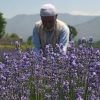
Wrecked by Climate Change, Farmers in Kashmir Shift to Lavender Cultivation
Mohammad Subhan Dar diligently tends to some bright purple plants on a four-acre farm in Bijbehara, a hamlet south of Kashmir’s capital, Srinagar. As you draw nearer, you’ll be mesmerized by the sight of sprawling lavender fields, where about 10 to 15 farmers, including Dar, prepare for a promising harvest.« Previous Page — Next Page »


The Week with IPS

NEXT STOP - SDGs
Tracking global progress towards a sustainable world
Tracking global progress towards a sustainable world
