Languages
Sunday, October 18, 2026



News and Views from the Global South
Culture

IRAN: Music Finds a Voice in Tehran
The waiter at the coffee shop moves rapidly to the entrance for a quick glance outside. Within, a young Iranian musician has started to play the saxophone. He has five minutes to perform, he cannot risk a raid on the "guerrilla" location for a little music.
CULTURE-CUBA: Women Rappers a Vocal Minority
Women are still a small minority on Cuba’s hip hop scene. "If the situation is hard for us nationwide, imagine what it’s like in the eastern region, where this genre has very little recognition," says Yaneidys Tamayo, leader of the group Las Positivas.
INDIA: Hunger Shows its Power
If India’s powerful central government that rules over the destinies of 1.2 billion people quails before a slight 74-year-old man, it is because he is armed with a weapon that has rarely failed in this country – extreme renunciation through a fast-unto-death.Turks Police Own London District Amid Rioting
As London simmered under a heavy police lid last night, there were some areas of the city that had no need for flashing blue lights and riot shields to maintain the ragged sense of calm.
Restoring the Cuban City with a French Colonial Air
The city of Cienfuegos, known in Cuba as the "Pearl of the South", is unique for its spotless cleanliness, the orderly grid pattern of its streets, its 19th century architecture and its air of "Grande Dame" elegance. Now its past splendours, ravaged by time or left to deteriorate because of economic difficulties, are being restored.
CHINA: Tianjin Embraces its Colonial Legacy
When the old Astor Hotel reopened to great fanfare from the local city fathers here in 2010, it marked more the return of the "Grande Dame of Tianjin" to the city’s growing collection of luxury hotels. It was a travel back to the future. It manifested the city leaders’ eagerness to embrace and rebrand the colonial heritage as a way of boosting Tianjin’s modern identity.NEPAL: Religious Practices Oppress Women
The recent gang-rape of a Buddhist nun and her expulsion from her sect have sparked a debate about the deep-rooted religious traditions and biases that foster discrimination and violence, especially against women, in this South Asian state.
BRAZIL: World Cup, Olympic Social Legacy Thrown in Doubt
Community organisations say the major infrastructure works for the 2014 football World Cup and 2016 Olympic Games in Brazil do not reflect the spirit of the social legacy promised by the government and business community, which project 68 billion dollars in economic benefits from the first event alone.PAKISTAN: Troubled Karachi Finds a Happy Enclave
The long boardwalk, balmy sea air and ebb and flow of water under the bridge, but most of all the festive carnival-like atmosphere of people enjoying the Karachi sunset, are images that stand in deep contrast to the violence this metropolis recently witnessed.
INDIA: Temple Treasures Open Up Problems of Plenty
The discovery that treasures lying in the vaults of an ancient temple in Thiruvananthapuram may be worth more than 25 billion dollars is raising questions regarding the vast wealth owned by religious shrines in this impoverished country.OP-ED: Foreign Policy Goes Gaga
Lady Gaga and Alice Walker don't have much in common. One dresses in red meat; the other doesn't even eat the stuff. One writes lyrics like "I want your ugly, I want your disease, I want your everything as long as it's free." The other writes "The Color Purple".
BRAZIL: Women in Favelas Broadcast Peace
Local women's voices have begun to be heard over a community radio station now broadcasting in Complexo do Alemao, a clump of favelas or shantytowns on the north side of this Brazilian city that were ruled until recently by armed drug gangs.JAPAN: Aftershocks Hit Single Fathers
In a matter of minutes on Mar. 11, 33-year-old Hiroshi Yoshida became a widower and a single father, as the massive tsunami swept over his home in Rikuzentakata in northern Japan and took away his wife and younger son.INDIA: Kashmir Dreams of Bollywood
If films are the voice of society, then Indian Kashmir is mute, with a virtually non-existent film industry and the subsequent inability to nurture local talent.Cuban Twitterers Meet Face-to-Face
"I want to meet @salvatore300 and @elainediaz2003" was a comment overheard at #TwittHab, the first meeting in Cuba of social network users. After years of being connected only via the web, the internet is now being used to facilitate real-world contact between citizens of this socialist island nation.CUBA: Video Games Spread Despite Limitations
Despite the many limitations on access to digital-age technology in Cuba, a taste for computer games is spreading in this country, giving rise to a youthful movement that is beginning to conquer new public spaces.
COLOMBIA: ‘Impunity’ – Keeping the ‘Black Hand’ Anonymous
The film "Impunity" has only just now arrived in Colombia, although the filming was completed a year ago and it was first shown to the public in Geneva in January. But the wait was apparently worth it because the documentary contributes key elements to the heated debate on the so-called "black hand" behind many of the atrocities committed in this South American country.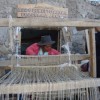
PERU: Indigenous Women Weave New Community Ties
Fuchsia, green and turquoise yarn shuttles swiftly across the wooden loom Dora Huancahuari has learned to use. Together with other craftswomen, she has started a small weaving business which is helping to rebuild their lives in this remote, poverty-stricken Andean community torn by Peru's history of armed conflict.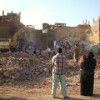
MIDEAST: Sphinx Avenue Paved With Bitter Memories
Mohamed Saeed’s battle with a wrecking crew ended predictably. His refusal to leave the home his grandfather built and defiant attempts to throw himself in front of the giant hydraulic hammer bought his family some time, but by the end of the day their two-storey house was reduced to rubble.
Q&A: “Women Have Yielded the Cooking Profession to Men”
"Women didn't want to be slaves any more, or work professionally at what they were trying to liberate themselves from," renowned Venezuelan chef Helena Ibarra told IPS, explaining why women have taken so long to compete in a workplace as symbolically feminine as the kitchen.Dam Project in Turkey Breeds Controversy
The tranquillity and mystery of this town on the banks of Tigris River will not last long. The millennia-old town will be nearly totally destroyed once the nearby Ilisu dam, built for energy and irrigation, is complete.« Previous Page — Next Page »





The Week with IPS

NEXT STOP - SDGs
Tracking global progress towards a sustainable world
Tracking global progress towards a sustainable world
