Languages
Thursday, October 1, 2026



News and Views from the Global South
East Africa

SUDAN: New Conflict Displaces Thousands
The Sudanese government says that a majority of the tens of thousands of people displaced by the fighting in the country’s Blue Nile state have started returning to the area. This is despite reports by local and international aid agencies that say people are still fleeing the region.
SOUTH AFRICA: “Secrecy Bill” Step Backwards for Africa
Critics call it "the Secrecy Bill". And it comes at a time when several African countries are adopting promising new legislation on access to information. But campaigners say South Africa's draft Protection of Information Bill represents a step backwards.
East Africa Wants to Trade Beyond the EU
The East African Community (EAC) and European Union head back to negotiations on Monday to resolve the controversy over the delay in signing an economic partnership agreement between the two trading blocs.
AFRICA: Slow Progress in Reducing Maternal Mortality
Agnes Kalunda’s doctor feared that because of her slight frame there was a high chance of her developing complications during delivery.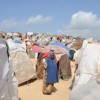
SOMALIA: Armed Militia Grab the Famine Business
Armed groups are withholding aid and preventing Somali famine refugees from leaving camps to ensure the continued supply of food by aid agencies that they are presently selling on the open market.
SOMALIA: Food Aid Stolen From Famine Victims
Masses of food meant for famine victims in Somalia are being stolen, an investigation has revealed.
TRADE: Free Trade in Africa, For Better or Worse?
It is not certain that an African free trade area will further regional integration or deepen the existing inequality between countries.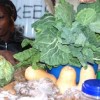
KENYA: Poor Struggle as Inflation Soars
As Kenya's inflation rate reached 15.53 percent, compared to 3.18 percent in October 2010, the country's poor have been struggling to afford the most basic of essentials. In some areas families can no longer rely on regular meals and have reduced them to one a day, others mostly eat potatoes to get by, and in one Rift Valley slum, poor families now buy toothpaste by the drop.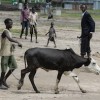
SOUTH SUDAN: Inter-Ethnic Clashes Become More Frequent and Deadly
Thousands of women and children are being abducted and over 1,000 people have died this year as communities in oil-rich South Sudan war over a precious commodity – cattle.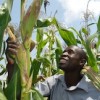
KENYA: Lime Improves Maize Harvest
As the world’s worst food security crisis continues across the Horn of Africa, including in Kenya, some smallholder farmers in the western part of the country are still feeding their families with last year’s abundant harvest.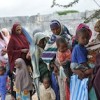
SOMALIA: Massive School Dropouts As Famine Continues
Jamaal Abdi, an eight-year-old boy at the Badbaado camp on the outskirts of Mogadishu, would like to have an education. He has his own dreams for the future.
SOMALIA: City in Need of More Aid
The shelling and gunshots, once a common sound in Mogadishu, no longer ring out in the city's streets. The surprise withdrawal on Aug. 6 of the Islamist extremist group Al Shabaab from their stronghold in Mogadishu has meant that people now move about the city, for the first time in two years, without fear of constant attack.
UGANDA: Post War Reconstruction Ignores Victims of Sexual Violence
Ester Abeja has experienced both physical and emotional atrocities. She was captured by Uganda's feared rebel group the Lord’s Resistance Army (LRA) and was forced to join them. But not before the soldiers made her kill her one-year- old baby girl, by smashing her skull in, and then gang raped her.
KENYA: Post Election Violence Victims Still Suffer
The Mawingu camp for internally displaced persons affected by Kenya’s 2007- 2008 post-election violence is a desolate place. Located in the Rift Valley, the camp is a collection of tattered, sagging and forlorn tents.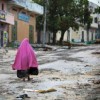
Somali Women Bear Superhuman Burden
While the exit of the Al-Qaeda-backed rebel group Al Shabaab has led to the first U.N. relief airlift in five years in the capital of famine-wracked Somalia, the situation for women and children remains precarious, humanitarian workers warn.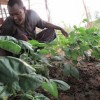
KENYA: Relief Food Sourced from Local Farmers
Mourid Abdi Dolal and Wilson Rotich are both small-scale farmers who grow staple crops. But while one sells his produce at the local village market, the other farms to feed the growing number of refugees in Kenya.SOMALIA: U.S. Greenlights Aid to Shabaab-Controlled Areas
The Barack Obama administration promised Tuesday that the U.S. would not prosecute relief agencies for delivering aid to parts of Somalia controlled by the Islamist insurgent group al- Shabaab, despite concerns that unrestricted aid in the failed state would be diverted to the wrong hands.
Famine Relief in Somalia Stymied by Access
While an estimated 12.4 million people linger on the brink of starvation in the Great Horn of Africa, U.S. officials and world relief agencies said Monday that even in a "best case scenario" the crisis will worsen as the areas in most desperate need remain cut off from access to relief.
SOMALIA: “I Carried Him a Whole Day While He Was Dead, Thinking He Was Alive”
As the first of food aid from the United Nations World Food Programme was airlifted into Mogadishu on Wednesday, it came too late for Qadija Ali's two- year-old son Farah.
EAST AFRICA: ‘It’s Not a Heartless Mother Leaving a Child Behind, Just One Who Wants to Survive’
On the road between the Kenyan and Somali border lie the dead bodies of children who have succumbed to the famine and the hardships of making the journey from their drought-stricken villages to Kenya.SOUTH SUDAN: Row Over Exorbitant Fees for Pipeline Use
Less than three weeks after gaining independence, South Sudan is embroiled in a row with Sudan over pipeline fees charged by the latter to export oil.« Previous Page — Next Page »


The Week with IPS

NEXT STOP - SDGs
Tracking global progress towards a sustainable world
Tracking global progress towards a sustainable world
