Languages
Saturday, October 24, 2026



News and Views from the Global South
HIV/AIDS
ASIA: Prescription for HIV/AIDS Pandemic – Social Justice
The prescription that thousands of participants effectively issued at a just- ended AIDS conference here was clear: It is time to fight social and political inequities so that the medical gains in curbing HIV and AIDS can work with maximum efficacy.
HEALTH-ASIA: Where Are the Religious Leaders?
"Thank God for condoms!" Donald Messer of the U.S.-based Centre of Church and Global AIDS declared during one of the many sessions at an AIDS conference for the Asia-Pacific, which ended here Thursday.RIGHTS-ASIA: Transgenders Assert Identity At AIDS Meet
"There has been so much confusion going around transgenders. We are not MSMs [men who have sex with men] and don't lump us under the transvestite [category either] because we have different needs," declared Kartini Slemeh at the 9th International Conference on AIDS in Asia and the Pacific (ICAAP) here.
HEALTH: Activists Press for ‘People’s Property Rights’ to Medications
Pharmaceutical firms have developed drugs that have lengthened lives and cut death rates from HIV and AIDS, but their financial clout in no way overrides their social responsibility in fighting the pandemic, a key advocate argued at an Asian conference on AIDS Wednesday.HEALTH-ASIA: Media Missing the HIV/AIDS Story
The scant presence of mainstream media organisations at the 9th International Conference on AIDS in Asia and the Pacific (ICAAP) was a sad reflection of how the press was overlooking the big story on HIV/AIDS, say some journalists and development analysts at Asia's largest meeting on the pandemic.ASIA: After Medical Gains in HIV, Time to Tackle Stigma
One can take anti-retroviral therapy to cope with HIV. But how does one remedy the deeply rooted social inequities that marginalises groups like men who have sex with men and drug users, as well as women, putting them out of the reach of efforts to address the pandemic?
HEALTH: Go Away With Your Spray
Zinaldina dos Reus, Zizi for her friends, is washing clothes by a stream near the airport in São Tomé. Her toddler plays nearby. Zizi, 21, can't remember the last time she or her husband had malaria, years ago. She credits the free bed nets and anti-mosquito home spraying regularly supplied countrywide since 2004.ASIA: Stigma, Cash Crunch Undercut Gains in Access to HIV Treatment
The failure to reach the neediest, often the most stigmatised, people and the global financial crisis, loom as Asia-Pacific's biggest challenges in coping with HIV and AIDS at this point, despite the major headway it has made in expanding the number of people with access to treatment.
CULTURE: Young Women in Chat Rooms Beware
Internet and mobile phones have spawned a new kind of marriage in the Gulf.
HEALTH-SOUTH AFRICA: Wheeling and Healing
Every weekday morning, a stylish procession leaves the offices of MaAfrika Tikkun NGO in Delft, Cape Town; bumps and jolts through the gravel entry gates; then hits the tar and scatters into every corner of the township...
HEALTH: Fighting AIDS in Conservative Mauritania
Campaigners against HIV/AIDS in Mauritania face an uphill task to put their messages across, especially those that deal with safer sex and condom use. Campaigners have to cut corners in order to avoid angering the country's powerful religious clerics.HEALTH-AFRICA: TB Vaccine In The Pipeline
For the first time in eighty years, a new Tuberculosis (TB) vaccine has entered the efficacy stage of a clinical trial. While the developers are optimistic about the outcome, lung health and TB experts are warning against being overly excited.
HEALTH-AFRICA: Early ART: A Stitch in Time…
A global call to put people living with HIV on antiretroviral therapy (ART) at an earlier stage of their illness is intensifying, but most developing countries, especially in Africa, are struggling to meet the current recommendations.HEALTH-AFRICA: HIV Laws Do More Harm Than Good
In Sierra Leone, a mother who transmits HIV to her child can be fined, jailed for up to seven years, or both. Human Rights Watch reports that in 2008, several men were arrested in Egypt simply for being HIV positive. New legislation is currently being discussed in Angola that could lead to a three to ten year jail sentence for those who knowingly pass on HIV.HEALTH: Namibia Makes Strides in Paediatric HIV
While paediatric HIV remains a growing concern throughout Southern Africa, Namibian doctors have managed to put high numbers of babies on the life-saving antiretroviral (ARV) treatment with the help of an early infant diagnosis (EID) programme based on dry blood sampling.
HEALTH-AFRICA: Phoney Choice Between Life and Death
Failure to sustain funding for HIV/AIDS treatment programmes could lead to a rising number of deaths, particularly in Africa.HEALTH-AFRICA: Where To Find A Million New Nurses?
If developing countries want to succeed in improving their health systems, they urgently need to decentralise them and shift tasks from doctors to nurses and community health workers, said experts at the Fifth International AIDS Society (IAS) Conference on HIV Pathogenesis, Treatment and Prevention in Cape Town.
HEALTH-AFRICA: Maintain Funding for HIV/AIDS Prevention
Health experts and scientists have accused the world's wealthiest countries of abandoning the goal of universal access to HIV prevention, care and treatment by 2010.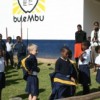
DEVELOPMENT: Social Enterprise in the Swazi Highveld
In 2006, faith-based charity organisation Bulembu Ministries Swaziland took over management of an all-but abandoned mining town, situated on a 1,700 hectares in northwestern Swaziland.
SWAZILAND: Resurrecting Bulembu
In 2005, Bulembu was a ghost town. The once-prosperous mining town's population had fallen from 10,000 to just 100. The beautiful houses that used to accommodate company staff and their families, schools that had been among the best performers in the Kingdom, shops, clinics - all fell quickly into disrepair when the asbestos mine closed.MEXICO: Int’l AIDS Funds Necessary but Not Sufficient
For the first time, Mexico is eligible for a grant from the Global Fund to Fight AIDS, Tuberculosis and Malaria. But even if its application is successful, resources for HIV/AIDS prevention among high-risk sectors of the population will fall short.« Previous Page — Next Page »





The Week with IPS

NEXT STOP - SDGs
Tracking global progress towards a sustainable world
Tracking global progress towards a sustainable world
