
Wednesday, July 1, 2026



News and Views from the Global South
Inequality
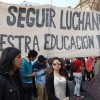
Young People in Latin America Face Stigma and Inequality
Young people in Latin America now enjoy greater access to education. But in many cases their future is dim due to the lack of opportunities and the siren call of crime in a region where 167 million people are poor, and 71 million live in extreme poverty.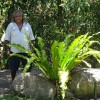
Aboriginal Businesses Stimulate Positive Change in Australia
Roy Roger Gibson, an indigenous Kuku Yalanji elder, would watch thousands of tourists and vehicles trampling his pristine land while working on the sugarcane fields in Far North Queensland. His people were suffering and their culture was being eroded. The native wildlife was disappearing. He dreamt of turning this around.
OPINION: Greece Gives EU the Chance to Rediscover Its Social Responsibility
The European Union should not be afraid of the leftist opposition party Syriza winning the Greek election, but see it as a chance to rediscover its founding principle - the social dimension that created it and without which it cannot survive.
Fighting Extremism with Schools, Not Guns
As a wave of outrage, crossing Pakistan’s national borders, continues a month after the Dec. 16 attack on a school in the northern Khyber Pakhtunkhwa province, some citizens are turning away from collective expressions of anger, and beginning the hard work of building grassroots alternatives to terrorism and militancy.
From Bullets to Ballots: The Face of Sri Lanka’s Former War Zone
In four months’ time, Sri Lanka will mark the sixth anniversary of the end of its bloody civil conflict. Ever since government armed forces declared victory over the Liberation Tigers of Tamil Eelam (LTTE) on May 19, 2009, the country has savored peace after a generation of war.
OPINION: A New Era of Hemispheric Cooperation Is Possible
Two decades after the first Summit of the Americas, a lot has changed in the continent and it has been for the good. Today, a renewed hemispheric dialogue without exclusions is possible.
Papal Visit Rekindles Hopes in Former War Zone
Jessi Jogeswaran, a 20-year-old woman from Sri Lanka’s northern Jaffna district, waited over six hours with 18 friends in the sweltering heat just to get a glimpse of Pope Francis on Jan. 14.
Anemia in Eastern Cuba Reflects Inequality
Cuba has met the United Nations goal of reducing hunger. But anemia caused by malnutrition is still a problem among infants, small children and pregnant women in this Caribbean island nation, which has been in the grip of an economic crisis for over two decades.
Haitians Worry World Bank-Assisted Mining Law Could Result in “Looting”
With Haiti’s Parliament having dissolved on Tuesday, civil society groups are worried that the Haitian president may move to unilaterally put in place a contentious revision to the country’s decades-old mining law.
Women ‘Sewing’ a Bright Future in Northern Pakistan
At 46, Naseema Nashad is starting her life over, not out of choice but out of necessity. The Afghan woman was just 25 years old when Taliban militants stormed Kabul and her family was forced to flee to neighbouring Pakistan to escape what they knew would be a brutal regime.
Bhopal Cloud Hovers Over Industrial Safety in India
Three decades after 40 tons of deadly methyl isocyanate gas leaked from the Union Carbide India Limited plant in the central Indian city of Bhopal on Dec. 3, 1984 – killing an estimated 4,000 almost instantly and maiming and blinding hundreds of thousands of others – the world's worst industrial disaster remains a sharp lesson on the need for greater safety regulations in Asia’s third-largest economy.
OPINION: No Nation Wants to Be Labeled “Least Developed”
Since 1971, Maldives is one of only three countries that have graduated from the ranks of the world’s “least developed countries” (LDCs) – the other two being Botswana and Cape Verde.
Sri Lanka’s Minorities Choose “Unknown Angel” Over “Known Devil”
When the initial results started trickling in a little after midnight on Jan. 9, it still wasn’t clear exactly which way the country would swing: had Sri Lanka’s 15 million eligible voters thrown in their lot with incumbent President Mahinda Rajapaksa for a third term? Or would the desire for change put common opposition candidate Maithripala Sirisena at the helm?
Illiteracy Wears a Woman’s Face in El Salvador
At the age of 74, Carmen López has proven that it’s never too late to learn. She is one of the 412 people in this small town in central El Salvador who recently learned to read and write.
Organic Farming in India Points the Way to Sustainable Agriculture
Standing amidst his lush green paddy fields in Nagapatnam, a coastal district in the southern Indian state of Tamil Nadu, a farmer named Ramajayam remembers how a single wave changed his entire life.
The Rise and Fall of the World’s Poorest Nations
The world's 48 Least Developed Countries (LDCs) - a special category of developing nations created by the General Assembly in 1971 but refused recognition by the World Bank - have long been described as "poorest of the poor" in need of special international assistance for their economic survival.
From the American Dream to the Nightmare of Deportation
Julio César Cordero’s American dream didn’t last long. He was trying to reach Houston, Texas as an undocumented immigrant but was detained in Acayucán in southeastern Mexico. And like thousands of other deported Salvadorans, he doesn’t know what the future will hold.
Spectre of Violence Hangs Over Sri Lanka Polls
As 14.5 million Sri Lankans prepare to select their next leader, there is growing fear that violence could mar the Jan. 8 elections, billed as the closest electoral contest in the island’s history.
India’s ‘Manual Scavengers’ Rise Up Against Caste Discrimination
Watching Bittal Devi deftly weave threads of different colours into a vibrant patchwork quilt, it’s hard to imagine that this 46-year-old’s hands have spent the better part of their life cleaning toilets.
Time to Recognise Indigenous Australians in the Constitution
 Australian Aboriginal and Torres Strait Islanders comprise 2.5 per cent (some 548,370) of Australia’s 24-million strong population, but they are not recognised by the Constitution.

Small Grants for Big Solutions in Northeast Argentina
Summers in northeast Argentina are hot and humid. At siesta time, the people of this rural municipality like to drink “tereré” (cold yerba mate), which until now they had problems preparing because of lack of clean water or electricity. But sometimes small donations can make a big dent in inequality.« Previous Page — Next Page »


As the international community takes stock of the progress over a decade and a half of Millennium Development Goals, rising inequality is the black cloud that hovers over achievements worth celebrating, when the world debates a development agenda beyond 2015. While inequality between countries has declined, many nations have seen a rise in the rift between rich and poor within their borders. Not infrequently, inequality is compounded by a lack of sound governance that allows for corruption, tax evasion and illicit money flows. A handful of countries, however, have managed to combine growth with a historic decline in inequality. IPS tracks the achievements of development, while closely examining obstacles to equal growth and forces driving progressive change.

This page includes independent IPS news coverage supported by the Norwegian Ministry of Foreign Affairs, to put the issue of inequality higher up the news agenda during the run-up to the 2015 MDG deadline and the process to forge a new development consensus
