Languages
Monday, October 26, 2026



News and Views from the Global South
Jamaica

Caribbean Civil Society Gathered in Jamaica to Strengthen Resilience Amid Global Shifts
Civil society groups from across the Caribbean met in Jamaica in February 2026 for a landmark regional conference, with development leaders urging stronger governance, digital readiness and deeper partnerships to adapt to a shifting and increasingly complex geopolitical landscape.
COP30 Fails the Caribbean’s Most Vulnerable, Leaders Say: ‘Our Lived Reality Isn’t Reflected’
Caribbean small island states say this year’s UN climate conference has once again failed to deliver the urgency and ambition needed to tackle escalating climate devastation across the region. From slow-moving climate finance to frustrating political gridlock, leaders say COP30 did not reflect the realities that small islands are living through every day.
Adaptation Finance Shortfalls Leave Developing World Exposed
Hurricane Melissa made landfall in Jamaica yesterday—the strongest hurricane to impact the island on record since 1851—with expectations of tens of thousands of people being displaced and devastating damage to infrastructure. The tropical storm, slightly downgraded but nevertheless devastating, made landfall in Cuba today as UNEP’s newly released Adaptation Gap Report 2025: Running on Empty shows that the finance needed for developing countries to adapt to the climate crisis is falling far behind their needs.
Rocky Point Fishers Await Sanctuary To Ease Environmental Issues, Low Fish Catch
Long before the COVID-19 Pandemic, fishers at the Rocky Point fishing beach in Clarendon were forced to venture farther out to sea to make a living or find alternatives to make ends meet.
Poor Water Distribution Infrastructure Gives Jamaica a ‘Water Scarce’ Label
It will take billions of dollars and many years to fix a growing problem that has placed Jamaica into the unlikely bracket of being among the world's most water-scarce countries due to the unavailability of potable water.
Commonwealth Climate Finance Hub to Boost Belize’s Delivery of Climate Change Projects
In September 2020, at the height of the COVID-19 pandemic, the UK-based Commonwealth Secretariat announced that it had dispatched highly skilled climate finance advisors to four member nations to help them navigate the often-complicated process of accessing climate funds. Belize, the Caribbean Community’s (CARICOM) only Central American member, was one of the recipients.
Measuring the Impact of COVID-19 on the World’s Forests
The COVID-19 Pandemic has affected every sector of society and a global assessment by the United Nations Forum on Forests (UNFF) confirms that its shocks have extended to forests on every region on earth.

Blockchain Releases Farmers From the Collateral Trap
A Jamaican start-up has an innovative solution to help smallholder farmers—many of whom do not have the collateral demanded by financial institutions to access loans—build a track record of their production that is proving better than collateral.
‘Inna de Yard’ Delves into the ‘Soul’ of Jamaica
Dogs barking in the distance. Birds chirping nearby. A man walking through the mist, surrounded by lush vegetation. A distinctive vibrato singing “Speak Softly, Love” over it all.
Renewables to Become the Norm for the Caribbean
Jamaica and other Small Island Developing States (SIDS) are embracing renewable energy as part of their plans to become decarbonised in the coming decades.
Q&A: Jamaica Pushes Climate Smart Policies to Secure the Future of its Food Supply
The island state of Jamaica is vulnerable to climate change which has in turn threatened both its economy and food production. But the Caribbean nation is taking the threat seriously and it has constructed a robust policy framework to support national climate action, particularly when it comes to promoting climate-smart agriculture (CSA).
Building Climate Resilience in Coastal Communities of the Caribbean
Ceylon Clayton is trying to revive a sea moss growing project he and friends started a few years ago to supplement their dwindling earnings as fishermen.
Communities Step Up to Help Save Jamaica’s Forests
According to the United Nations Food and Agriculture Organization (FAO), 31.1 percent or about 337,000 hectares of Jamaica is forested. Of this, 26.1 percent or 88,000 is classified as primary forest, the most biodiverse and carbon-dense form of forest.
Bamboo Gaining Traction in Caribbean as Climate Savior
Keen to tap its natural resources as a way to boost its struggling economy, Guyana struck a multi-million-dollar deal with Norway in 2009.
France Hosts Major Exhibition on Jamaican Music
It’s one of those movie-like spring days in Paris, where blue skies and brilliant sunshine lift spirits after a long, wet, grey winter. Many people are outdoors trying to catch the rays, but Jamaican artist Danny Coxson is not among them. He’s inside a museum in a northeastern neighbourhood of the French capital, with a brush in his hand and tubs of vivid paint beside him, focusing on finishing a portrait of a deejay named Big Youth.
Together We are Stronger Against Police Violence
As a relative of a young man killed by the police in Kingston, Jamaica, many people have asked me how my family copes with the pain, with having lost a part of us, with the immense frustration of not having found justice for Nakiea.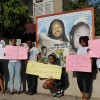
Jamaica’s Culture of Fear Allows Police to Get Away With Murder
The morning her brother was shot dead in January 2014, Shackelia Jackson had slept through her alarm. She woke up to the sound of his name and instantly knew something was wrong. When she ran down to the modest restaurant he operated in downtown Kingston, she noticed the spoon in the rice pot, the flour where the chicken was being fried. Then one of his slippers, and blood marks.Laws Criminalizing Drug Possession Can Cause More Harm
In many countries, a criminal record, even for a minor offense can have serious implications. Being convicted of a criminal offence renders one ineligible for certain jobs, social grants or benefits or from even being able to exercise one’s right to vote. It can also severely limit the ability to travel to certain countries and can result in the loss of custody of minor children. As prison conditions are often poor and health care services limited, a custodial sentence can have implications on the health outcomes of individuals.
Jamaica’s Climate Change Fight Fuels Investments in Renewables
By year’s end, Jamaica will add 115 mega watts (MW) of renewable capacity to the power grid, in its quest to reduce energy costs and diversify the energy mix in electricity generation to 30 per cent by 2030.
Against the Odds, Caribbean Doubles Down for 1.5 Degree Deal in Paris
Negotiators from the 15-member Caribbean Community (CARICOM) are intent on striking a deal to keep the global temperature rise at 1.5 degrees of pre-industrial levels, but many fear that a 10-year-old agreement to buy cheap petroleum from Venezuela puts their discussions in jeopardy.
Caribbean Agriculture Looks to Cope with Climate Change
Climate change represents a clear and growing threat to food security in the Caribbean with differing rainfall patterns, water scarcity, heat stress and increased climatic variability making it difficult for farmers to meet demand for crops and livestock.Next Page »





The Week with IPS

NEXT STOP - SDGs
Tracking global progress towards a sustainable world
Tracking global progress towards a sustainable world
