Languages
Thursday, October 15, 2026



News and Views from the Global South
Mexico

Think Tank Urges “More Ambitious” U.S.-Mexican Agenda
The electoral and political stars are aligning in ways that offer the United States and Mexico major opportunities to substantially deepen their cooperation, particularly on trade, energy, and immigration, according to a report released here Wednesday by a special commission of the Inter-American Dialogue (IAD).
China-Mexico Ties Grow Thin
"We are completely 'clueless' when it comes to China." This statement by Enrique Dussel, director of the Centre for China-Mexico Studies of the National Autonomous University of Mexico, perfectly describes the currently stale state of relations between the two countries.
Sustainable Transport Gets a Boost in Latin America
Latin America's big cities should cooperate with each other in order to overcome shared challenges in transport issues, such as sustainability and a more human-centered approach to urban development, experts say.
Obama Misses Opportunity to Stem Gun Flow to Mexico
Unveiling the most extensive gun control proposal in generations, U.S. President Barack Obama on Wednesday signed nearly two dozen executive orders and called on the U.S. Congress to enact a legislative package to blunt the country's growing trend of gun violence.Mexico Tearing Its Hair Out Over Mercury
The Coatzacoalcos river basin in southern Mexico is so polluted that you can sense the mercury in the air, feel it and breathe it, and the population living in the area is only too aware of its undesirable neighbours: refineries and petrochemical complexes that emit this toxic element into the air and water.Mexico’s Gun Problems Go Beyond Drug Wars
A lot of attention goes to the U.S.-made weapons in the hands of criminal groups in this Latin American country. But there is little talk of another problem: the large number of light weapons in the hands of civilians.
A Memorial of White Scarves Protests Calderón’s Legacy
Each scarf represents a life cut short. Each stitch, a tear. Each thread, a cry of frustration about death and impunity.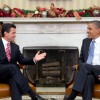
President-elect Pushes New Mexican Image in Washington
Ahead even of his Saturday swearing in, Mexican President-elect Enrique Pena Nieto met here on Tuesday with President Barack Obama to lay out a vision for a new bilateral relationship based more on economics and less on security issues.Citizens’ Tribunal Brings Charges Against Mexican President
Conservative outgoing Mexican President Felipe Calderón is to face a ballot again - not to compete for public office but to receive the verdict of a citizens' trial that is accusing him of violating the constitution.Treaty Tolls Death Knell for Mexican Countryside
The Trans-Pacific Strategic Economic Partnership Agreement negotiations, which Mexico is to join in December, are threatening to eliminate the last defences of the country’s agricultural sector.
The World Needs Healthier Food Oils
For half a century cardiovascular disease has been the largest killer in Western countries, but recently it has started to dominate the health statistics in the South as well. In India coronary heart disease is already the biggest killer, and strokes are about to rise to second place. Globally, cardiovascular disease now kills about 17 million people a year, and a growing number of people are having heart attacks or strokes as early as their 40s or 50s.
Mexico, Also a Haven for Illegal Fishing
The authorities in Mexico seem to have thrown in the towel in the fight against illegal fishing, which is hurting fisheries, the environment, and incomes.
U.S. Guns Bring Mexican Casualties
Mexican activists winding down a month-long U.S. tour warned Tuesday that guns licensed in the United States were playing a massive part in gang- and drug cartel-related violence in Mexico.
OP-ED: MEXICO-U.S.: La Caravana Has Arrived
On Monday, after a month-long trek across the United States, a caravan of victims of violence in Mexico made its way to Washington, D.C.
Mexico May Be on Verge of Rolling Back Military Jurisdiction
Following two groundbreaking rulings in recent days by the Supreme Court of Mexico, rights campaigners here on Thursday expressed optimism that widely criticised military legal jurisdiction over cases of human rights violations in Mexico’s anti-drugs fight could soon be overturned.Mexican Official: CIA ‘Manages’ Drug Trade
The U.S. Central Intelligence Agency and other international security forces "don't fight drug traffickers", a spokesman for the Chihuahua state government in northern Mexico has told Al Jazeera, instead "they try to manage the drug trade".
Women Rights Defenders Targeted in Mexico
There has been an alarming increase over the past two years in violence against women human rights defenders and journalists in Mexico, according to women’s human rights organisations.U.S.: Latinos Could Shift Outcome of 2012 Elections, Experts Say
As the Latino population in the United States rises, the demographic shift will affect future as well as current voting habits, and therefore election outcomes, in the United States, according to several experts.
MEXICO: Whatever It Takes to Win the Poor Vote
"It's like the parties are competing with each other to see who spends the most money. In a state as poor as ours, that's indecent," Alex, a 30-year-old taxi driver in this city of the southern state of Chiapas, just 30 minutes from the Guatemalan border, told IPS.Student Protests Energise Mexico’s Election Campaign
The "Occupy" movement has spread to Mexico, where thousands of university students have taken to the streets, bringing fresh air to a superficial and flat election campaign and forcing political parties to pay attention to a long-ignored segment of the population.
Dirty Money Still Untouched in Mexico
"You don’t close down a bank by arresting the tellers." That phrase, from Argentine expert Edgardo Buscaglia, illustrates the challenge of the fight against money coming from illegal activities in Mexico.« Previous Page — Next Page »





The Week with IPS

NEXT STOP - SDGs
Tracking global progress towards a sustainable world
Tracking global progress towards a sustainable world
