Languages
Sunday, November 8, 2026



News and Views from the Global South
Millennium Development Goals (MDGs)

U.N. Women’s Agency Being “Strangled at Birth”
When the United Nations inaugurated a landmark special agency for women last January, Secretary-General Ban Ki-moon set an initial target of 500 million dollars as the proposed annual budget for the new gender-empowered body.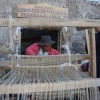
PERU: Indigenous Women Weave New Community Ties
Fuchsia, green and turquoise yarn shuttles swiftly across the wooden loom Dora Huancahuari has learned to use. Together with other craftswomen, she has started a small weaving business which is helping to rebuild their lives in this remote, poverty-stricken Andean community torn by Peru's history of armed conflict.The Oxymoron of Political Leadership
Political will is all that's needed to bring electricity to the 2.5 billion people with no or unreliable access to power, or to feed the one billion who go hungry every day, or to finally begin to slash carbon emissions to avoid dangerous climate change, or just about any other global problem.SUDAN: Southern Kordofan – A State of Ghost Towns
While humanitarian organisations try to bury the corpses scattered across Southern Kordofan, aid to the thousands of people displaced by the fighting is slow as the country's humanitarian commission has prohibited most aid organisations from working in the area.
NAMIBIA: Investing in the Health of Farm Workers
In one of the most sparsely populated countries on the planet, people travel up to 200 kilometres in the simmering heat to see a nurse or get basic medication.
SOUTHERN AFRICA: Getting Water to the People
The Southern African region is underutilising its water – a resource to which its citizens already have limited access.OP-ED: The Good News About Coal
During the years when governments and the media were focused on preparations for the 2009 Copenhagen climate negotiations, a powerful climate movement was emerging in the United States: the movement opposing the construction of new coal-fired power plants.
UNICEF Leads ‘Back to School’ Initiative in Cote d’Ivoire
When the five-month-old political standoff in Cote d'Ivoire came to an end in early April, the strife-torn West African nation was expected to return to normal - later than sooner.
UGANDA-HEALTH: When Women Go Without Needed Contraceptives
When the monthly contraceptive injection that Bernadette Asiimwe, a mother of four, got from government health centres in western Uganda was out of stock for weeks, she fell pregnant with her fifth child.
ZIMBABWE: Harvesting Water for Food Security
Earth mounds running across her field hold back the water that Caroline Ndlovu uses to grow maize, pumpkins, beans and watermelons long after the short rainy season in this arid part of Zimbabwe.
Mauritania Could Lose Its Capital City to the Sea
For the past five years, water has been seeping out of the ground beneath parts of Nouakchott, undermining foundations and transforming some areas of the Mauritanian capital into uninhabitable marshes.
DR CONGO: Water Shortages Grip the Capital
In recent months, no one in the Congolese capital has been spared the effects of water shortages. Where spending entire days criss-crossing Kinshasa in search of water with battered containers in hand was previously the unhappy task of women and children, now men in suits have joined the fray.Nuclear for the Poor, Renewables for the Rich?
In a debate about the future of energy, the global south wants to spend tens of billions of dollars on nuclear plants while the global north looks to spend hundreds of millions on decentralised, renewable energy.World Heading to Slow Motion Health Crisis
Sixty percent of all global deaths are now caused by non- communicable diseases (NCDs) such as cancer, diabetes and lung disease, according to a report by the U.N. Secretary-General's office.
KENYA: Training Poultry Farmers to Vaccinate Against Disease
Every Tuesday and Friday Teresia Muisyo wakes up at 05.00 to feed her ever- growing flock of over 300 free-range indigenous birds.On the Road to Green Energy for All
Like our cave-dwelling ancestors of 200,000 years ago, nearly three billion people still use fire for cooking and heating. Of those, some 1.5 billion people have no access to electricity. For a billion more, their only access is to sporadic and unreliable electricity networks.
PAKISTAN: Schools Rise From the Rubble
Violence in the tribal areas of northwest Pakistan has kept students away from school, in some areas for at least two years. Now, officials are trying to make up for lost time by holding classes even under tents or trees.Navigating Challenges, Brazil Steps Up AIDS Response
Long heralded as a model for the global response to HIV/AIDS, Brazil is intensifying its actions, at home and abroad, in the face of potential setbacks including an arising need for new treatment regimens, the resultant increase in drug prices and the debate over intellectual property rights.
GUATEMALA: Women-Only Buses Against Sexual Harassment
"We are all safer here; it's great because this way there are no men groping you," Jaqueline Escobar, a sales executive, told IPS on a bus that is exclusively for women, a service against sexual harassment that is being tried out in the Guatemalan capital.NIGERIA: Islamic Sect’s Siege on Nation Borne Out of Frustration
The sectarian crisis and recent violence by extremist groups, like the Jun. 16 bomb blast on the Nigerian Police Headquarters, are borne out of anger at prevailing economic conditions rather than religion, analysts say.VENEZUELA: Ambitious Promises of Affordable Housing
"I want my own roof over my head, my own home. I don't want to live in a curtained-off cubicle surrounded by masses of people," says Elena Díaz, who does ironing for a living and lives in a temporary shelter in the centre of the Venezuelan capital.« Previous Page — Next Page »





The Week with IPS

NEXT STOP - SDGs
Tracking global progress towards a sustainable world
Tracking global progress towards a sustainable world
