Languages
Sunday, November 8, 2026



News and Views from the Global South
Millennium Development Goals (MDGs)

PAKISTAN: Health Workers Without Maternity Leave
Shazia Kiran is seven months pregnant with her third child and worried she might be unable to juggle her work and the responsibilities of caring for a newborn. But what worries her more is that she has no maternity benefits, and she has not received her salary as a Lady Health Worker (LHW) for the last three months.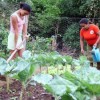
Brazil at Risk of Agrarian Counter-Reform
A process of "agrarian counter-reform" is taking place in Brazil, according to activist João Pedro Stédile, a leader of the Landless Rural Workers Movement (MST).Sunshine and Shadow in Rwanda’s Rural Housing Programme
The gleam of new corrugated iron sheets shimmers through the blue-green haze that veils Rwanda's rural valleys and hillsides. It is a visible sign of Rwanda’s metamorphosis from a nation devastated by genocide seventeen years ago to the fastest modernising state on the continent.
HEALTH: Fukushima, Chernobyl Raise Questions about WHO’s Role
The nuclear disaster in Fukushima, Japan and the 25th anniversary of the catastrophe in the Chernobyl nuclear power plant in Ukraine have thrown into relief contradictions in the role played by the World Health Organisation, which civil society organisations have spent years pointing out.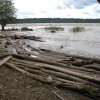
BOLIVIA: The Boomerang Effect for Morales
It wasn't easy to get to the Bolivian city of Riberalta from Brazil. The adventurous journey included potholes on the Brazilian highway, a rickety boat that ferried us across the Mamoré - the border river - and an unnerving ride on a motorcycle taxi. But the biggest complication was the roadblocks.
Q&A: “Brazil Doesn’t Need Poisons to Maintain Food Production”
Brazil could give up its dubious rank as the world’s number one consumer of agrochemicals without decreasing the amount of food it produces for its own people, according to João Pedro Stédile, leader of the Landless Workers Movement (MST).OP-ED: Maternal Meltdown From Chernobyl to Fukushima
On this day 25 years ago, a massive explosion at the Chernobyl nuclear power plant in Ukraine released clouds of radioactive particles into the atmosphere across Russia and Europe. The catastrophe had lasting effects on people's health, particularly on women and their unborn children. On this sober anniversary, we look back at Chernobyl and the lessons learned to ensure the health of Japanese women as the Fukushima disaster unfolds.SENEGAL: Local Health Posts a Qualified Success
"We no longer need to go to Hanène, three kilometres away, for vaccinations or for a check-up for our children," said Maguette Niang, a 40-year-old mother from Keur Madaro, a village in the west of Senegal.Scientists Claim Hard-Fought Ground Against Malaria
By the time the reader gets to the end of this paragraph, an African child, likely under five years old, will have died from malaria.BURKINA FASO: Training Gives Domestics Hope of Escaping Their Lot
Emeline Djigma, a twenty-year-old domestic worker, is preparing for the entrance exam to the National Teachers' College this year. She hopes she'll make it, having finally obtained her secondary school certificate thanks to five years of evening classes.NIGERIA: Uneasy Finale to General Elections
Nigerians will return to the polls Tuesday to elect state legislators and governors. Government at this level plays a key role in delivering services and infrastructure, but in northern states the choice of credible leaders could be overshadowed by lingering anger over the Apr. 16 presidential election.GUATEMALA: Theatre as HIV Prevention Tool in Native Communities
Poverty, lack of access to education and taboos about sexuality have hampered campaigns for the prevention and control of HIV/AIDS among indigenous communities in Guatemala. These constraints have led to the development of new ways of communicating vital information, like theatre.ENVIRONMENT: Women Key to Greening the Economy
Earth Day celebrated its 41st year Friday with the slogan ‘A Billion Acts of Green’. The grassroots demonstration is said to have inspired the modern environmental movement, and continues to inform and promote green economic policies worldwide, while attracting over a half billion people every year.MEXICO: Some Progress Made in Eliminating Toxic PCBs
Mexico is carrying out a project to identify, decommission and eliminate polychlorinated biphenyls (PCBs) waste in order to reduce risks of human exposure and environmental damages.ENVIRONMENT: Kiss of Life for DR Congo Pygmies
"Most of the houses in our villages are still made with small branches that we have collected, while our timber and our medicinal plants are taken by people who are enriching themselves elsewhere," said Ampiobo Amuri, a traditional pygmy chief.
SIERRA LEONE: Renewed Commitment to Local Government
The re-establishment of local councils in Sierra Leone in 2004 was intended to give people a greater voice in their government, reversing long years of marginalisation for rural districts in particular. But nearly seven years later, it has still not been fully implemented. A local NGO, Campaign for the Voiceless, is working to strengthen the performance of this most accessible tier of government.TRADE-CENTRAL AMERICA: Global Wave Drowns Small Businesses
"If we could export our products, it would open up a lot of possibilities for us, but we don't have any direct support from the government, or training or credit facilities," said Efraín Patzán, a small-scale furniture maker in the central Guatemalan town of San Juan Sacatepéquez.
China Puts Its Mark on Malawi
Driving through Malawi’s capital, Lilongwe, it is difficult to miss the imposing building under construction in the city centre. It's the country’s first five-star hotel, 90 million dollars worth of well-appointed rooms, a state-of-the-art conference centre and 14 opulent presidential suites.Colonial-Style Land Grabbing Back on the Table
The highly-contested Principles on Responsible Agricultural Investment (RAI), a set of priorities that peasants’ collectives and food rights groups have been battling for years, are back on the table this week, as the annual Conference on Land and Poverty opened at World Bank headquarters here Monday.
LATIN AMERICA: Lack of Prevention, Timely Treatment Make Women Vulnerable to Cancer
In many cases, cancer is preventable, treatable and curable if detected on time. But the fate of millions of women with the disease varies enormously, depending on where they live.DEVELOPMENT: Swazi Village Tastes Sweet Success with Sugarcane
The previously impoverished community of Malibeni, previously ravaged by drought, is bustling with farmers who have transformed the area into a bread basket. Lush green fields of sugarcane and vegetables have replaced an expanse of dry shrubs near this community in northeastern Swaziland.« Previous Page — Next Page »





The Week with IPS

NEXT STOP - SDGs
Tracking global progress towards a sustainable world
Tracking global progress towards a sustainable world
