Languages
Sunday, November 8, 2026



News and Views from the Global South
Millennium Development Goals (MDGs)
Financiers Lock Horns over Macro Policies While Millions Go Hungry
As weeks of what the International Monetary Fund's managing director Dominique Strauss-Kahn called "painful" negotiations over a host of macroeconomic policies drew to a close here Saturday, confusion over coherent strategies for sustainable economic recovery hangs thick in the air.
SENEGAL: Dispute Over Fishing Permits for Foreign Fleets Hots Up
Senegal's small-scale fishers are challenging the government over licences granting foreign trawlers permission to fish in Senegalese waters. The artisanal fishers condemn the "selling off" of the country's fishery resources at a time when stocks off Senegal's coast are severely depleted.BRAZIL: From Development Aid Recipient to Donor
Although Brazil's international development funds are still small compared to those of the industrialised world, the South American giant's foreign aid has grown considerably in the last eight years, and the country has gone from beneficiary of development assistance to donor.WORLD: Finding Funding for LDCs Amidst Global Financial Crisis
Representatives of the world’s poorest nations are preparing to assemble a new "programme of action" to reduce grinding poverty. Among proposals that could emerge from the U.N. Least Developed Countries Conference in Istanbul next month is a global tax on financial transactions that would generate billions of dollars a year for development assistance.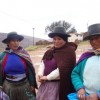
PERU: Local Gov’ts Fail to Prioritise Equality for Women
Legally, each of Peru's 25 administrative regions must have a plan for promoting equal opportunities for women. But over the last year, only 10 regions have actually allocated resources to the task of overcoming gender inequity, while another 10 have not even drawn up the compulsory equal opportunities plan.South Africa Key to Swazi Protest Outcome
Uneasy calm has returned to the streets of Manzini, Swazi commercial capital, after two days of heavy-handed police action against unions protesting government's handling of the financial crisis gripping the mountain kingdom.
Uganda Latest Govt to Face Down Protests
The Ugandan opposition has announced it will continue protests against rising prices for fuel, food and other essential commodities, undeterred by violent police repression of the previous two days of action.
A Table for Nine Billion
As the World Bank and International Monetary Fund convene for their annual Spring Meetings here, soaring food prices are high on the agenda, prompting some analysts to fast-forward to 2050 and the question of how to nourish the mid-century's estimated world population of 8.9 billion people – the majority of whom will live in developing countries.
PHILIPPINES: Religious Groups Weigh In on Reproductive Health Debate
In a country where an estimated 4,500 women die every year due to complications during childbirth, the enactment of a reproductive health (RH) policy is said to be a measure that could save lives.
ENVIRONMENT: Military Debris Threaten Oceans
 Military debris dumped into the world’s oceans are hazardous to coral ecosystems, reefs, fish and marine wildlife, say experts, who also warn - in light of the recent tragedy in Japan - that earthquakes and tsunamis could disturb this debris and even wash it ashore.
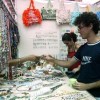
Young Cubans Unsure Where to Turn for Decent Jobs
In the throes of Cuba's economic "reorganisation," young people are walking a tightrope towards an uncertain employment future. They are finding it increasingly difficult to find jobs that meet both their professional aspirations and their salary expectations.Vast Majority of Stillbirths Found in Developing Countries
According to a special series in the medical journal The Lancet presented in New York Wednesday at the U.N. children's agency UNICEF, over 2.6 million stillbirths occur worldwide annually, affecting mostly African and Asian women who lack proper access to health care and facilities.
Emerging Powers Harnessing Neighbours’ Hydroelectricity
Emerging countries like Brazil and China are building numerous hydroelectric dams at home and abroad to help drive their economic growth. But while in Latin America the phenomenon is touted as an integration process, in Asia it has generated tension over the shared use of rivers.China’s Green Blueprint Raises Stakes at U.N. Climate Talks
China’s rise as a leader in the environmentally friendly, low-carbon economy is giving the Asian giant new diplomatic muscle for this year’s round of climate change negotiations leading up to the COP17 U.N. summit in Durban, South Africa in November.
Kenyan Women Pulling Together Against Poverty
When it works, it's spectacular: Esther Ngonyo Njuguna's dairy project stands as testimony to the potential of microcredit schemes to boost rural incomes.Smart Planning for the Global Family
When it comes to population growth, the United Nations has three primary projections. The medium projection, the one most commonly used, has world population reaching 9.2 billion by 2050. The high one reaches 10.5 billion. The low projection, which assumes that the world will quickly move below replacement-level fertility, has population peaking at eight billion in 2042 and then declining.
Films Shrink Global Problems Down to a More Human Scale
"It's bad to be rich at the height of fame with your morals a dirty shame," says Valter pointedly as he bumps along in the back of a pickup towards Jardim Gramacho, the largest landfill in the world, located in Brazil.New World Development Report Repackages Old Ideas
With over 1.5 billion people living in countries blighted by incessant or recurring violence, the World Bank's annual World Development Report (WDR), with this year's focus on how conflict derails development, was anxiously received Monday by scores of development agencies, governments and NGOs all over the world.
BRAZIL: Belo Monte Dam Faces Endless Hurdles and Controversies
The Xingu river flows around small isles and islands and across rapids and waterfalls in Brazil's Amazon jungle, and has a dramatically reduced flow during dry season. Navigating it presents constant hurdles and risks.CLIMATE CHANGE: Developing Countries Step In Where Richer Nations Fear to Tread
Led by countries like Indonesia, 48 developing nations are rolling out a range of pledges to voluntarily cut their respective emissions of greenhouse gases (GHG) by 2020, the year climate scientists say the earth’s rising temperature should peak by if an environmental catastrophe is to be avoided.Nigerian Women Stand Up to be Counted
As Nigeria tries again to begin its staggered general elections on Apr. 9, spare a thought for the women who will be putting themselves forward as candidates in an overwhelmingly male field.« Previous Page — Next Page »





The Week with IPS

NEXT STOP - SDGs
Tracking global progress towards a sustainable world
Tracking global progress towards a sustainable world
