Languages
Sunday, November 8, 2026



News and Views from the Global South
Millennium Development Goals (MDGs)
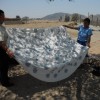
Indigenous Craftswomen Take on Mexican Fashion World
Reina Pérez, an Otomi indigenous craftswoman in the central Mexican state of Querétaro, skilfully embroiders "grecas" or traditional design motifs in threads of many colours, on fabrics that will be used to make dresses, skirts and blouses.
AFRICA: More Skilled Attendants Needed to Reduce Maternal Mortality
Sub-Saharan African countries have claimed nine of the ten bottom places in a ranking of maternal health around the world. "The Mothers' Index", a new survey of motherhood by Save the Children, analyses health, education and economic conditions for women and children in 164 countries.
DEVELOPMENT: Time For New Approaches says Civil Society
The dominant approaches to development have failed the world’s poorest citizens and now the paradigm must change. This is the strong message coming from over 2,000 non-governmental organisations gathered at the civil society forum for the Fourth U.N. Conference on the Least Developed Countries (LDC-IV) in Istanbul, Turkey.
DEVELOPMENT: Plotting a World Without LDCs
Malawi's gross domestic product has grown by more than six percent in each year since 2005. The country's most recent Welfare Monitoring Survey finds unemployment stands at just one percent. At a glance, Malawi makes being a landlocked, least developed country almost desirable.
DOMINICAN REPUBLIC: Four Percent for Education
The government of the Dominican Republic, where one-third of the population of is under 14 years of age, is facing a well- organised and growing citizens' campaign to increase the amount spent on public education.Can Microcredit Reclaim Its Visionary Mission?
As controversy mounts over the efficacy of microfinance as a global poverty-alleviation effort, the 15th Global Microcredit Summit, scheduled to kick off on Nov. 14 in Valladolid, Spain, will be forced to answer critical questions about poverty, resources and tactics.CENTRAL AMERICA: Boosting Small Enterprise to Fight Poverty
Small and medium-sized companies in Central America are the targets of foreign development aid programmes aimed at fighting the region's high poverty levels.
DEVELOPMENT-ZAMBIA: ‘Real Changes Needed in Policy and Implementation’
Zambia has enjoyed economic growth of around six percent per year over the past decade, says Patrick Mucheleka, but the government is failing to translate this into social and economic development for the majority of citizens. The upcoming conference on least developed countries in Turkey offers an opportunity to recalibrate the country's approach to development.
Q&A: Translating Southern Successes Into LDC Solutions
"In South-South cooperation we are all partners," Josephine Ojiambo, ambassador of Kenya to the U.N. and president of the U.N. General Assembly High-Level Committee on South-South Cooperation, told IPS. "SSC specifically shies away from the donor-client relationship."
BOLIVIA: Dam Spells Hope and Fear for Small Jungle Town
Arturo Sánchez, 72 years old and nearly blind, dreams of bringing ecotourism to Cachuela Esperanza, a Bolivian town of 1,336 people on the Beni river, and hopes the construction of a huge hydroelectric dam will give a boost to his dreams.U.N. Predicts 9.3 Billion Population by 2050
The United Nations is predicting that come Oct. 31, the world population will hit the seven billion mark - and keep expanding till it reaches 9.3 billion by the year 2050.
AFRICA: Childhood Blindness – Catch Them Young
Every minute, somewhere in the world, a child goes blind according to the World Health Organization. Three in five poor children who go blind are likely to die within two years of losing their sight - yet half of cases of childhood blindness are avoidable.CUBA: Professionals Awaiting their Chance
Cuba’s opening to private enterprise still leaves out many professionals who have yet to find a way to use their skills and potential in non-state industries, although they have not lost hope that the rules of the game will change.
SIERRA LEONE: Growing Pains for Local Councils
He was all over the place during the 2008 local council election campaign, but no one's seen the councillor since he won his seat, says Freetown journalist Ismael Bakarr. "He just disappeared."Food Price Hike Worsens Poverty in Asia
An annual meeting of Asian finance ministers and central bank governors in Hanoi is set to address the fate of 64 million people in the region on the brink of extreme poverty. They are the worst affected by soaring food prices, which have hit record highs in the first two months of this year.YEMEN: Youth Ready to Confront Gender Roles
Despite being at the forefront of sweeping changes taking place in the country, the lives of the majority of Yemeni women are restricted to early marriage, motherhood and serving husbands, according to a new study by Women Without Borders (WWB), a Vienna based public relations and advocacy platform for women’s voices around the world.PAKISTAN: Vaccinators Get a Shot in the Arm
The questions came like something from a medical student’s exam: What is routine immunisation? When should a vaccine be destroyed? What is the best temperature for storing a vaccine? At which angle should the needle be held while administering a pentavalent vaccine? And which five diseases does a pentavalent vaccine prevent?RIGHTS-BRAZIL: Amnesty International Calls for End to Police Violence
The Brazilian government must "put its house in order" and take a firm stand on respect for human rights if it wants a permanent seat on the United Nations Security Council, said Amnesty International (AI) secretary-general Salil Shetty.
COLOMBIA: Displaced Campesinos Want a Say on Land Restitution Bill
The Colombian government has been extolling a bill on Victims and Land Restitution which is being debated in Congress and is receiving extensive media coverage. But the demands of the victims themselves, forcibly displaced campesinos, are falling on deaf ears.
Pollutants Banned, But With Exceptions
The fifth conference of the 173 parties to the Stockholm Convention on Persistent Organic Pollutants, Apr. 25-29, could bring to 22 the total number of internationally agreed forbidden pollutants. Alternatives to DDT - one of the persistent organic pollutants (POPs) used in the fight against malaria - are gaining popularity, but its complete ban is not on the agenda.
WEST AFRICA: Building a Regional Response to Locusts
The period between May and August is when farmers in the West African Sahel fear the arrival of swarms of locusts. This year, efforts to limit the devastation will be strengthened by coordination across the region thanks to the Africa Project to Combat Locust Invasions.« Previous Page — Next Page »





The Week with IPS

NEXT STOP - SDGs
Tracking global progress towards a sustainable world
Tracking global progress towards a sustainable world
