Languages
Sunday, November 8, 2026



News and Views from the Global South
Millennium Development Goals (MDGs)
U.N. Targets “Lost Generation”
Even as the U.N. launched the International Year of Youth last week, one of its agencies was warning of a "lost generation" of disillusioned young workers who are unable to find decent jobs.DEVELOPMENT-NIGER: Selling Sand to Survive
It's a trade that requires no capital, only courage and endurance. A group of 200 women are making ends meet - sometimes even a bit more - by selling sand.KENYA: Medical Smart Card Extended to Maternal Care
Kenyans can now save towards the cost of childbirth at the country's largest maternal hospital thanks to a medical smart card system.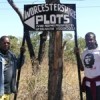
SOUTHERN AFRICA: Land Reform Underfinanced and Failing
Mavis Muchena sits on the veranda of her mud hut, a middle-aged single mother of four with a face worn beyond her years and hands creased from working the soil. She should represent the future of a renewed farming boom in Zimbabwe, but instead she represents its failure.GUATEMALA: Multi-Pronged Effort to Boost Food Security Still Falling Short
"I used to work on the south coast, cutting sugar cane, and I would go all the way to Belize to pick oranges during the harvest. I went through a lot so we could get by," Héctor Pan, a Q'eqchi Indian in Guatemala who has now abandoned farming to become a river rafting guide, told IPS.AFRICA: Shortage of Skills for Reproductive Health
Dr Geoffrey Kasembeli says he worked almost seven years without a day off: that's how severe the shortage of obstetricians and gynaecologists in Kenya is. A similar situation prevails across the continent, a symptom of the weakness of reproductive health care in Africa.Labour Rights Under Scrutiny in Bangladesh and Sri Lanka
The garment industry in Bangladesh and Sri Lanka has come under intense scrutiny amidst widespread accusations of large- scale labour exploitation.
SOUTH SUDAN: Children Too Hungry to Return to Civilian Life
When Timothy was forced into the southern Sudan People’s Liberation Army (SPLA) at age 11, the first thing they did was beat him. Then they took him to a military base where his tasks were to carry other soldiers’ bags, wash their clothes, collect firewood for them, and cook their food.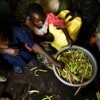
DRC Farmers Welcome Support
Farmers in the southwestern Democratic Republic of Congo are looking forward to increased production after 16 tractors and 200 ox-drawn carts were distributed across three regions in the province of Bandundu.MALAWI: A Cellphone, a Bicycle and Sound Agricultural Advice
It is 11 am and Mary Jusa seems unconcerned by the sun beating hard on her back. Humming a traditional tune, she carries on uprooting weeds in her maize field between two water canals.
AFRICA: Modified Banana Could Cure Deadly Disease
An innovation by researchers in Nigeria could be a cure for the devastating Banana Xanthomonas Wilt (BXW) - responsible for annual losses in excess of 500 million dollars of crop across East and Central Africa. But it has also fuelled debate on the genetic engineering of crops in Africa.
SOUTH AFRICA: “Children are Dying Needlessly”
By the time Thandi Khumalo* brought her seven-month-old daughter to the Red Cross Children’s Hospital in Cape Town, help came too late. The infant had developed acute diarrhoea and kwashiorkor, a condition caused by severe protein and calorie deficiency, and died a few days after being admitted.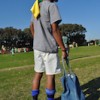
WORLD CUP: ‘Now We Demand They Do It For the Poor’
Weak floodlights barely held back gathering darkness as Somalia met Serbia in the finals of the Poor People's World Cup. A small band of supporters were on hand to see an African side lift the cup in Cape Town's Vygieskraal Stadium.ZIMBABWE: Questions Raised Over Water Treatment Funding
The memories of Zimbabwe's 2008-2009 cholera outbreak are fresh in the minds of everyone except the people who have the safety of the country's water in their hands.Commission Takes a Hard Look at Free-for-All Migration
At 35, Daniel James has his mind set on leaving Trinidad and Tobago "for greener pastures".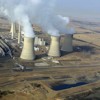
WORLD: Cooking Up a Climate Deal
Another round of negotiations towards a global treaty on climate change concluded in Bonn on Aug. 6, with activists calling on parties to rediscover a spirit of compromise and make offers rather than demands.AFRICA: Bring Water Into Climate Change Negotiations
Longer periods of drought, decreased river flow, higher rainfall variability and lower soil moisture content: water is at the heart of the impacts of climate change. Yet the precious commodity scarcely features in climate negotiations.
Wanted: Pied Piper for Swazi Village Under Siege
When good rains finally fell, Catherine Mngomezulu was so hopeful that this year she would reap a bumper harvest. Then the rats appeared.KENYA: New Constitution a Winner With Women
A day after Kenyans voted to accept a new constitution, women across the country speak about their hopes and expectations. The case of Elizabeth Chazima could stand for the story of millions of women in Kenya who have been robbed of their financial contributions to matrimonial assets.
AFRICA: Lack of City Planning to Hurt More Citizens
Thousands of Kenyan urban dwellers, rich and poor, live in fear that their homes or building investments could soon be demolished as the country struggles to keep up with the rapid urbanisation of cities.
MALAWI: Urban Dwellers Adopting Dry Sanitation
Diarrhoea causes more deaths than malaria and AIDS combined, yet while funding to fight the latter two have risen sharply, the same cannot be said of resources available for hygiene, sanitation and clean drinking water.« Previous Page — Next Page »





The Week with IPS

NEXT STOP - SDGs
Tracking global progress towards a sustainable world
Tracking global progress towards a sustainable world
