Languages
Monday, November 9, 2026



News and Views from the Global South
Millennium Development Goals (MDGs)
CLIMATE CHANGE: 75 Million Environmental Refugees to Plague Asia-Pacific
Pacific Islanders, aiming to secure their very survival, are calling for immediate commitments from the developed world to reduce greenhouse gas emissions by at least 45 percent by 2020.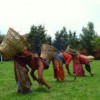
POLITICS-NEPAL: Women Push for Gender Equality in New Constitution
A political crisis, which has dragged on for months, crippling progress in drafting a new constitution for Nepal by the Constituent Assembly (CA) has considerably dampened the euphoria of women's organisations here.HAITI: Aid Flowing, But Food Crisis Drags On
Though beleaguered with their own financial problems, donor countries say they are not planning to withdraw financial support for cash-strapped Haiti.
PARAGUAY: Indigenous Squatter Communities Organise Self-Help
Indigenous families living in a squatter settlement on the outskirts of the Paraguayan capital are organising themselves, and now have a community soup kitchen and are producing and selling handicrafts. They don't want to return to panhandling on the streets of Asunción, so far from their home villages.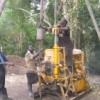
TANZANIA: Solutions to Dar's Water Problems in the Pipeline
In the nine months since she moved to the Dar es Salaam neighbourhood of Kinondoni, Anna Christopher has only seen water running from her taps once.RIGHTS: U.N. Body Relentlessly Pursues Women's Equality
The U.N. Committee on the Elimination of Discrimination Against Women (CEDAW) is known to publicly castigate countries accused of gender discrimination or violating international conventions governing women's rights.WATER-TANZANIA: Who Pays the Piper?
When John Rubara* and his family moved into their new house in Dar es Salaam's Tabata Kimanga, a fast-growing middle-income neighbourhood in Temeke district, the water company disconnected their supply because the previous owner was in arrears.
HEALTH-AFRICA: Early ART: A Stitch in Time…
A global call to put people living with HIV on antiretroviral therapy (ART) at an earlier stage of their illness is intensifying, but most developing countries, especially in Africa, are struggling to meet the current recommendations.
MOROCCO: Farmers Overcome Water Scarcity
Researchers in the central Moroccan region Beni Mellal are introducing new agricultural techniques that increase production while reducing water usage.
ECONOMY-RWANDA: Credit for Women's Development
In early July, Rwandan officials announced a new programme that aims to strengthen women's economic capacity by providing more access to credit and enabling them to start income generating projects.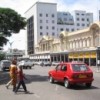
ZIMBABWE: Water Rationing Looms in Bulawayo
Bulawayo city council is to tighten a water rationing programme relaxed last year because residents are rapidly pushing up the city's daily consumption by using municipal water supplies for non-domestic activities.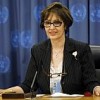
Q&A: "Changing Stereotypes of Women Is the Starting Point"
For the last 10 days, experts from the U.N. Committee on the Elimination of All Forms of Discrimination Against Women (CEDAW) have been reviewing the status of women's rights in 11 countries.ARGENTINA: Kidnappings, Threats Target Child Rights Campaign
Youngsters involved in a network of social organisations working with street kids and disadvantaged youths, as part of its "Hunger Is a Crime" campaign, have been the targets of eight kidnappings and dozens of death threats in the last 16 months.MOROCCO: New Law, But the Same Old Men
The new Moroccan family law was designed to give women equal rights in the family. But five years after its introduction, Moroccan women leaders say opposition to the law from politicians and within the judicial system persists, and the new law has not been able to change Moroccan mentality.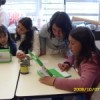
URUGUAY: Schoolgirls Access Computers but Can’t Shake Gender Stereotypes
The girls who attend the school of Villa García, a township on the outskirts of the Uruguayan capital, are still playing dolls and dress up - only now they do it on their laptop computers.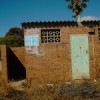
ZIMBABWE: Neglect Sanitation at Your Peril
A functioning public toilet has become a rare sight in Bulawayo. Across this southern Zimbabwean city of about two million residents, public toilets have all but stopped functioning, the buildings now more useful as platforms for graffiti and campaign posters than as public conveniences where people answer the call of nature.
Q&A: Brazil’s Lesson to the World: Invest in Family Farming
Kanayo F. Nwanze chose Brazil for his first official visit as the recently elected president of the International Fund for Agricultural Development (IFAD), and was pleased to personally attest to President Luiz Inácio Lula da Silva’s commitment to family farming.
DEVELOPMENT-CUBA: Water Scarce at the 'Singing Frog'
Canta Rana, which somewhat ironically translates as "Singing Frog", is more than just a neighbourhood in this town in the drought-stricken eastern Cuban province of Holguín. Here, at the highest point in the area, which provides a view of the entire town and the sugar mill tower, there is a huge tank marked by rust, the passage of time and the scarcity of water.
RIGHTS-BULGARIA: Two Women Take on Defence Ministry
Two young women are suing Bulgaria's Ministry of Defence over gender discrimination in the mainly ceremonial, National Guard - a case that could go a long way in changing patriarchal social norms.
Q&A: Reality Fell Upon Us: Women's Voices Must Be Heard
Fifty-six percent of Rwanda's parliamentarians are women, a manifestation of the active role women have taken in rebuilding the country since the 1994 genocide.
HEALTH-INDIA: High Morbidity Mars Kerala Women’s Progress
While Kerala, in southwest India, enjoys enviable indices when it comes to health and human development, the state seems unable to shake off high chronic morbidity rates among its women.« Previous Page — Next Page »





The Week with IPS

NEXT STOP - SDGs
Tracking global progress towards a sustainable world
Tracking global progress towards a sustainable world
