Languages
Tuesday, November 10, 2026



News and Views from the Global South
Politics
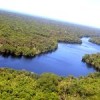
Guatemalan Beaches Threatened by Iron and Gas Operations
"If they come here to extract iron from the beach, it will mean the destruction of our natural wealth and the end of tourism," warned Leonel Palma, a hotel employee in Puerto de San José on Guatemala’s Pacific coast, where the government has granted mineral exploration licenses.Israel Prepares to Confront Historical Shifts
Back in August 2000, just weeks after the failed Camp David peace summit and weeks before the outbreak of the second Palestinian Intifadah uprising, Marwan Barghouthi, leader of the Fatah armed forces, laid out his alternative strategy for ending the Israeli occupation.Military Looms over July Polls
Thailand’s powerful army chief, Gen. Prayuth Chan-ocha, appears determined to carve out a dominant role for the military in the coming weeks, as political parties seek to woo an estimated 45 million voters ahead of the general election on Jul. 3.
BRAZIL: Despite Historic Victory, Gay Rights Struggle Far from Over
Although gay rights organisations in Brazil are celebrating a historic triumph, legal recognition of civil unions by the Supreme Court, they say the struggle is far from over.
INDIA: Women Hold Their Own in Provinces
Provincial elections in four major Indian states have produced two female chief ministers, proving women capable of holding their own in the rough and tumble of politics in this deeply patriarchal country.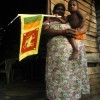
SRI LANKA: Wounds of War Healing Slowly
Suresh Sundaram and Wilfred Wickremasinghe live 350 kilometres apart, and have never met each other. But their lives ran parallel for over a quarter of a century, as war ravaged their tear-shaped country Sri Lanka and changed their destinies forever.
DEVELOPMENT: Women Leading Bangladesh Away from the LDC Tag
Women entrepreneurs and workers will soon help Bangladesh shake off the Least Developed Country (LDC) label, business leaders say.
BRAZIL: New Forest Code Could Hinder Climate Goals
The adoption of a new Forest Code in Brazil could threaten efforts to curb Amazon deforestation, which was reduced 70 percent between 2004 and 2010.
War Crimes Prosecutor Seeks Gaddafi Warrant
The International Criminal Court's chief prosecutor has asked a three-judge panel to issue arrest warrants for Libyan leader Muammar Gaddafi, his second-eldest son, Saif al-Islam, and his intelligence chief, Abdullah Senussi.
DEVELOPMENT: Chinese Step In, Efficiently
For Jany Chen from Shanghai, concern often-raised in Europe and North America about the Chinese invasion of Africa is a lot of wasteful talk that deserves to be flushed down the toilet. Efficiently.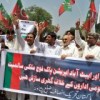
PAKISTAN: Parliament Backs Army and Intel Service
Pakistan’s Senate and National Assembly closed ranks behind the country’s prime spy agency, the Inter-Service Intelligence (ISI), which the U.S. government suspects of having harboured Al-Qaeda chief Osama bin Laden.OP-ED: Religion and the Public Sphere in India
In contrast to most South Asian countries, modern India has always been officially "secular", a word the country inscribed in its Constitution in 1976.
SOUTH AFRICA : Women’s Issues Missing from Election Manifestos
Come rain or shine, single mother of five, Sylvia Mathebula,* can be found selling fruit and cigarettes at the roadside because it is the only way her family can survive. "Since the government is not helping us with jobs, rather than work as a maid for a white person I decided to start this little business by myself," she says lamenting the lack of opportunities for unskilled women.GREECE: Athens Plunges Deeper Into Crisis
The murder of Manolis Kantaris, 44, last week has initiated a vicious circle of violence in the Greek capital that deepens the existing wounds of the country and makes many wonder what the future holds for Athenians.MIDEAST: Nakba Anger Points to Third Intifadah
Israeli confidence that Nakba day, marked by The Great March on May 15 in the occupied Palestinian territories, Israel and neighbouring Arab countries, would remain under control, has backfired badly.Expectations Build for Obama Mideast Policy Speech
With Jordan's King Abdullah and Israeli Prime Minister Benjamin Netanyahu coming to Washington next week, anticipation of a major Middle East policy speech by President Barack Obama set for Thursday is growing rapidly.
MIDEAST: Music Runs Into Walls
In the West Bank, dissident voices questioning the Palestinian Authority's increasingly authoritarian rule have become rare. But a young musician in Ramallah refuses to hold his tongue.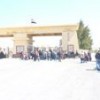
MIDEAST: Opening a Border, Ending an Era
In a dramatic policy shift late last month, Egypt's post-revolutionary government announced plans to reopen the Rafah border crossing with the Gaza Strip. And on Friday, hundreds of thousands of Egyptians amassed in Cairo's Tahrir Square to demand the decision be carried out without delay.
BRAZIL: Amnesty Highlights ‘Entrenched Inequalities’
Despite "considerable progress" made in reducing poverty, "stark inequalities" remain in Brazil, as well as high levels of police and gang violence in poor urban neighbourhoods, Amnesty International warns in its annual human rights report, released as it reaches its 50th anniversary.HEALTH: Rich and Poor Suffer Both Infectious and Noncommunicable Diseases
The world is experiencing a change in the geographic distribution of diseases. Traditionally, infectious diseases, which claim the lives of so many children, affected poor countries, and noncommunicable diseases like diabetes, cardiac ailments and cancer plagued rich countries.DEVELOPMENT: New Action Programme, and New Name for the Poorest
A new 10-year blueprint for assisting the poorest countries on the planet to join the league of the more fortunate ones was approved Friday at the closing of the Fourth U.N. Conference on the Least Developed Countries (LDC-IV) held May 9- 13 here.« Previous Page — Next Page »





The Week with IPS

NEXT STOP - SDGs
Tracking global progress towards a sustainable world
Tracking global progress towards a sustainable world
