Languages
Monday, November 9, 2026



News and Views from the Global South
Poverty & MDGs
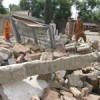
PAKISTAN: Schools Rise From the Rubble
Violence in the tribal areas of northwest Pakistan has kept students away from school, in some areas for at least two years. Now, officials are trying to make up for lost time by holding classes even under tents or trees.Navigating Challenges, Brazil Steps Up AIDS Response
Long heralded as a model for the global response to HIV/AIDS, Brazil is intensifying its actions, at home and abroad, in the face of potential setbacks including an arising need for new treatment regimens, the resultant increase in drug prices and the debate over intellectual property rights.
GUATEMALA: Women-Only Buses Against Sexual Harassment
"We are all safer here; it's great because this way there are no men groping you," Jaqueline Escobar, a sales executive, told IPS on a bus that is exclusively for women, a service against sexual harassment that is being tried out in the Guatemalan capital.NIGERIA: Islamic Sect’s Siege on Nation Borne Out of Frustration
The sectarian crisis and recent violence by extremist groups, like the Jun. 16 bomb blast on the Nigerian Police Headquarters, are borne out of anger at prevailing economic conditions rather than religion, analysts say.VENEZUELA: Ambitious Promises of Affordable Housing
"I want my own roof over my head, my own home. I don't want to live in a curtained-off cubicle surrounded by masses of people," says Elena Díaz, who does ironing for a living and lives in a temporary shelter in the centre of the Venezuelan capital.BOLIVIA: Women Fight Superstition, Machismo in Mining Cooperatives
Hundreds of women belonging to mining cooperatives in Bolivia are striving for the right to mine seams of tin and silver in the country's western highlands, where an age old superstition maintains that the presence of women "scares away" the minerals.SUDAN: Feeling the Economic Impact Before Secession
Amira Amer* becomes very picky the minute she reaches the bus station. One by one she lets the new air-conditioned busses pass her by. She is waiting for a cheaper bus. They are limited in the expensive city of Khartoum and are constantly packed to the point of overflowing.
KENYA: No Longer Forced to Buy Ineffective Anti-Malarial Drugs
People in Western Kenya are now able to buy effective anti-malarial drugs at low prices thanks to the success of the Global Fund’s subsidy programme, and thanks to honest pharmacists who are reselling the drugs at the recommended low prices.SOUTH SUDAN: Fuel Shortages Grip Country
South Sudan is facing severe fuel shortages less than three weeks before it gains independence from the rest of the country. Many gas stations have shut down and those that remain open have people lining up overnight for fuel.
NICARAGUA: Rape Victim Launches New Hunger Strike for Justice
After a series of hunger strikes and vigils, Fátima Hernández had managed to become an exception, as one of the few rape victims in Nicaragua to obtain justice. But now her fight has started all over again and the hope that her case offered to others might become a mirage.KENYA: Empowering Women through Micro-Finance Credit
Without a college education and against the backdrop of limited job opportunities, it was not easy for Salome Wairimu to find employment.
KENYA: Uneducated Women Struggle to Access Credit Fund
As an estimated 3.7 million dollars continues to sit idle in the Women Enterprise Fund (WEF) kitty, the very women the fund was meant to benefit have complained about the difficult requirements that need to be met in order to access the money.UGANDA: Distribution Policy Means Not Enough Drugs for Clinics
The nurse at Najembe Health Centre in Buikwe district says the centre’s supply of malaria drugs will be finished in two days. A malaria epidemic has hit the area and the demand for the drugs is high. But the centre, which serves the entire sub-county, will have to wait up to six weeks before their supply will be replenished.Building Vaccines for the “Bottom Billion”
As the world marks 30 years since HIV/AIDS was first identified, vaccine researcher Dr. Peter Hotez hopes intervention programmes can begin to incorporate treatment for some lesser-known ailments called neglected tropical diseases, or NTDs.Africa Faces Explosive Population Growth
The African continent, which is projected to make significant economic gains over the next decade, is in danger of being weighed down by a dramatic explosion in population growth.SIERRA LEONE-HEALTH: Free Health Care Not Really Free
There is a brief bustle and then a woman wails as the small body is wrapped in cloth and set on a cot by the door of the paediatric ward. Nurses in pristine white uniforms continue to pad quietly around the large room at Ola During Children's Hospital in Freetown, Sierra Leone's capital city.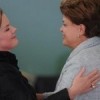
BRAZIL: Women Gain More Ground in the Presidential Palace
By appointing women this month to two key ministries, Brazilian President Dilma Rousseff has nearly met her goal of having 30 percent of women in her cabinet, and is putting women in predominant roles at the Planalto Palace, the seat of government.Another Push for Reproductive Rights
By 2015, women demanding family planning products and services in the developing world will likely reach 933 million, a terrific increase from the current 818 million women demanding access to these basic reproductive commodities.Developing Countries Pledging More Emissions Cuts Than Industrial North
Negotiations over a new international climate agreement are on the brink as new analyses show that carbon emission reduction promises by industrialised nations are actually lower than those made by China, India, Brazil and other developing nations. Even with all the promises or pledges added together they are still far short of cuts needed to prevent global temperatures from rising two degrees Celsius, experts reported here.
HEALTH: High Drug Prices Hamper Drug-Resistant TB Treatment
Access to treatment for drug-resistant tuberculosis (DR-TB) remains compromised, especially in developing countries, because too few pharmaceutical companies manufacture quality-assured drugs. Lack of competition has led to skyrocketing prices and this means that public health budgets are quickly spent.
SIERRA LEONE: Substandard and Counterfeit Drugs Flood the Market
Bubble-wrapped pills are scattered across the crude table in a busy market beside crumpled boxes of lubricant, paracetamol and anti-fungal powder.« Previous Page — Next Page »





