Languages
Sunday, October 11, 2026



News and Views from the Global South
Southern Africa
ZAMBIA: Bumper Harvest May Prove an Embarassment of Riches
Buoyed by government’s fertiliser subsidy, Zambia’s farmers produced 2.8 million tonnes of maize in the 2009/10 growing season. Initial delight over the increased harvest - up from 1.8 million tonnes the previous year - gave way to worry as farmers realised they could be stuck with most of the crop.
SOUTH AFRICA: Satellite Preparing Scientists for New Space Industry
Though practically invisible to the naked eye, a uniquely South African satellite has been orbiting the earth for the past year, creating an archive of images and jumpstarting what its creators hope will be a space revolution in the country.AFRICA: Hunger Intensifying But Cash Transfers Improving Lives
Chronic hunger is intensifying in Africa, despite the world’s commitment to address this Millennium Development Goal and reduce world hunger by half by 2015.
Lesotho Could Beat Drought With Irrigation
Bonang Charles's fields are a richly green rarity in October's parched landscapes along the Phutiatsana River. It's a vivid demonstration of the limited reach of irrigation to Lesotho's small-holder farmers.TRADE-SOUTHERN AFRICA: “Parochialism” Stymies Integration Efforts
The Southern African Development Community (SADC) has set ambitious targets for regional integration. But the goal of creating a customs union by 2010 has been postponed and the adoption of a single regional currency by 2018 may be missed due to national concerns.
MALAWI: While the President Flies, the People Queue for Fuel
A public spat has developed between the Malawian government and organisations in the small south-eastern African country over foreign exchange being "wasted" on foreign trips undertaken by President Bingu wa Mutharika. The consequence has been repeated fuel shortages, organisations say.DEVELOPMENT: Welfare of Poverty-Stricken Families Depends on New Policy
For HIV-positive Tereza Chatsilizika, the monthly cash grant of 10 dollars she receives means that she can educate her disabled daughters and put food on the table.BOTSWANA: Not All Women in Local Government Making a Difference
Florence Shagwa, a female councillor at the Gaborone City Council, considers her three-year business qualification worthless.ZIMBABWE: Free Maternal and Child Care Needed From Government
Mother-to-be Agnes Ncube budgets up to 100 dollars each month from her informal roadside business just so she can pay for the maternal services at her local government clinic.SOUTHERN AFRICA: Ignoring Patriarchy, Female Politicians Rise
In Malawi, if both a girl and boy are born into a poor family, it will naturally be the boy in whom all the financial resources are invested.
MALAWI: Richer Soil First Defence Against Climate Change
Malawi has directed local government officials to develop local response strategies to the effects of climate change.WATER-ZAMBIA: Vanished Funds Mean Fields Stay Dry
The M’cheleka Irrigation Scheme was meant to answer water and food security challenges in the Chadiza district of Zambia's Eastern Province. But ten years after the completion of the dam wall, only six families are benefiting from the water.
Q&A: “Gender Not a Limiting Factor in Politics”
In the rural KwaZulu Natal town of Jozini, Thembeni Madlopha-Mthethwa has been the town’s mayor for a decade. And in contrast to the rest of the country, which has experienced numerous civil strikes and service delivery complaints, Jozini has rarely had any such problems.DEVELOPMENT: Fate of Millions Hangs on Global Fund Pledges
Sibongile Mavimbela has been living with HIV for the past 12 years; she has been on antiretrovirals for the past seven. But the mother of two fears the supply of free ARVs could dry up in the near future if contributions to the Global Fund on HIV/AIDS, TB and Malaria fall short of the $20 billion needed to meet development targets.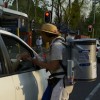
SOUTH AFRICA: Female Entrepreneurs Forge Their Own Path
At dawn, Fatima Jardine-Millard straps a massive, German-engineered tank to her back and a tray of pastries to her waist, and prepares to cater to groggy motorists immobilised at a traffic light in Johannesburg's chaotic daily commute.ZIMBABWE: Neonatal Circumcision Yet to Gain Ground
Judith Sikhosana recently gave birth to a healthy baby boy. And while she has strictly followed the advice of health workers about the post-natal care for her child, there is one thing she is yet to understand: why nurses want her baby to be circumcised.
ECONOMY: Growing Obesity in Africa Bad for Worker Productivity
Obesity is no longer a problem confined to wealthy nations. In their developing counterparts in Africa, an increasing number of people can be categorised as obese. According to researchers this trend could be detrimental to countries’ already fragile economies.Progress in Prevention of Mother-to-Child Transmission of HIV
The number of pregnant women being tested for HIV and accessing treatment in Sub-Saharan Africa has shown significant progress – indicating that virtual elimination of mother-to-child transmission of the virus by 2015 is possible.MALAWI: Village Chief Leads Fight For Maternal Health
In Ntcheu, a rural district in central Malawi, villagers have taken the fight against the country's high maternal mortality rate into their own hands. They have almost eradicated maternal deaths in the area by urging pregnant women to give birth in hospitals, under medical supervision.DEVELOPMENT-AFRICA: Tax Could be The Way Out of Aid Dependence
Many African countries struggle with debt and finding money for national budgets because they fail to recognise taxation as a sustainable source of funding. Moreover, multinational companies are too easily given tax breaks while siphoning off money through illegal tax evasion.
RIGHTS-AFRICA: “Investors Should Help Democratise Zimbabwe”
While investors need assurances about property rights and the protection of investments before they will invest in Zimbabwe’s precarious economy, the state of democracy in the Southern African country should also be a consideration.« Previous Page — Next Page »





The Week with IPS

NEXT STOP - SDGs
Tracking global progress towards a sustainable world
Tracking global progress towards a sustainable world
