Languages
Wednesday, October 21, 2026



News and Views from the Global South
Southern Africa
Fears for South Africa’s Press Freedom
International media freedom watchdog Reporters Without Borders ranks South Africa's press as among the freest on the continent. Two proposed new measures are drawing unfavourable comparisons to repressive laws in Zimbabwe and Ethiopia.BOTSWANA: Acquiring a Taste for Recycled Water
Many Batswana are quick to recoil at the mere mention of drinking treated wastewater.
AFRICA: Bearing Witness and Celebrating the Everyday
 "I had a lump in my breast for a few years that I ignored [mainly because] it didn’t hurt. It’s so easy to try to deny illness," says Tracey Derrick. When she finally went to see a doctor for a biopsy, she got a big shock. The result came back positive: breast cancer.

SOUTHERN AFRICA: Rallying Around Mugabe While Economic Unity Lags
Southern African leaders used the 30th Southern African Development Community (SADC) summit of government leaders to rally around Zimbabwean president Robert Mugabe’s land seizures, in a move that undermines regionalism, while lamenting their own failure to implement their decisions on regional economic integration.
SWAZILAND: Finding Ways to Care for HIV Orphans
In the poor, drought-stricken community of Kangcamphalala, AIDS orphan Nomvula Dladla* is in tears. The 17-year-old has been told that her aunt, the only surviving relative she could live with, passed away a few hours ago of an HIV-related illness. And if she had been living anywhere else in the country, it would have made Dladla destitute.
ECONOMY: “Borderless Southern Africa Is a Pie in the Sky”
Regional economic integration plans in southern Africa are not rooted in reality, according to civil society organisations holding a parallel meeting alongside the Southern African Development Community (SADC) summit in Namibia’s capital of Windhoek.
MALAWI: Local Management the Tonic for Water Woes
Hop over a seep of filthy sludge behind a bathroom screened with ragged sacks, turn past the toilet with battered cardboard walls, crab between mud-brick shanties roofed with rusty metal... There: emerge into a small, neat yard where a dozen women and girls are filling plastic buckets from five water taps sticking out of concrete wall.
SOUTHERN AFRICA: Women Traders “Blocked” From the “Big Business”
"Africans do not believe women can do big business," fumes Zambian trader Angelica Rumsey.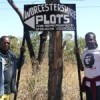
SOUTHERN AFRICA: Land Reform Underfinanced and Failing
Mavis Muchena sits on the veranda of her mud hut, a middle-aged single mother of four with a face worn beyond her years and hands creased from working the soil. She should represent the future of a renewed farming boom in Zimbabwe, but instead she represents its failure.AFRICA: Shortage of Skills for Reproductive Health
Dr Geoffrey Kasembeli says he worked almost seven years without a day off: that's how severe the shortage of obstetricians and gynaecologists in Kenya is. A similar situation prevails across the continent, a symptom of the weakness of reproductive health care in Africa.
DRC Farmers Welcome Support
Farmers in the southwestern Democratic Republic of Congo are looking forward to increased production after 16 tractors and 200 ox-drawn carts were distributed across three regions in the province of Bandundu.MALAWI: A Cellphone, a Bicycle and Sound Agricultural Advice
It is 11 am and Mary Jusa seems unconcerned by the sun beating hard on her back. Humming a traditional tune, she carries on uprooting weeds in her maize field between two water canals.
SOUTH AFRICA: “Children are Dying Needlessly”
By the time Thandi Khumalo* brought her seven-month-old daughter to the Red Cross Children’s Hospital in Cape Town, help came too late. The infant had developed acute diarrhoea and kwashiorkor, a condition caused by severe protein and calorie deficiency, and died a few days after being admitted.
WORLD CUP: ‘Now We Demand They Do It For the Poor’
Weak floodlights barely held back gathering darkness as Somalia met Serbia in the finals of the Poor People's World Cup. A small band of supporters were on hand to see an African side lift the cup in Cape Town's Vygieskraal Stadium.
EAST AFRICA: Deadly Cactus Good for Animal Feed
Joseph Ole Morijo is baffled by research findings that cactus plants can be used as animal fodder during drought. Not after he lost his entire herd of 152 goats and sheep to the said plant.
POLITICS-RWANDA: “Climate of Repression” as Voting Concludes
As voting concluded in Rwanda’s presidential elections, with incumbent President Paul Kagame expected to win by a landslide, fears remain that not all citizens will accept the results amidst claims the elections were neither free nor fair.ZIMBABWE: Questions Raised Over Water Treatment Funding
The memories of Zimbabwe's 2008-2009 cholera outbreak are fresh in the minds of everyone except the people who have the safety of the country's water in their hands.
WORLD: Cooking Up a Climate Deal
Another round of negotiations towards a global treaty on climate change concluded in Bonn on Aug. 6, with activists calling on parties to rediscover a spirit of compromise and make offers rather than demands.AFRICA: Bring Water Into Climate Change Negotiations
Longer periods of drought, decreased river flow, higher rainfall variability and lower soil moisture content: water is at the heart of the impacts of climate change. Yet the precious commodity scarcely features in climate negotiations.
Wanted: Pied Piper for Swazi Village Under Siege
When good rains finally fell, Catherine Mngomezulu was so hopeful that this year she would reap a bumper harvest. Then the rats appeared.
MALAWI: Urban Dwellers Adopting Dry Sanitation
Diarrhoea causes more deaths than malaria and AIDS combined, yet while funding to fight the latter two have risen sharply, the same cannot be said of resources available for hygiene, sanitation and clean drinking water.« Previous Page — Next Page »





The Week with IPS

NEXT STOP - SDGs
Tracking global progress towards a sustainable world
Tracking global progress towards a sustainable world
